
Selecting your first fishing reel is a pivotal decision that shapes your early experiences on the water. For most beginners, a spinning reel is the most practical and rewarding choice because of its forgiving design and minimal learning curve. However, if your immediate goals involve targeting heavy cover, casting heavy lures, or mastering pinpoint accuracy, a baitcasting reel offers distinct mechanical advantages that may justify the extra practice required to master it.
Understanding how these two reel types operate mechanically will help you avoid frustration and select the gear that matches your local fishing environment. By evaluating their design differences, casting dynamics, and maintenance needs, you can make an informed purchase that keeps you focused on catching fish rather than troubleshooting gear issues.
Why Spinning Reels Are the Standard Starting Point
Spinning reels are widely considered the standard starting point for novice anglers due to their highly forgiving mechanical design. The defining feature of a spinning reel is its fixed spool, which remains stationary during the cast. When you cast, the line uncoils freely from the front of the spool, pulled only by the weight of the lure. Because the spool itself does not rotate, there is virtually no risk of the spool spinning faster than the line can exit, which is the primary cause of severe line tangles.
Products mentioned in this guide
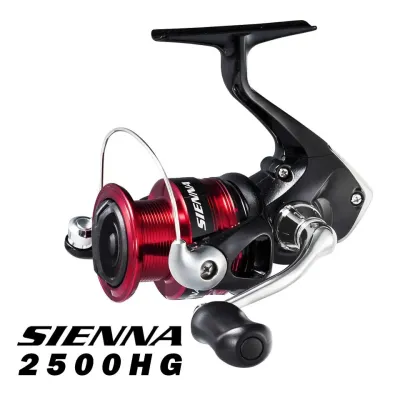
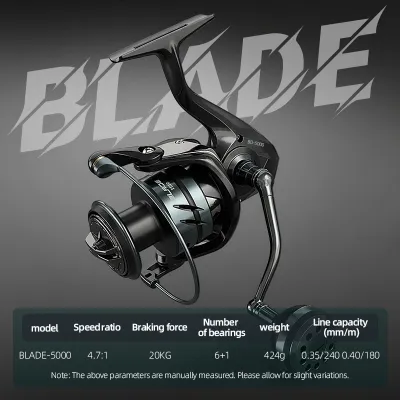
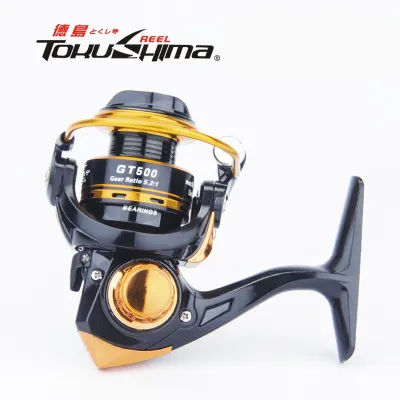
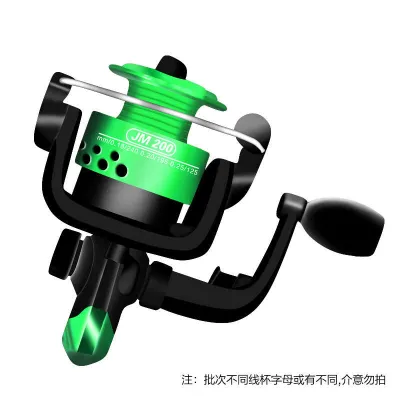
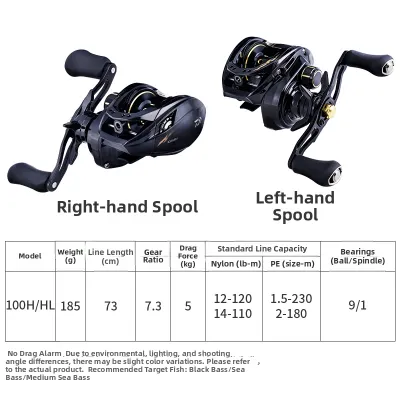
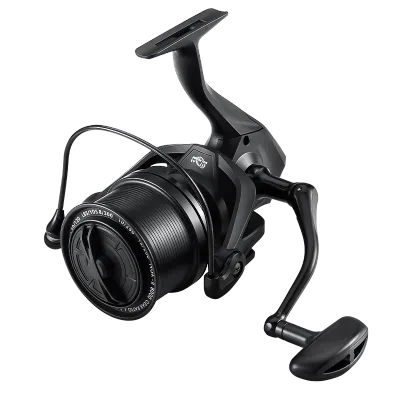
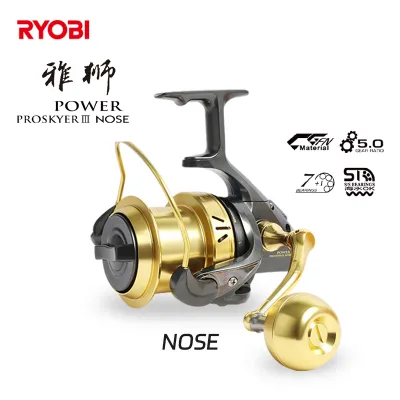
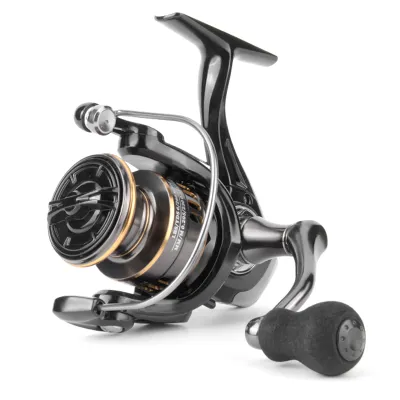
Prices are valid at publication and may change. Please refer to the product page for the latest price.
This fixed spool design makes spinning reels exceptionally efficient at casting light lures and managing thin lines. Whether you are casting a lightweight soft plastic lure or a small live bait rig, the line flows off the spool with minimal friction. This allows beginners to achieve respectable casting distances without needing to master complex physical coordination or manual line control mid-cast.
Managing line tension is also remarkably straightforward with a spinning reel. The open bail arm is flipped manually before casting, and once the lure lands, you simply turn the reel handle to close the bail and engage the line. This mechanical simplicity allows you to focus on your retrieve and detect subtle fish bites rather than constantly monitoring the spool for potential tangles.
Basic maintenance for a spinning reel is simple enough for any beginner to perform regularly. After a day of fishing, especially in coastal or brackish waters, a gentle rinse with fresh water is usually sufficient to remove salt, sand, and debris. For deeper maintenance, such as oiling the main shaft or greasing the internal gears, you should always consult the manufacturer’s manual to ensure you use the correct lubricants and avoid damaging the drag washers.
When to Consider a Baitcasting Reel as a Beginner
While spinning reels are easier to learn, baitcasting reels offer specialized performance that some beginners may want to pursue early on. A baitcasting reel features a revolving spool that sits perpendicular to the rod. When you cast, the weight of the lure pulls the line, which physically forces the spool to rotate. This design requires active, manual intervention to control the speed of the rotating spool.

To prevent the spool from overrunning—a situation where the spool spins faster than the lure travels, resulting in a tangled mess known as a “bird’s nest”—you must use your thumb as a manual brake. By applying light, consistent thumb pressure to the spinning spool during the cast and stopping it completely the instant the lure hits the water, you regulate the line flow. Developing this thumb control requires dedicated practice and muscle memory.
Despite this steep learning curve, baitcasters provide unmatched casting accuracy and retrieval power. Because the line flows directly off the rotating spool in a straight path, you have direct contact with the lure, allowing you to place it precisely next to structures like docks, fallen trees, or thick vegetation. Additionally, the gear design of a baitcasting reel provides high torque, making it much easier to handle heavy lures and pull strong fish out of dense cover.
To assist beginners, modern baitcasting reels feature adjustable braking systems, which are either magnetic or centrifugal. These brakes apply resistance to the spool during the initial phase of the cast to help prevent backlashes. Beginners must learn how to adjust these brakes alongside the mechanical tension knob whenever they change to a lure of a different weight or when casting into the wind.
Side-by-Side Comparison of Key Reel Features
To help visualize the practical differences between these two reel types, the following table compares their performance across several key operational dimensions:
| Feature | Spinning Reel | Baitcasting Reel |
|---|---|---|
| Casting Ease | High (Very forgiving for beginners) | Moderate to Low (Requires thumb control) |
| Lure Weight Compatibility | Excellent for light to medium lures | Best for medium to heavy lures |
| Line Capacity & Type | Ideal for light monofilament and fluorocarbon | Excellent for heavy braided and thick lines |
| Maintenance Complexity | Low to Moderate (Simple external rinsing) | Moderate to High (Requires precise lubrication) |
| Wind Resistance | High (Casts well into headwinds) | Low (Headwinds easily cause backlashes) |
When choosing a reel, it is important to distinguish between features that are fixed by design and those that are adjustable by the user. The spool orientation and line flow direction are fixed physical characteristics of each reel type. Conversely, features like drag tension, braking resistance, and handle orientation can be adjusted or selected based on personal preference.
When shopping, remember that specific specifications such as gear ratios, bearing counts, and maximum drag capacities vary widely between models. You must verify these details on individual product labels or manufacturer specification sheets to ensure the reel meets your specific fishing requirements.
Matching the Reel to Your Target Fish and Environment
Your choice of reel should align closely with the specific environments you plan to fish and the species you hope to target. Spinning reels excel in open-water scenarios, such as casting along sandy beaches, open reservoirs, or clear rivers. They are the ideal choice when targeting smaller, active species like panfish, small bass, or light coastal fish that require light lines and delicate lure presentations.
In contrast, baitcasting reels are designed for heavy cover and challenging environments. If you plan to fish in dense weed beds, lily pads, submerged timber, or around mangrove roots, a baitcaster is highly advantageous. This environment requires thick, heavy braided lines and robust lures, such as topwater frogs or heavy jigs, to coax large, powerful fish out of their hiding spots without breaking your line.
Environmental factors like wind and water salinity also play a significant role in reel performance. High winds can make casting a baitcaster incredibly difficult, as a sudden gust can stall your lure mid-air while the spool continues to spin, leading to an immediate backlash. Spinning reels handle windy conditions much more gracefully.
Furthermore, if you plan to fish in saltwater or brackish environments, corrosion resistance is critical. Saltwater can quickly degrade internal metal gears and bearings. Regardless of whether you choose a spinning or baitcasting reel, always check the manufacturer’s specifications to verify that the reel is rated for saltwater use and features sealed bearings and corrosion-resistant materials.
Your Decision Framework: Which Fishing Reel to Buy First
To make your final decision, evaluate your personal goals, patience level, and where you plan to fish using this straightforward decision framework.
Choose a spinning reel if:
- You want a hassle-free entry into fishing with a minimal learning curve.
- You plan to use lightweight lures, live bait, or thin lines.
- You prefer to spend your time on the water focusing on finding fish rather than managing your gear.
- You want a versatile setup that performs well in windy conditions and open water.
Choose a baitcasting reel if:
- You are committed to practicing your casting technique in a backyard or park before heading to the water.
- You plan to target large fish in heavy cover, weeds, or thick vegetation.
- You require pinpoint casting accuracy to place lures close to structure.
- You plan to use heavy lures and thick braided lines regularly.
- You enjoy the mechanical aspect of fine-tuning gear settings.
Verify first if:
- Before purchasing any reel, you must check its compatibility with your fishing rod. Spinning reels must be paired with spinning rods, which feature large, downward-facing line guides to accommodate the wide loops of line coming off the fixed spool. Baitcasting reels must be paired with casting rods, which feature smaller, upward-facing guides and a trigger grip on the reel seat. Mismatching a reel and rod will severely limit your casting distance, increase line wear, and potentially damage your equipment.
Frequently Asked Questions (FAQ)
Can I use a spinning reel on a baitcasting rod?
No, you should not use a spinning reel on a baitcasting rod. Spinning reels are designed to hang beneath the rod, and they release line in wide, spiraling loops that require large, high-riding rod guides to tame the line friction. Casting rods, designed for baitcasters, have small, low-profile guides positioned on top of the rod blank. Mounting a spinning reel on a casting rod forces the line through guides that are too small, creating extreme friction that severely reduces your casting distance and causes premature line wear.
Are baitcasting reels more expensive than spinning reels?
Both spinning and baitcasting reels are available across a wide range of price points, with entry-level models for both types starting around S$50 to S$100. However, baitcasting reels can carry higher long-term costs for beginners. Because baitcasters are highly sensitive to line quality, you may need to invest in premium braided lines to minimize backlashes. Additionally, the complex internal braking systems and rotating spools of baitcasters often require more frequent maintenance and specialized lubricants to keep them operating smoothly.
How do I fix a bird's nest on a baitcasting reel?
To clear a bird’s nest tangle, start by pulling the drag tight and pressing your thumb firmly down on the tangled spool. While holding firm thumb pressure, turn the reel handle one full rotation to lock the line in place. Next, release the spool clutch and gently pull the main line out from the front of the reel until you reach the point where it is snagged. Repeat this process of applying thumb pressure, turning the handle, and pulling the line to release the trapped loops. If the tangle is severe or wrapped tightly around the spool shaft, stop pulling to avoid damaging the line, and use line clippers to carefully cut the knot.

Community discussion
Share your experience or ask a question. Comments are reviewed before publication.