
Choosing the right dumbbell bar is a foundational decision when building a home gym, as it dictates the type of weight plates you can use and the safety of your training. The primary difference between a standard dumbbell bar and an Olympic dumbbell bar lies in the sleeve diameter—the portion of the bar where you slide the weight plates. Standard bars feature a sleeve diameter of approximately 1 inch (25mm), while Olympic bars feature a thicker sleeve diameter of approximately 2 inches (50mm).
Your choice between these two systems should not be based on a generic assumption of quality, but rather on three practical factors: the weight plates you already own, your long-term strength goals, and your budget. If you already have a collection of 1-inch plates or want a compact, cost-effective setup for light-to-moderate isolation exercises, a standard dumbbell bar is often the most practical choice. Conversely, if you plan to lift heavy, already own Olympic plates for a barbell, or want a system that supports significant progressive overload, investing in an Olympic dumbbell bar is the better path.
Understanding the Core Differences: 1-Inch vs 2-Inch Sleeves
To make an informed purchase, you must first understand the physical dimensions that define these two categories. A standard dumbbell bar is designed with a uniform shaft and sleeve diameter, typically measuring around 25mm to 28mm (roughly 1 inch). Because the bar is relatively thin throughout its entire length, it is lightweight and highly maneuverable, making it a popular choice for traditional home workouts and general fitness routines.
Products mentioned in this guide
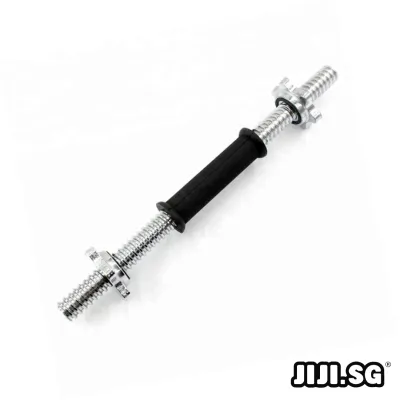
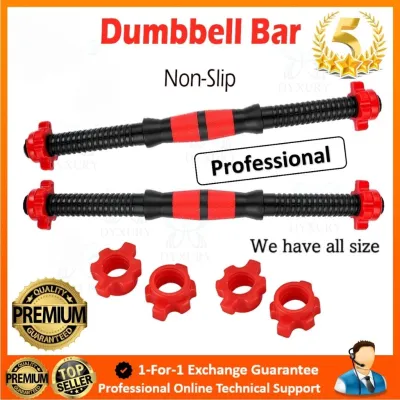
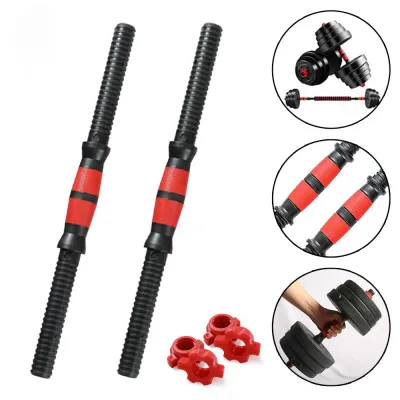
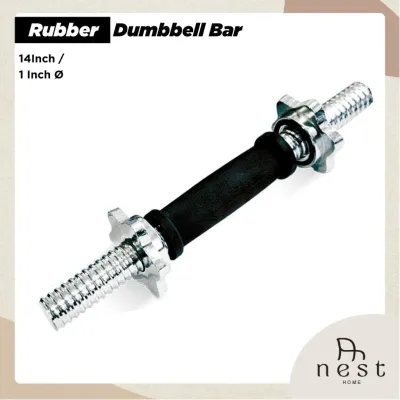
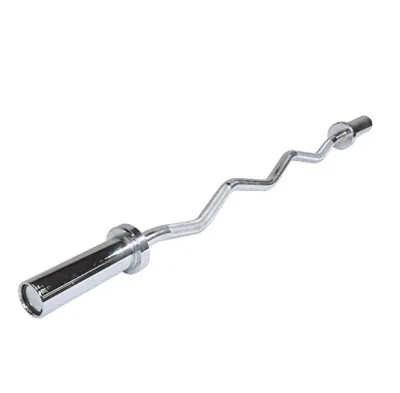
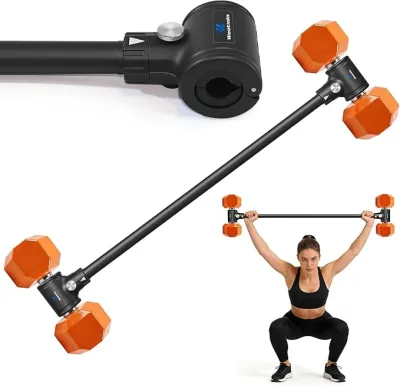
Prices are valid at publication and may change. Please refer to the product page for the latest price.
An Olympic dumbbell bar, on the other hand, features a distinct design where the sleeves on either end are significantly thicker than the central grip section. These sleeves measure approximately 50mm (2 inches) in diameter and often feature rotating bushings or bearings. This rotation is a key design element inherited from Olympic barbells, allowing the weight plates to spin freely during dynamic movements, which reduces rotational torque on your wrists and elbows.
The difference in sleeve thickness directly dictates the center hole size of the weight plates you must buy. Standard plates have a 1-inch center hole and will only slide onto standard bars. Olympic plates have a 2-inch center hole, designed specifically for Olympic sleeves. It is also important to note that while sleeve diameter is standardized, other dimensions like total bar length, sleeve length, and grip thickness can vary widely across different brands and models, meaning you should always check individual product specifications.
Furthermore, the physical construction of the sleeves differs. Standard sleeves are often threaded, requiring a spin-lock collar that screws onto the bar to hold the plates in place. Olympic sleeves are almost always smooth, requiring compression collars, spring clamps, or specialized lock-jaw collars. This structural difference affects not only how quickly you can change weights during a workout but also how securely the plates remain attached when the bar is held at different angles.
Evaluating Your Existing Equipment and Plates
Before browsing online marketplaces or local sporting goods stores, take a close look at any fitness equipment you already own. If you have a set of weight plates tucked away in a closet, use a caliper or a simple ruler to measure the inner diameter of the center hole. Purchasing a new dumbbell bar without verifying this measurement is a common mistake that can leave you with incompatible gear.

If you own 1-inch standard plates, they physically cannot fit onto an Olympic dumbbell bar because the 2-inch sleeve is too wide to pass through the plate’s center hole. There is no safe way to modify a 1-inch plate to fit a 2-inch bar, and attempting to drill out the center of a cast-iron or cement-filled plate can compromise its structural integrity, leading to dangerous cracking or shattering during a workout.
If you own 2-inch Olympic plates and are considering a standard 1-inch bar, you might encounter adapter sleeves. These plastic or metal sleeves slide over a 1-inch bar to increase its outer diameter to 2 inches, allowing you to mount Olympic plates. While this is physically possible, using adapters on a dumbbell bar can compromise stability and safety, especially at higher weights. The added bulk of the adapter can reduce the usable sleeve length, leaving less room for secure collars, which increases the risk of plates slipping off during vertical or dynamic movements.
Additionally, mixing systems with adapters often leads to a highly unbalanced dumbbell. Olympic plates are typically much wider in diameter than standard plates of the same weight, which can make the dumbbell feel unwieldy and awkward to balance during exercises like overhead presses or chest flies. For a seamless and safe lifting experience, it is always best to use plates that natively match the sleeve diameter of your bar.
Matching the Bar to Your Training Goals and Load
Your training style and strength progression goals should heavily influence which dumbbell bar you choose. Standard dumbbell bars are highly suited for light-to-moderate loads, general fitness maintenance, and high-repetition isolation exercises such as bicep curls, lateral raises, and tricep extensions. Because the bars themselves are lightweight, they allow for very low starting weights, which is highly beneficial for rehabilitation or beginners.
For those focused on heavy compound movements, progressive overload, and advanced strength training, Olympic dumbbell bars offer distinct advantages. Exercises like heavy dumbbell bench presses, rows, and Romanian deadlifts require substantial weight that can quickly exceed the capacity of standard bars. The rotating sleeves of an Olympic bar also make dynamic movements like dumbbell cleans or snatches much smoother, protecting your joints from repetitive strain.
However, you should never assume that all Olympic bars are indestructible or that all standard bars are fragile. Weight capacities vary significantly based on the materials used, such as solid steel versus hollow alloy tubes. Always check the manufacturer’s stated maximum weight capacity on the product packaging or online listing before purchasing. A high-quality standard bar made of solid steel may have a higher weight limit than a cheap, poorly constructed Olympic bar.
Furthermore, consider the physical length of the sleeves. Olympic dumbbell bars generally have longer sleeves, allowing you to stack more plates on each side. This is particularly important if you use thicker plates, such as rubber-coated bumper plates or vinyl-filled weights, which take up more space on the bar. If you plan to lift heavy, ensure the sleeve length of your chosen bar can accommodate the number of plates required to reach your target weight.
Space, Budget, and Home Gym Considerations
Setting up a home gym in Singapore requires careful consideration of both space and budget. Standard dumbbell bars and their compatible 1-inch plates generally require a lower upfront financial investment. Standard plates are often made of cast iron or vinyl-coated cement, which are highly economical options for those starting their fitness journey or working within a tight budget.
Olympic dumbbell bars and 2-inch plates typically carry a higher price tag due to the more complex manufacturing required for rotating sleeves and high-tensile steel. Additionally, Olympic plates are often bulkier, especially if you opt for rubber-coated bumper plates designed to protect floors. In smaller living spaces, such as HDB flats, storing bulky Olympic plates and the longer, heavier Olympic dumbbell handles can present a storage challenge.
To get the most value, look for bundle deals at local sporting goods stores or reputable online fitness retailers. Purchasing a set that includes both the dumbbell bars and a matching assortment of plates is often much more cost-effective than buying the components separately. When budgeting, remember to factor in the cost of high-quality collars, as secure locking mechanisms are essential for safe home workouts.
You should also consider the flooring and noise constraints of your living environment. If you live in a high-rise apartment, dropping heavy dumbbells can cause significant noise and vibration. Standard plates, being smaller, are easier to control and set down gently. If you choose Olympic weights, you may need to invest in thick rubber gym mats or drop pads to protect your tiles or vinyl flooring from damage, adding to your overall setup cost.
Standard vs Olympic Dumbbell Bar Comparison Table
To help you quickly compare your options, the table below summarizes the key differences between standard and Olympic dumbbell bars. Remember that these are general category characteristics, and you must always verify the specific weight capacity and dimensions of any individual product before buying.
| Feature | Standard Dumbbell Bar (1-Inch) | Olympic Dumbbell Bar (2-Inch) |
|---|---|---|
| Sleeve Diameter | Approx. 25mm (1 inch) | Approx. 50mm (2 inches) |
| Plate Compatibility | 1-inch center hole plates only | 2-inch center hole plates |
| Sleeve Rotation | None (fixed sleeves) | Bushings or bearings (rotating sleeves) |
| Ideal Training Style | Light-to-moderate lifting, isolation work | Heavy compound lifts, progressive overload |
| Relative Cost | Generally lower upfront investment in S$ | Higher initial cost for bars and plates |
| Space Requirement | Compact, easy to store in small spaces | Bulkier plates, longer handles require more space |
| Weight Capacity | Must verify per product (typically lower) | Must verify per product (typically higher) |
Final Decision Framework: Which Dumbbell Bar Should You Buy?
When making your final decision, let your existing equipment and safety requirements guide your choice. If you already own a collection of weight plates, the most logical and budget-friendly step is to buy the dumbbell bar that matches those plates. If you are starting from scratch, consider your long-term fitness goals: choose standard if you want a compact, affordable setup for general fitness, or choose Olympic if you plan to transition to heavy barbell training in the future.
Before finalizing your purchase, use this checklist to verify the specifications of your chosen dumbbell bar:
- Verify the sleeve diameter: Ensure it matches your plates exactly (25mm/1-inch vs. 50mm/2-inch).
- Check the collar type: Threaded spin-lock collars are common on standard bars and offer excellent security, while Olympic bars often use spring clamps or quick-release lock collars.
- Assess grip ergonomics: Look for knurling (the textured pattern on the handle) that provides a secure grip without being overly abrasive to your hands.
- Confirm the maximum load limit: Ensure the manufacturer's rated weight capacity safely exceeds your current lifting limits and allows room for progression.
By prioritizing manufacturer specifications and safety guidelines over generic category assumptions, you can select a dumbbell bar that will safely and effectively support your strength training journey for years to come.
Frequently Asked Questions (FAQ)
Can I use standard plates on an Olympic dumbbell bar? (FAQ)
No, you cannot use standard 1-inch plates on an Olympic dumbbell bar. The center hole of a standard plate is approximately 25mm, which is physically too small to slide onto the 50mm sleeve of an Olympic bar. Attempting to force a standard plate onto an Olympic bar is impossible, and modifying the plates by drilling or cutting them is highly dangerous as it ruins their structural integrity. If you want to use an Olympic bar, you must pair it with compatible 2-inch Olympic plates.
Are Olympic dumbbell bars too heavy for beginners? (FAQ)
Empty Olympic dumbbell handles are typically heavier than standard handles, often weighing between 3kg and 5kg each, compared to standard handles which usually weigh around 1kg to 2kg. While this extra starting weight is manageable for most beginners, those recovering from injury or focusing on very light rehabilitation exercises should check the exact handle weight in the product specifications. Knowing the starting weight of the empty bar ensures you can perform your exercises with proper form and control from day one.
Do I need spin-lock or spring collars for my dumbbell bars? (FAQ)
The choice of collar depends entirely on your bar’s sleeve design and your training style. Threaded spin-lock collars are highly secure and are the standard choice for threaded standard bars, preventing plates from sliding even when the dumbbell is held vertically. Olympic bars, which have smooth sleeves, typically use spring clamps or quick-release nylon collars. While spring clamps are convenient for fast weight changes, always ensure the collars you choose are rated for the sleeve diameter of your bar and fit snugly to prevent the plates from shifting during movement.

Community discussion
Share your experience or ask a question. Comments are reviewed before publication.