
Finding the right cardio equipment for a Singapore Housing & Development Board (HDB) flat requires balancing fitness goals against physical space, noise constraints, and budget. While a motorized treadmill or a heavy-duty elliptical trainer offers robust workout programs, the humble step board for exercise often emerges as the most practical, low-impact, and space-saving solution for high-density apartment living. Deciding which equipment fits your home involves analyzing how much floor area you can permanently dedicate, how you plan to manage noise transmission to your downstairs neighbours, and what kind of physical impact your joints can tolerate.
Evaluating Space and Footprint Constraints in HDB Apartments
HDB flats, especially newer BTO (Build-To-Order) units, have premium floor space. A standard treadmill typically requires a dedicated rectangular area of about 1.5 to 2 meters in length and 0.8 meters in width. Even folding treadmills, which lift up vertically when not in use, still occupy significant visual and physical space and require a clear safety zone behind the belt to prevent injury during a fall.
Ellipticals generally have a non-folding, rigid frame that demands a permanent footprint. Because the pedals and handlebars move in an elliptical path, you must account not only for the machine’s physical dimensions but also for the extended user clearance at the front and rear during operation. This makes them challenging to integrate into multi-purpose living rooms or small bedrooms.
Products mentioned in this guide
Prices are valid at publication and may change. Please refer to the product page for the latest price.
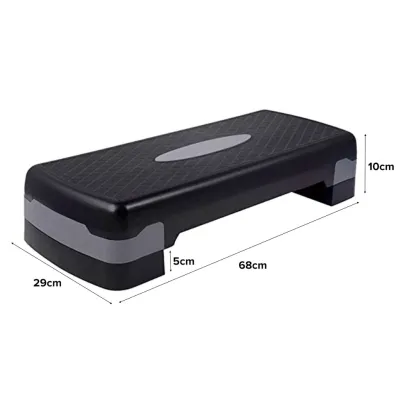
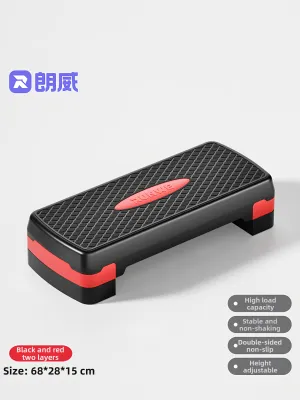
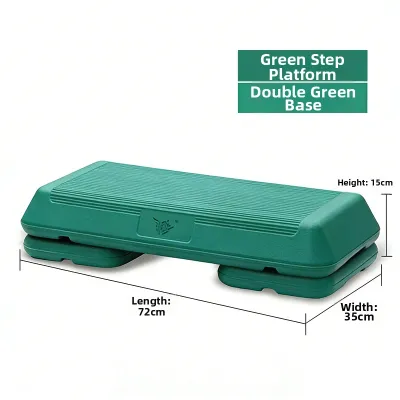
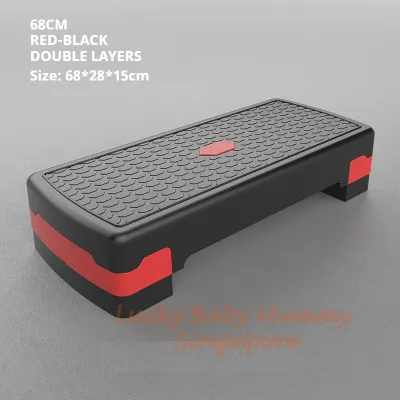
In contrast, a step board for exercise is exceptionally compact. Measuring roughly 70 to 110 centimetres in length and 30 to 40 centimetres in width, it can easily slide under a bed, fit inside a wardrobe, or stand upright in a utility closet when your workout is finished. This high level of storage flexibility makes it an ideal choice for homes where dedicated workout space is unavailable.
Before purchasing any equipment, use this practical measurement checklist to ensure a safe setup:
- Floor Space: Measure the exact footprint of the machine and add at least 0.6 meters of clearance on all sides, plus 1 to 1.5 meters of clear space behind a treadmill.
- Ceiling Height: Calculate your height plus the maximum deck height or pedal height of the machine. Ensure there is at least 30 centimetres of clearance between your head and the ceiling at the highest point of your movement to avoid injury.
- Doorway and Lift Clearance: Verify that the boxed or assembled dimensions of larger machines can fit through your HDB main door, hallway corridors, and the passenger lift during delivery.
Matching Workout Effectiveness With Your Fitness Goals
Each piece of equipment targets cardiovascular health and muscular endurance differently. Treadmills excel at simulating natural running or walking, offering high-impact cardiovascular training that burns calories efficiently. However, the repetitive impact of running on a hard deck can strain knees, ankles, and lower back joints, which may not be suitable for everyone.

Ellipticals provide a low-impact alternative that simulates a cross-country skiing motion. By engaging both the upper body handlebars and the lower body pedals, they distribute the workload across multiple muscle groups, including the quadriceps, hamstrings, glutes, chest, and back. This full-body engagement helps maintain an elevated heart rate while minimizing joint stress, making it highly suitable for active recovery or joint-friendly conditioning.
Step boards offer a highly versatile platform for targeted lower-body conditioning, balance training, and aerobic step choreography. By adjusting the height risers, you can increase or decrease the gravity-resisted workload on your glutes, calves, and thighs. Step workouts can easily be adapted from low-intensity steady-state cardio to high-intensity interval training (HIIT) by incorporating hand weights or increasing step tempo.
To ensure your chosen equipment meets your fitness needs, verify the manufacturer’s specifications before buying. For ellipticals, check the stride length (typically 40 to 50 centimetres is comfortable for average heights) and the number of resistance levels. For treadmills, verify the motor’s continuous horsepower (CHP) rating and the maximum speed and incline options. For step boards, check the weight capacity and the stability of the non-slip feet.
Comparing Budget and Long-Term Value in Singapore
The financial commitment of home cardio equipment extends beyond the initial purchase price. In Singapore, a basic step board for exercise is highly accessible, typically ranging from S$20 to S$100 depending on the material quality, brand, and number of adjustable risers. Because they have no moving mechanical parts or electrical components, they require virtually zero ongoing maintenance and can last for years without depreciating in utility.
Treadmills and ellipticals represent a much larger financial investment. Entry-level motorized treadmills and compact ellipticals generally start around S$300 to S$600, while mid-range to premium models designed for daily, heavy use can range from S$1,000 to well over S$3,000. These motorized machines also consume electricity, which will reflect in your monthly household utility bills.
Hidden costs are another critical factor to consider when purchasing larger machines. Delivery fees for heavy fitness equipment in Singapore can range from S$50 to S$150, especially if manual lifting up stairs is required. Professional assembly is often highly recommended to preserve the manufacturer’s warranty, adding to the upfront cost. Furthermore, motorized treadmills require regular belt lubrication, alignment checks, and potential motor or console repairs out of warranty, which can incur expensive technician call-out fees.
Managing Noise, Vibration, and Neighbourly Considerations
Living in a multi-storey HDB apartment means your workout choices directly affect your neighbours. Treadmills are notorious for generating significant impact noise and low-frequency vibrations. Every footstrike on a treadmill deck sends shockwaves through the machine’s frame and directly into the concrete floor slab, which can easily resonate as a loud, thumping sound in the flat below you.
Ellipticals and step boards offer a much quieter alternative. The smooth, continuous gliding motion of an elliptical keeps your feet in constant contact with the pedals, eliminating impact noise entirely. Similarly, step board exercises, when performed with proper form and soft-soled athletic shoes, generate minimal impact sound, as the user’s body weight is controlled and the board’s rubberized feet help absorb shock.
To maintain good relations with your neighbours, implement these practical noise mitigation steps:
- Anti-Vibration Mats: Place a high-density rubber equipment mat (at least 6mm to 10mm thick) under your treadmill or elliptical to absorb structural vibrations before they reach the floor.
- Floor Load Limits: Verify that the weight of a heavy motorized machine, combined with your body weight, does not exceed the structural load limits of your HDB floor, particularly for older estates.
- Noise Ratings: Check the manufacturer's specifications for operational decibel levels and read user reviews specifically focusing on apartment use.
- Workout Timing: Restrict high-impact or motorized workouts to reasonable daytime hours, avoiding early mornings or late nights when ambient noise levels in the building are low.
Decision Framework: Choosing the Right Cardio Equipment
To make a confident decision for your HDB home, evaluate your situation against this conditional framework:
- Choose a step board if: You have limited floor space, need equipment that can be completely hidden away after use, are working with a modest budget, and prefer a versatile tool for lower-body toning and low-impact aerobic workouts.
- Choose an elliptical if: You have a dedicated corner for a permanent fitness setup, require a low-impact workout that protects sensitive joints, want full-body muscle engagement, and need a machine that operates quietly to avoid disturbing family members or neighbours.
- Choose a treadmill if: You are training for outdoor running events, prefer walking or running as your primary form of cardio, have sufficient floor space and ceiling clearance, and are prepared to invest in high-quality noise-dampening mats and regular machine maintenance.
Verify first if: You share your home with others. Ensure the equipment’s console features, user weight limits, and adjustable components (such as elliptical stride length or treadmill belt width) can accommodate multiple household members safely.
Frequently Asked Questions (FAQ)
Can a step board provide a sufficient cardio workout for weight loss?
Yes, a step board for exercise can provide an exceptionally effective cardiovascular workout for weight loss when used consistently and with sufficient intensity. By performing continuous, rhythmic stepping movements, you engage the largest muscle groups in your body—the glutes, quadriceps, and hamstrings—which naturally elevates your heart rate and increases calorie expenditure. To maximize weight loss, you can adjust the intensity by increasing the height of the board, accelerating your stepping tempo, or incorporating upper-body movements and hand weights. While a motorized treadmill or elliptical allows you to easily track speed and resistance electronically, a step board offers a highly efficient, high-intensity alternative that relies on your own physical effort and body weight to drive cardiovascular conditioning.

Community discussion
Share your experience or ask a question. Comments are reviewed before publication.