
Choosing between a stretching band and a resistance band comes down to understanding whether you need to extend your reach or challenge your muscles. While both are highly portable, space-saving fitness accessories perfect for home workouts, they serve entirely different physiological purposes. A stretching band is designed to assist with flexibility, joint mobility, and static alignment by acting as a physical extension of your limbs. A resistance band, on the other hand, is engineered to provide progressive elastic tension that challenges your muscles during active movement, making it a direct alternative to free weights or cable machines. Selecting the wrong tool not only limits your training progress but can also lead to joint strain or equipment failure.
Core Functional Differences
To understand which band fits your routine, you must first look at their primary design intent. A stretching band—often referred to as a yoga strap or flexibility strap—is built to help you safely reach and hold positions that your current range of motion would otherwise prevent. By providing a stable, non-yielding anchor, it allows you to relax into a stretch, targeting specific muscle groups without straining other parts of your body. For example, when stretching your hamstrings while lying on your back, a stretching band allows you to keep your shoulders flat on the floor while gently pulling your leg upward.
In contrast, a resistance band is designed to create external load. As you stretch a resistance band, the tension increases exponentially, a concept known as progressive resistance. This tension forces your muscles to recruit more fibers to complete the movement, making it highly effective for strength building, muscle hypertrophy, and joint stabilization. Instead of helping you relax into a position, a resistance band demands active muscle contraction to overcome the elastic force.
Products mentioned in this guide

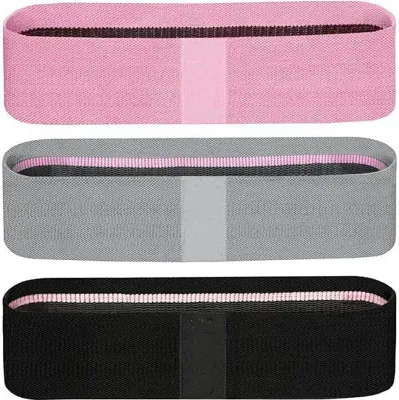
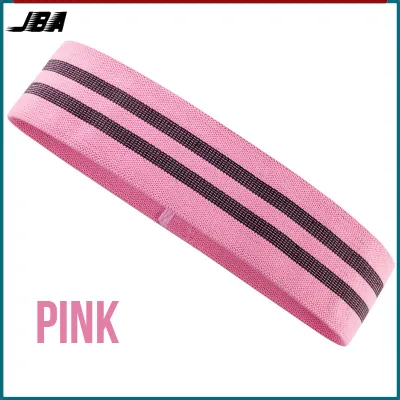
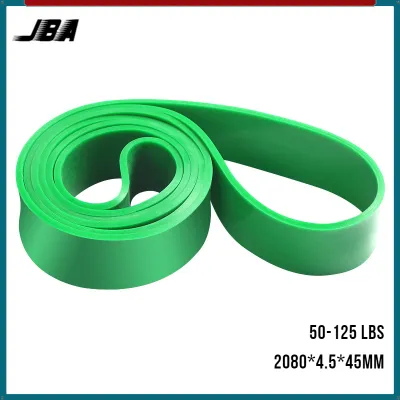
![[RECEIVE IN 3 DAYS] Looped Resistance Exercise Yoga Bands](https://img.lazcdn.com/g/p/478c71011ff76f1dc2636e7c42012a8d.jpg_400x400q80.jpg_.webp)
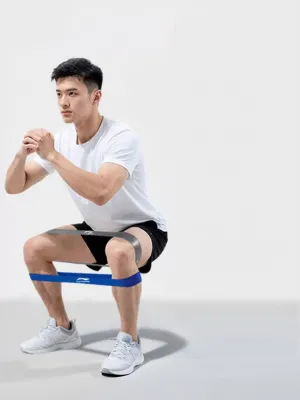


Prices are valid at publication and may change. Please refer to the product page for the latest price.
The physical structure of these bands dictates the movement patterns and force vectors they can safely support. Stretching bands are optimized for static or slow, controlled passive movements where the force is applied in a single, linear direction. Resistance bands are designed for dynamic, multi-directional movements. They require you to control the resistance not just as you stretch the band (the concentric phase), but also as you slowly return to the starting position (the eccentric phase). Attempting to use a highly elastic resistance band for deep, static stretching can lead to unstable joint positioning, as the band constantly pulls back against your hold.
Material and Design Variations
Identifying the physical differences between these two tools is straightforward once you know what materials and structural designs to look for. Stretching bands are typically made from tightly woven nylon, polyester, or cotton. These materials are chosen for their high tensile strength and lack of elasticity. Because they do not stretch, they provide a reliable, unyielding support system that will not slip or change length mid-stretch. Many stretching bands feature a multi-loop design—often with 8 to 12 individual loops sewn along the strap—allowing you to easily adjust your grip and track your flexibility progress over time.

Resistance bands are manufactured from highly elastic materials such as natural latex, thermoplastic elastomer (TPE), or fabric-latex blends. These materials allow the band to stretch up to several times its original length and snap back to its original shape. Resistance bands come in several distinct shapes: continuous flat loops (often used for pull-up assistance or lower-body activation), hollow tubes with plastic handles or carabiners, and small, wide loops (commonly called mini-loops or booty bands) designed to be placed around the thighs or ankles.
In tropical climates where high humidity and warmth are common, material choice becomes even more critical. Natural latex and TPE resistance bands are susceptible to environmental degradation over time. Sweat, body oils, and humidity can cause latex to become sticky, brittle, or prone to sudden snapping. Woven nylon stretching bands, by contrast, are highly resistant to these environmental factors and can easily be tossed into a washing machine. Regardless of the type you choose, always check the manufacturer’s product packaging and warning labels to verify the maximum stretch limits and intended weight equivalencies before starting your workout.
Matching the Band to Your Fitness Goals
Selecting the right band requires a clear assessment of your current fitness objectives, your physical space, and your budget. For residents living in compact apartments or HDB flats, both tools offer an incredibly space-efficient way to exercise without cluttering the home with heavy iron weights. However, they must be matched to the specific phase of your fitness journey. Budgeting S$15 to S$50 for quality fitness accessories can easily cover either option, but buying the wrong one will stall your progress.
You should choose a stretching band if your primary focus is on improving joint mobility, deepening your yoga practice, or executing a physical therapy protocol. If you are recovering from an injury or suffer from tight hamstrings, shoulders, or hips, a non-elastic stretching strap provides the precise, stable leverage needed to gradually expand your range of motion. It is also the ideal choice for passive recovery sessions, where the goal is to lower your heart rate and relax the nervous system.
Conversely, you should choose a resistance band if your goal is to build muscle, tone your body, or warm up your muscles before a heavy lifting session. Resistance bands are excellent for adding progressive overload to bodyweight exercises like squats, push-ups, and bicep curls. They are also highly effective for targeted muscle activation, such as using a mini-band to fire up the glutes before running or using a light tube band to warm up the rotator cuffs before an upper-body workout.
There are scenarios where both bands can play a complementary role in a single workout routine. For instance, you might use a stretching band during your warm-up to open up tight hips, transition to resistance bands for your main strength circuit, and finish with the stretching band for a cool-down. If you are on a tight budget and can only purchase one item, a very light, flat latex resistance band can occasionally serve a dual purpose. It can provide mild assistance for gentle stretching while still offering enough tension for low-load muscle activation. However, you must exercise caution: a light resistance band will continue to stretch under heavy pressure, which can lead to overextension of the joint or a sudden snap if pulled beyond its physical limits.
Safety Checks and Usage Limits
Because elastic bands store a significant amount of kinetic energy when stretched, prioritizing safety is essential to prevent painful snap-backs and joint injuries. Before every single workout, perform a quick visual and tactile inspection of your bands. Run your fingers along the entire length of latex or TPE resistance bands, feeling for any nicks, micro-tears, discoloration, or dry patches. For woven stretching bands, check the stitching along the loops for any signs of fraying or unraveling. If you detect any damage, discard the band immediately; a band snapping under high tension can cause severe bruising or eye injuries.
Proper anchoring is another critical safety factor. When securing a resistance band, only use smooth, rounded, and completely stable anchor points, such as a heavy metal gym rack or a designated door anchor placed on the hinge side of a closed door. Never wrap elastic bands around sharp metal edges, rough wooden beams, or abrasive outdoor surfaces, as this creates friction points that rapidly degrade the material. When using bands underfoot, ensure you are wearing supportive athletic footwear with a good grip; wrapping a high-tension band around bare feet or slippery socks increases the risk of the band slipping off and snapping upward.
Finally, understand the physical limits of your equipment and your body. Elastic bands are excellent tools for self-guided fitness, but they cannot replace proper movement mechanics or professional medical advice. If you experience sharp pain, joint instability, or numbness during an exercise, stop immediately. If you are using these tools to rehabilitate an injury, always consult a qualified physical therapist to ensure your form and resistance levels are safe for your specific recovery stage.
Frequently Asked Questions (FAQ)
Can I use a resistance band for stretching?
Yes, you can use a light, flat resistance band for gentle stretching, but you must do so with caution. Because resistance bands are elastic, they will constantly pull back against your body, which can prevent your muscles from fully relaxing into a static stretch. Avoid using heavy, thick loop bands or tubular bands with handles for stretching, as their high tension can easily lead to joint overextension or muscle strain. For deep, passive stretching where you need to hold a position for an extended period, a non-elastic woven stretching band is a much safer and more effective choice.
How do I know the right resistance level to buy?
Most manufacturers use a color-coding system to indicate different tension levels, ranging from extra-light to extra-heavy, with printed weight ranges often listed on the packaging. When starting out, it is highly recommended to purchase a multi-band set so you can test different tension levels for various exercises. Always begin with a lighter band than you think you need to ensure you can maintain perfect form throughout the entire movement. Check the product packaging to verify that the band’s length and load specifications match your height and current strength level before making a purchase.

Community discussion
Share your experience or ask a question. Comments are reviewed before publication.