
Selecting the right training mat thickness is a balance between joint cushioning and physical stability. The ideal thickness depends directly on your primary exercise routine, your body weight, and where you train. While a thin mat keeps you grounded during balance-heavy standing poses, a thicker mat protects sensitive joints during floor-based core work. Choosing incorrectly can lead to wrist strain, ankle instability, or painful bruising on hard floors.
Understanding Training Mat Thickness Categories
Training mats generally fall into three primary thickness categories, each serving distinct functional purposes. Understanding these divisions helps you narrow down your options based on the physical demands of your exercises.
Thin mats typically measure between 1 mm and 3 mm. These mats prioritize ground connection and stability. Because there is minimal material between your body and the floor, your feet and hands can establish a firm grip. This makes thin mats the preferred choice for standing balance work, active yoga flows, and travel, as they roll up tightly and weigh very little. However, they offer minimal cushioning, making prolonged floor work uncomfortable on hard surfaces.
Products mentioned in this guide
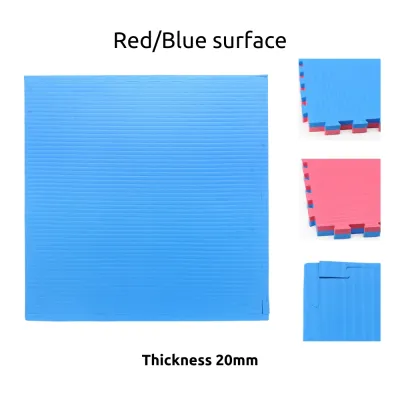
![SG [READY STOCK] Puzzle Exercise Workout Mat EVA Foam Interlocking Tiles 10mm / 20mm / 25mm thickness for Gym MMA Home Workshops Basement Fitness Room Outdoor Area](https://img.lazcdn.com/g/p/e67be99b7c7f465cc89de6d5840e854d.jpg_400x400q80.jpg_.webp)
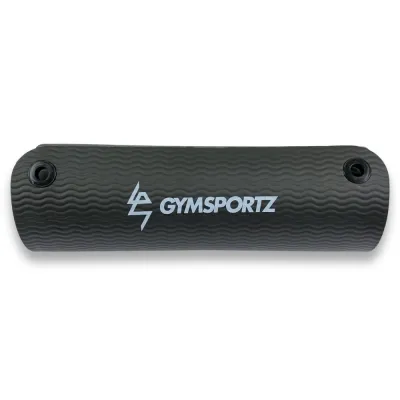
![[SG Stock] Ultra Wide Thick TPE Yoga Mat Non-Slip Shock Absorbing Exercise Mat for Home Dance Workout Training](https://img.lazcdn.com/g/p/c43f788bb7fa27b9acb4fa4a3e1008da.jpg_400x400q80.jpg_.webp)
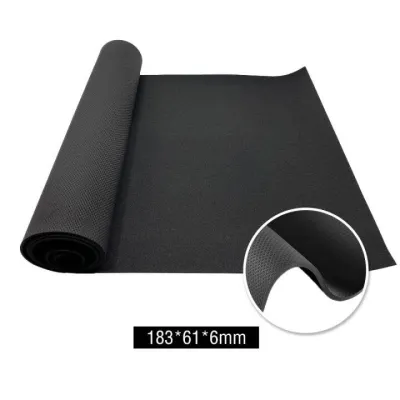
![[BEST SELLER]Balance Foam Pad Yoga Mat Exercise Non-slip Waterproof Soft for Fitness Training](https://img.lazcdn.com/g/p/ecdbe1ded9c6362a36a977bc38118d05.jpg_400x400q80.jpg_.webp)
Prices are valid at publication and may change. Please refer to the product page for the latest price.
Medium mats, ranging from 4 mm to 6 mm, offer a versatile middle ground for general fitness, light floor work, and dynamic exercises. This category is highly popular because it provides enough cushioning to protect your knees and spine during floor transitions while remaining firm enough to support standing balance poses without excessive wobbling. If your routine is varied and includes a mix of stretching, bodyweight exercises, and light cardio, a medium mat is often the most practical starting point.
Thick mats, which typically measure 8 mm to 15 mm or more, are designed to maximize joint cushioning and shock absorption. These mats are ideal for Pilates, core conditioning, and rehabilitation exercises where you spend the majority of your session lying down or kneeling. The generous padding protects the spine, hips, knees, and tailbone from hard subfloors. However, this extra cushioning comes at the cost of stability; standing on a thick, compressible surface makes balancing significantly more difficult.
When shopping, always verify the exact millimeter or inch specifications on the product label. Marketing terms like “extra thick” or “ultra-cushioned” are not standardized across the fitness industry. A mat labeled “extra thick” by one manufacturer might only be 6 mm, while another brand might use the same term for a 15 mm mat. Checking the precise measurements ensures you get the exact level of support you need.
Matching Thickness to Your Specific Workout Routine
To select the most appropriate thickness tier, you must evaluate the specific movements that dominate your daily workout routine. Different exercises place unique demands on your joints and require different levels of stability.

Balance and standing movements, such as those found in traditional yoga practices or single-leg strength training, require a firm, thin surface. When you perform a balance pose, your ankles and feet make micro-adjustments to keep you upright. On a thick, squishy mat, your feet sink into the material, which limits your sensory feedback and forces your ankle joints to overcompensate. This instability can lead to ankle fatigue, alignment issues, or loss of balance. A thin mat keeps your feet close to the solid floor, providing the stable foundation necessary to maintain proper posture.
Floor-based and core exercises, including Pilates, floor abdominal routines, and deep stretching, demand a medium to thick mat. During these movements, your body weight is concentrated on small, bony areas like the tailbone, knees, elbows, and spine. Without adequate cushioning, the pressure against a hard floor can cause immediate discomfort, distracting you from your form and potentially leading to bruising or joint inflammation. A thicker mat distributes this weight more evenly, allowing you to focus on muscle engagement rather than floor pressure.
High-Intensity Interval Training (HIIT) and dynamic cardio workouts require a careful balance of shock absorption and traction. Dynamic movements like jump squats, burpees, and mountain climbers generate high impact forces that can stress your joints over time. While a thicker mat might seem ideal for absorbing these impacts, excessively thick or soft mats can actually cause slipping or joint instability during rapid lateral movements. For HIIT, a high-density medium mat is generally preferred, as it absorbs impact without compressing so deeply that you lose your footing.
If your fitness routine is highly varied—mixing high-impact cardio, floor-based core work, and standing balance exercises—you may find that a single mat cannot meet all your needs. In such cases, you can prioritize joint protection by choosing a high-density medium mat that offers a compromise, or you can use two separate mats. For instance, you might use a thin mat for your standing balance work and lay a thicker utility mat over it when transitioning to floor-based core exercises.
Beyond Thickness: Other Specs That Affect Performance
While thickness is a primary consideration, it is not the sole factor determining how a training mat performs. To make an informed decision, you must also evaluate other critical specifications that influence support, safety, and usability.
Material density is just as important as physical thickness. A thin mat made of high-density material, such as natural rubber or heavy-duty polyurethane, can offer superior joint support compared to a thick mat made of low-density foam, such as cheap ethylene-vinyl acetate (EVA). Low-density mats compress completely under your weight, meaning your joints will still bottom out and press against the hard floor despite the mat’s apparent thickness. High-density mats resist compression, maintaining their supportive structure even under heavy localized pressure.
Surface texture and grip are essential for safety, especially during sweaty or high-intensity sessions. A mat’s grip is determined by its material composition and surface pattern, independent of its thickness. Some mats feature open-cell structures that absorb moisture to maintain grip, while others use textured, non-slip patterns on closed-cell surfaces to prevent sliding. Ensure the mat you choose has sufficient traction on both the top surface (to keep your hands and feet in place) and the bottom surface (to prevent the mat from sliding across the floor).
Weight and portability are practical factors that affect how often you will use your mat. Thicker mats, particularly those constructed from high-density materials, are significantly heavier and bulkier than thin alternatives. If you plan to leave your mat in a dedicated home gym, weight is rarely an issue. However, if you regularly commute to a fitness studio, travel, or need to store your equipment in a tight space, a heavy, thick mat can quickly become a hassle to roll, carry, and store.
How to Test and Evaluate Your Mat's Suitability
Once you have selected a mat, or if you are evaluating your current equipment, you can perform practical tests to determine if the thickness and density are appropriate for your body and routine.
Begin by performing movement-specific tests on a hard floor surface. Hold a standard plank position for thirty seconds to check the pressure on your wrists and forearms. If you feel your bones pressing directly against the hard floor beneath the mat, the material is either too thin or lacks sufficient density. Next, perform a single-leg balance test, such as a tree pose or a single-leg deadlift. If you feel excessive wobbling in your ankle or find it significantly harder to maintain balance than on the bare floor, the mat may be too thick or overly compressible.
Observe wear patterns and compression marks over time. High-quality mats should quickly bounce back to their original shape after you step off them. If you notice permanent indentations, flaking material, or areas that remain compressed long after your workout, the mat’s internal structure has degraded. A worn-out mat loses its ability to absorb shock and support your joints, indicating that it is time for a replacement.
Finally, always review the manufacturer’s care and cleaning instructions. Using harsh chemical cleaners, soaking the mat in water, or exposing it to direct sunlight can break down the synthetic or natural polymers inside. This structural degradation can cause the mat to lose its thickness, elasticity, and grip prematurely. Proper maintenance ensures that your mat continues to provide the necessary support and safety throughout its lifespan.
Frequently Asked Questions (FAQ)
Can I use a thick yoga mat for weightlifting?
Using a thick, compressible yoga mat for weightlifting is not recommended due to safety and stability risks. Weightlifting requires a solid, non-yielding surface to ensure efficient force transfer from your body to the ground. A thick mat compresses under heavy loads, destabilizing your stance and making it difficult to maintain proper alignment during lifts like squats, deadlifts, or overhead presses. For weightlifting, a thin, hard rubber mat or a dedicated lifting platform is much safer and more effective.
Is a thicker training mat always better for joint pain?
A thicker training mat is not automatically better for joint pain. While thickness provides cushioning, the density of the material is what ultimately prevents your joints from bottoming out against the floor. A very thick but low-density foam mat will compress fully under your knees or wrists, offering little actual protection. Furthermore, excessive thickness can create an unstable surface, forcing the small stabilizing muscles around your ankles and wrists to work harder, which can actually increase joint strain and discomfort.

Community discussion
Share your experience or ask a question. Comments are reviewed before publication.