
Deciding between a treadmill and an elliptical for a Housing & Development Board (HDB) flat in Singapore comes down to balancing your personal fitness goals against the physical realities of high-density high-rise living. While both machines offer excellent cardiovascular workouts, they differ significantly in their physical footprint, noise generation, joint impact, and maintenance needs. For most HDB residents, the choice is not just about which exercise machine burns more calories, but which one fits into a spare bedroom or living room corner without causing structural concerns or drawing complaints from the neighbors downstairs.
Space and Footprint Constraints in HDB Flats
Treadmills generally require a rectangular footprint that can range from 1.5 to 2 meters in length and 0.7 to 0.9 meters in width. However, the operational footprint is larger than the machine itself; manufacturers typically recommend leaving at least 1 to 2 meters of clear space behind the treadmill belt for safety in case of falls, along with 0.5 meters on either side. Many home-use treadmills feature folding decks that lift vertically when not in use, reducing the floor footprint by up to 50 percent, though they still require significant vertical clearance and can look imposing in a small room.
Ellipticals, on the other hand, usually have a fixed frame that does not fold, occupying a permanent footprint of about 1.2 to 1.8 meters in length and 0.6 to 0.8 meters in width. While they do not require as much rear safety clearance as a treadmill, you must account for the pedal and handlebar extension during operation. The pedals often extend beyond the front and rear of the frame during a stride, and the moving handlebars swing outward, requiring extra lateral and vertical clearance.
Products mentioned in this guide
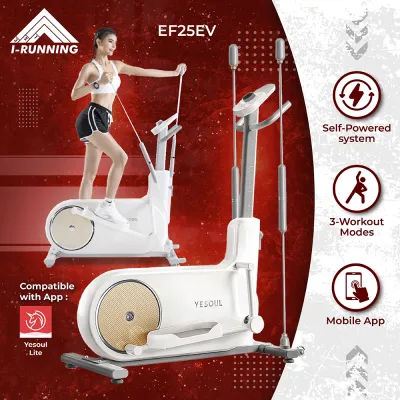
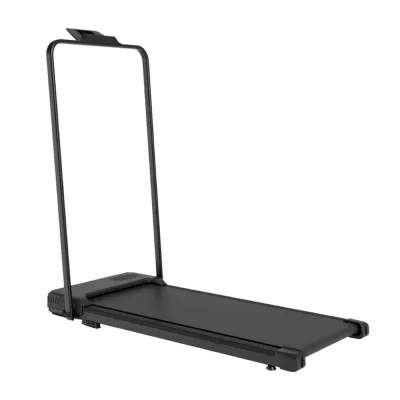
Prices are valid at publication and may change. Please refer to the product page for the latest price.
Before purchasing any exercise machine, measure your HDB flat’s doorways, hallways, and lift entryways. Standard HDB bedroom doors are typically 0.8 to 0.85 meters wide, and tight corridor corners can make maneuvering a heavy, non-folding elliptical frame extremely difficult. Look for models equipped with high-quality transport wheels and integrated lift handles, which allow you to roll the machine out of the way when hosting guests or cleaning.
Noise and Vibration: Keeping the Peace Downstairs
In high-density HDB blocks, structural noise and vibrations travel easily through concrete floor slabs to the units below. Treadmills are inherently high-impact machines; every running stride sends a shockwave through the deck, frame, and floor, creating a low-frequency thudding sound that is highly audible to neighbors downstairs. This impact noise is often accompanied by the high-pitched whine of the electric motor and the friction of the running belt, making treadmills a challenging choice for early morning or late-night workouts.

Ellipticals offer a distinct advantage in noise control because your feet never leave the pedals. This continuous, low-impact motion eliminates footfall impact noise entirely, leaving only the quiet mechanical hum of the flywheel and drive belt. For HDB residents who live in quiet estates or exercise during off-peak hours, an elliptical is generally the more neighbor-friendly option.
To mitigate noise, placing a specialized high-density rubber anti-vibration mat under either machine is highly recommended. These mats help isolate structural vibrations, though they cannot fully eliminate the airborne sound of a running treadmill. When shopping, verify the manufacturer’s decibel ratings if available, and check user reviews specifically mentioning apartment or high-rise use. If possible, test the machine in a local showroom to assess the motor noise and mechanical stability under load before committing to a purchase.
Workout Effectiveness and Joint Impact
Both machines provide effective cardiovascular conditioning, but they engage your body in different ways. Treadmills simulate natural walking or running, which is a weight-bearing exercise that strengthens bones and primarily targets the lower body muscles, including the calves, hamstrings, quadriceps, and glutes. Running at a high intensity generally burns more calories per hour than moderate elliptical training, making the treadmill highly effective for weight loss and athletic conditioning.
However, the repetitive impact of running can place significant stress on your ankles, knees, hips, and lower back. For individuals recovering from joint injuries, older adults, or those with chronic joint conditions, the elliptical offers a safer, low-impact alternative. By keeping your feet flat on the pedals, the elliptical guides your joints through a smooth, elliptical path that minimizes joint stress while still providing a weight-bearing workout.
Furthermore, ellipticals with moving handlebars offer a dual-action workout that engages the upper body, including the chest, back, shoulders, and arms. To ensure an ergonomic fit on an elliptical, check the stride length before buying; a stride length that is too short (under 45 centimeters) can feel choppy and uncomfortable for taller users, while a stride length that is too long can strain the hips. For treadmills, look for models with adjustable deck cushioning and incline options to vary your workouts and reduce joint strain.
Maintenance, Durability, and Long-Term Costs
Owning an exercise machine in Singapore’s warm, humid climate requires regular maintenance to prevent premature wear and rust. Treadmills require consistent upkeep, including lubricating the running deck with silicone oil every few months, adjusting belt tension to prevent slipping, and vacuuming dust from the motor compartment to prevent overheating. The running belt and deck are wear-and-tear items that may eventually need replacement after several years of heavy use.
Ellipticals generally require less frequent maintenance, but they are not entirely maintenance-free. You will need to periodically check and tighten the pivot points, joints, and pedal bolts to prevent squeaking, and wipe down the tracks to keep the rollers moving smoothly. Because ellipticals have fewer high-friction moving parts than treadmills, their mechanical components often last longer under typical home use conditions.
Power consumption is another factor to consider; treadmills rely on powerful electric motors (often ranging from 1.5 to 3.0 continuous horsepower) that draw significant electricity, whereas many modern ellipticals use self-generating power systems or low-wattage magnetic resistance systems. Ensure your chosen machine is compatible with standard Singapore three-pin sockets and does not overload your home’s electrical circuits. Always review the manufacturer’s warranty terms, paying close attention to coverage for the motor, frame, and labor, and verify that the brand has an authorized local service center in Singapore to handle repairs and spare parts.
Decision Framework: Which Exercise Machine Should You Choose?
To make your final decision, evaluate your living situation and fitness priorities against the characteristics of each machine. A treadmill is the ideal choice if you are training for outdoor running events, prefer high-intensity workouts, have a dedicated room where noise is less of an issue, or can accommodate a folding model that is packed away after use. Conversely, an elliptical is the better fit if you need a low-impact workout to protect your joints, prioritize near-silent operation to avoid disturbing family members or neighbors, and have a permanent spot where a non-folding machine can sit.
Before finalizing any purchase, verify the structural limits of your home. Standard HDB floor load limits are designed to handle typical household furniture and appliances, but extremely heavy commercial-grade fitness equipment can exceed these limits, especially when combined with dynamic impact forces. Check the product specifications for the machine’s net weight and maximum user weight capacity to ensure it is safe for your specific flooring.
When comparing models online or in-store, create a checklist of key specifications to guide your decision. For treadmills, compare the motor horsepower, running belt dimensions, deck cushioning technology, and folding mechanism. For ellipticals, compare the flywheel weight, stride length, resistance levels, and whether the machine uses a front-drive or rear-drive system. Taking the time to verify these details ensures you select an exercise machine that fits your fitness goals, your budget, and the unique environment of your HDB home.
Frequently Asked Questions (FAQ)
Can I place a treadmill or elliptical on an HDB balcony?
Placing fitness equipment on an HDB balcony is generally not recommended due to Singapore’s tropical climate. High humidity, heavy rain splashes, and direct sunlight can rapidly degrade the electronic consoles, rust metal frames, and dry out running belts or pivot joints. If your balcony is fully enclosed and protected from the elements, you must still ensure the floor load capacity can support the machine’s weight and that the noise does not disturb neighbors through open windows. Always check the manufacturer’s guidelines, as outdoor or semi-outdoor placement typically voids the warranty.
Do I need an anti-vibration mat for my HDB flat?
Yes, using a high-density rubber anti-vibration mat is highly recommended for both treadmills and ellipticals in an HDB flat. These mats serve two primary purposes: protecting your flooring from scratches and indentations caused by the machine’s heavy feet, and dampening the structural vibrations that travel through the concrete floor. While a mat is highly effective at reducing the low-frequency hum of an elliptical or the motor vibration of a treadmill, keep in mind that it will not completely eliminate the airborne impact noise of a runner’s feet striking a treadmill deck.

Community discussion
Share your experience or ask a question. Comments are reviewed before publication.