
Finding the right eyewear for swimming is essential for both safety and performance, especially if you rely on corrective lenses in your daily life. TYR offers a dedicated range of optical swimming goggles designed to provide clear vision underwater without the risks associated with wearing contact lenses in chlorinated or open water. These prescription-ready models are engineered with pre-ground corrective lenses, allowing swimmers with myopia (nearsightedness) to navigate lanes, track pace clocks, and maintain spatial awareness safely. To choose the correct pair, you must understand how TYR structures its optical range, how to verify the available diopter strengths, and how to match the frame design to your specific swimming environment.
Understanding TYR's Prescription Goggle Range
TYR structures its optical eyewear around pre-made corrective lenses, commonly referred to as step-diopter lenses. Unlike custom prescription glasses crafted by an optician to match your exact astigmatism and sphere measurements, step-diopter swim goggles use standardized, pre-molded lenses. These lenses are typically available in negative diopter strengths (ranging from -1.5 to -8.0, usually in 0.5 or 1.0 increments) to correct nearsightedness, which is the most common visual requirement for swimmers.
When browsing TYR’s catalog, it is crucial to distinguish standard swim goggles from their optical counterparts. Standard goggles may feature clear, smoke, or mirrored lenses designed solely for light reduction and glare protection, offering no vision correction. Optical models are explicitly labeled with terms such as “Optical,” “Corrective,” “Prescription,” or “Diopter” on their packaging and product listings. Buying a standard model by mistake is a common error, so always verify that the product specifications explicitly state a diopter value or lens strength option before finalizing your purchase.
Products mentioned in this guide
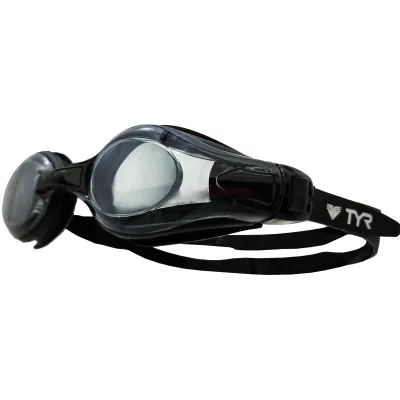
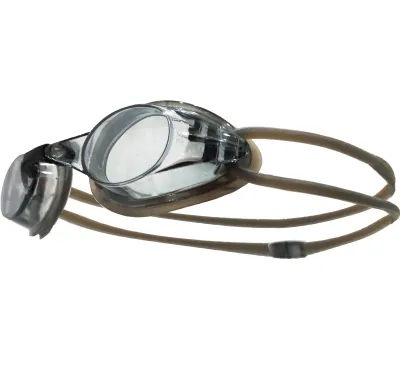
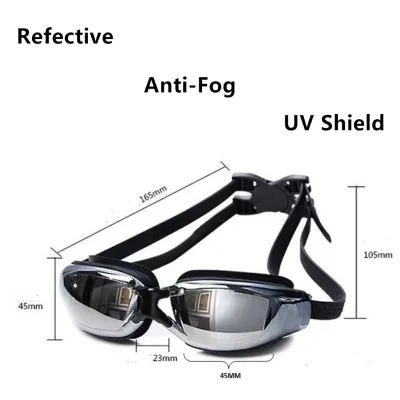
Prices are valid at publication and may change. Please refer to the product page for the latest price.
TYR’s optical range generally falls into two design configurations: integrated optical goggles and modular assembly kits. Integrated models come pre-assembled with identical corrective lenses in both the left and right eye cups. This is highly convenient for swimmers who have the same prescription in both eyes. For those with different prescriptions for each eye, some retailers offer modular kits where you can purchase individual corrective lenses and a separate assembly kit (consisting of the nose bridge and head strap) to customize your goggles to your exact needs.
Key Selection Criteria for Optical Swim Goggles
Selecting the right optical goggles requires evaluating several performance features beyond just the lens strength. The lens material itself is the foundation of optical clarity. High-quality polycarbonate lenses are standard in TYR’s optical range, offering excellent impact resistance and lightweight durability. Polycarbonate provides a stable medium for the corrective curve, ensuring that your underwater vision remains free from distortion.

Environmental factors play a significant role in lens selection. If you primarily swim in indoor pools, such as the indoor facilities across Singapore, clear or lightly tinted optical lenses are ideal for maximizing light transmission. For outdoor pools or open-water swimming under intense tropical sunlight, look for optical lenses that feature UV protection and a smoke or mirrored finish to reduce glare and protect your eyes from harmful ultraviolet radiation. Regardless of the venue, a reliable anti-fog coating is essential. High humidity and temperature differentials between your face and the water can cause rapid condensation, so verifying the presence of an integrated anti-fog treatment is critical for maintaining clear sightlines.
The gasket material determines the comfort and seal of the goggles during extended training sessions. Hypoallergenic silicone gaskets are highly recommended because they conform gently to the contours of the face, creating a watertight seal without requiring excessive strap tension. A poor seal not only lets water in but can also misalign the corrective lenses with your pupils, causing visual distortion and eye strain.
Finally, consider strap adjustability and frame construction. A secure, split-strap design distributes pressure evenly across the back of the head, preventing the goggles from shifting during dive starts or turns. Adjustable nose bridges—often supplied in multiple sizes with the goggles—are vital for optical models. They allow you to adjust the distance between the lenses so that the optical centers align perfectly with your eyes, ensuring optimal visual correction and comfort.
How to Verify Available Models and Diopter Options
Because product lineups and inventory levels change periodically, verifying current model availability is an essential step before making a purchase. To find the most up-to-date selection of TYR optical goggles, start by visiting the official TYR website or consulting authorized local sporting goods retailers in Singapore. Optical models, such as the TYR Blackhawk Racing Negative Prescription goggles or the classic TYR Corrective series, are specialized items and may have more limited stock compared to standard recreational goggles.
When reviewing product specification sheets, pay close attention to the diopter increment chart. Most TYR optical lenses are offered in negative steps (e.g., -1.5, -2.0, -2.5, up to -8.0). If you require positive correction for farsightedness (presbyopia or hyperopia), you must verify if positive diopter options are currently manufactured, as they are significantly less common and may require sourcing through specialized distributors.
Before purchasing, it is highly recommended to consult an eye care professional or optometrist. The refraction of light changes when you transition from air to water; water acts as a natural magnifying medium, which can make your standard glasses prescription feel slightly too strong underwater. An optometrist can help you calculate your “water prescription,” which often involves selecting a diopter that is slightly weaker (closer to zero) than your land-based prescription to prevent headaches and eye strain.
When shopping locally in Singapore, visiting a physical store that specializes in competitive swimming gear can be highly beneficial. This allows you to check the physical packaging, confirm the diopter ratings printed on the box, and verify stock availability. If purchasing online through authorized e-commerce platforms, double-check the return policy to ensure you can exchange the goggles if the fit or lens strength is not correct upon arrival. Expect to invest around S$30 to S$60 for a quality pair of optical goggles, depending on the specific model and whether you require a modular assembly.
Fitting, Care, and Maintenance Guidelines
To ensure your optical goggles perform reliably and last for multiple seasons, proper fitting and meticulous maintenance are required. Before entering the pool, perform a dry-fit test to verify the seal. Gently press the goggle cups against your eye sockets without using the head strap. If the goggles stick to your face for a few seconds through suction alone, the shape is compatible with your facial structure. Once the seal is verified, adjust the head strap so it is snug but comfortable; overtightening the strap is a common mistake that deforms the silicone gasket, actually causing leaks and putting unnecessary pressure on your temples.
After every swim, rinse your goggles immediately in clean, cold tap water to remove chlorine, salt, pool chemicals, and organic residue. Never use hot water, dish soap, or abrasive cleaners, as these will rapidly degrade the delicate anti-fog coating on the inside of the lenses. Crucially, avoid touching or wiping the inside of the lenses with your fingers, towels, or microfiber cloths. Wiping the lens can scratch the optical surface and rub off the anti-fog treatment, permanently ruining the clarity of your prescription lenses.
Allow the goggles to air dry completely in a shaded, well-ventilated area away from direct sunlight, as extreme heat can warp the silicone gaskets and damage the frame. Once dry, store them in a dedicated protective goggle case. Tossing loose goggles into a swim bag alongside keys, zippers, and rough gear is the primary cause of scratched lenses, which can impair your vision and render the optical correction ineffective.
Regularly inspect your goggles for signs of wear. If you notice the silicone gaskets becoming brittle, sticky, or cracked, or if the lenses develop deep scratches that obstruct your field of view, it is time to replace them. Operating with compromised equipment in the water can lead to leaks, eye irritation, and reduced visibility, which compromises your safety in the pool or open water.
Frequently Asked Questions (FAQ)
Can I wear contact lenses under standard goggles instead of buying optical ones?
Wearing contact lenses while swimming carries significant health risks and is generally discouraged by eye care professionals. When pool water or open water gets trapped behind a goggle lens, it can easily come into contact with your eye. Water harbors microorganisms, such as Acanthamoeba, which can adhere to contact lenses and lead to severe corneal infections, inflammation, and even permanent vision loss. Additionally, water entering the goggles can easily dislodge or wash away your contact lenses. Switching to dedicated optical swimming goggles eliminates these biological risks, providing a much safer, more hygienic, and highly secure solution for clear underwater vision.
How should I choose a diopter if my exact prescription falls between available steps?
If your exact prescription does not match the standard 0.5 or 1.0 diopter steps offered by TYR, the general rule of thumb in optometry is to round down to the nearest weaker strength (closer to zero) rather than rounding up. For example, if your prescription is -3.25, you should generally select a -3.0 diopter lens instead of a -3.5 lens. Over-correcting (choosing a lens that is too strong) can cause significant eye strain, dizziness, and headaches, especially when combined with the natural refractive properties of water. Always discuss your specific visual needs with an optometrist to confirm the safest and most comfortable diopter choice for your swimming activities.

Community discussion
Share your experience or ask a question. Comments are reviewed before publication.