
A 2m resistance band represents a highly versatile length standard in fitness equipment, offering a balance between extended range of motion and adjustable tension. This specific length—equivalent to two meters of unstretched material—matters because it dictates the types of exercises you can perform, how far you can stretch the band before reaching its safe elastic limit, and how much space you need for your workouts. Whether you are anchoring it to a door frame in a compact apartment or using it for full-body mobility work, understanding this measurement helps you select the right tool for your height and training goals.
Decoding the 2m Specification: What the Measurement Actually Means
When shopping for a 2m resistance band, the first step is understanding how manufacturers define this measurement, as it varies significantly across different product designs. For flat therapy bands, a 2m specification typically refers to the end-to-end linear length of the material when laid flat on a surface without any tension. This provides a straightforward baseline for exercises where you grip the ends or wrap the band around your feet.
For continuous loop bands, the 2m specification can sometimes refer to the total circular circumference of the loop, or it may refer to the flat, laid-out length from end to end. A band with a 2m circumference actually has a flat laid length of approximately one meter. Conversely, a band with a 2m flat laid length has a total loop circumference of four meters. It is crucial to verify the manufacturer’s product description or packaging details to confirm whether the “2m” label indicates the flat length or the loop circumference, as this drastically alters the band’s usable range.
Products mentioned in this guide
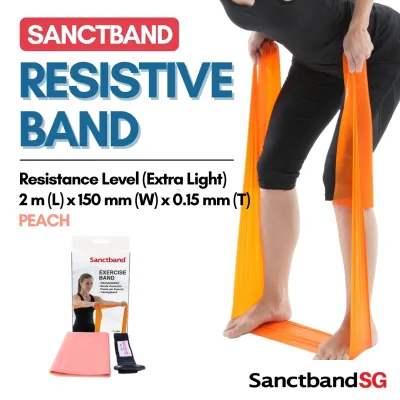
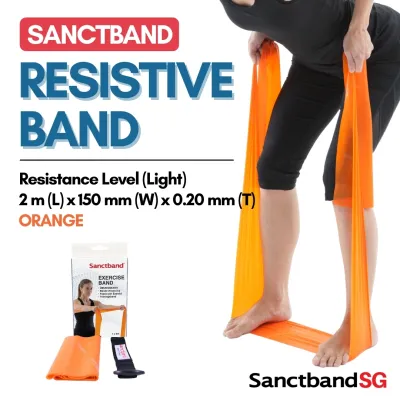
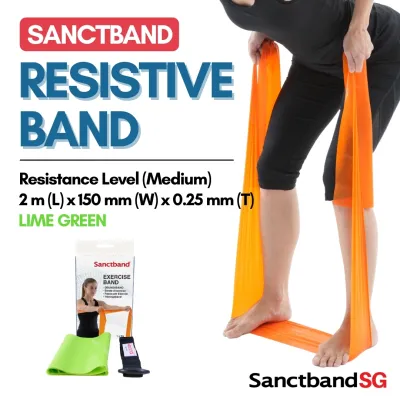
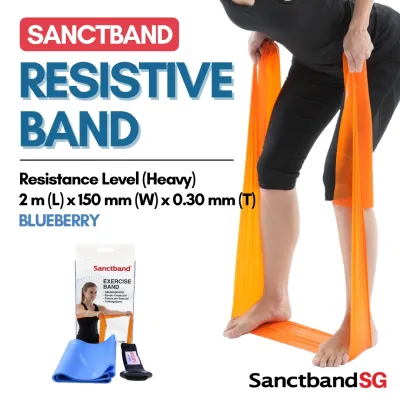
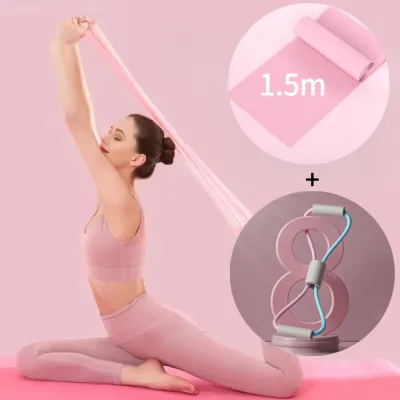
Prices are valid at publication and may change. Please refer to the product page for the latest price.
Tube bands with handles present another variation. In these models, the 2m measurement might represent only the elastic rubber tubing, or it could include the webbing, carabiners, and handles attached to each end. To avoid surprises during your workout, check the product specifications to see if the handles are included in the total length. Knowing the exact unstretched baseline allows you to calculate how much space and stretch you can safely expect during use.
How a 2m Length Impacts Your Range of Motion and Exercise Selection
The physical length of a 2m resistance band directly influences your exercise selection and the fluid execution of your movements. This generous length provides ample slack, making it highly suitable for full-body stretches, overhead presses, and wide-stance lower body movements like squats or lunges. For taller individuals or those with a wider arm span, a 2m band ensures that you can complete a full overhead press without stretching the material to its absolute limit at the top of the movement.

However, this length can introduce challenges during short-range isolation exercises. If you are performing bicep curls, tricep kickbacks, or lateral raises, a 2m band may have too much slack at the starting position. This requires you to wrap the excess material around your hands or feet to create tension, which can sometimes feel cumbersome or cause uneven resistance if not adjusted carefully.
Your physical height and arm span play a critical role in how the band behaves. When you anchor a 2m band under your feet for an overhead movement, the material must stretch to accommodate your height plus the length of your extended arms. If the band is too short, it will reach its maximum safe stretch ratio prematurely, increasing the risk of snapping. A 2m baseline offers a safer margin for most adult heights, allowing for a smooth, progressive resistance curve throughout the entire range of motion.
Adjusting Tension and Versatility Without Compromising Safety
One of the primary benefits of a 2m resistance band is its inherent versatility, allowing you to modify the effective length and resistance level without needing to purchase multiple bands. To increase the tension for specific exercises, you can simply widen your stance, fold the band in half to double the resistance, or wrap the excess material securely around your hands or a stable anchor point. These quick adjustments make a single band adaptable to both light mobility work and heavier strength training.
However, modifying your band requires strict adherence to safety guidelines to prevent sudden failure or injury. You should avoid tying knots in the band to shorten it, as knotting creates localized stress points that can weaken the material and lead to tearing. Similarly, never wrap the band around sharp edges, rough concrete, or abrasive metal brackets. The friction and sharp angles can cause micro-tears in the latex or thermoplastic elastomer, which may result in the band snapping violently under tension.
Before performing any high-tension exercises, always check the manufacturer’s recommended maximum stretch ratio. Most high-quality bands can safely stretch to three or four times their original length, but exceeding this threshold risks permanent deformation or failure. Regularly inspect the entire length of your 2m band for small nicks, discoloration, or tears, and replace the band immediately if you detect any signs of wear.
Evaluating If a 2m Band Fits Your Training Environment and Goals
Deciding whether a 2m resistance band is the right fit for your fitness routine depends heavily on your training environment and specific goals. When compared to shorter alternatives, such as 1.2m tube bands or mini-loop bands, the 2m option offers superior versatility for full-body integration but requires more physical space to use safely. If you are working out in a compact apartment, you must ensure you have sufficient clearance from walls, ceiling fans, and furniture to accommodate the band when it is fully extended.
For outdoor training in local parks or fitness corners, a 2m band is highly advantageous. Its length makes it much easier to loop around sturdy trees, goalposts, or outdoor pull-up bars, giving you a reliable anchor point for chest presses, rows, and rotational core exercises. Shorter bands often limit your anchoring options, forcing you to stand uncomfortably close to the anchor structure.
To guide your decision, consider your primary training focus. If your goals center on physical therapy, gentle rehabilitation, or deep mobility work, a 2m flat therapy band provides the gentle, progressive tension and grip options you need. For heavy strength training or pull-up assistance, a 2m continuous loop band with a thicker profile is more appropriate. If your routine consists primarily of quick, isolated lower-body movements like glute bridges or clamshells, a shorter mini-band will be far more efficient than managing the excess slack of a 2m model.
Frequently Asked Questions (FAQ)
Can I cut a 2m resistance band to make it shorter?
Physically cutting a 2m resistance band is highly discouraged. Cutting the material—whether it is a flat loop, a tube, or a therapy band—compromises its structural integrity, creates frayed edges that are highly prone to tearing, and voids any manufacturer warranty. If you find that a 2m band is consistently too long for your exercises, it is much safer to adjust your grip, fold the band to double its resistance, or purchase a separate, shorter band designed specifically for close-range movements.
Does the 2m length include the handles on tube bands?
Whether the 2m measurement includes the handles depends entirely on the manufacturer’s specifications. Some brands measure only the elastic rubber tubing itself, while others measure the entire product from the tip of one handle to the other. Because this standard is not universal, you should always check the product description or user manual to verify the exact usable length of the elastic material before purchasing, ensuring it matches your height and exercise requirements.

Community discussion
Share your experience or ask a question. Comments are reviewed before publication.