
Choosing a 5kg kettlebell might seem straightforward, but the material and design you select will fundamentally shape your workouts, your home setup, and your physical progress. Unlike a dumbbell, a kettlebell features an offset center of gravity that sits outside your hand. At the 5kg mark, the market divides into three primary categories: vinyl-coated, solid cast iron, and steel competition kettlebells. The ideal choice depends on your specific training environment, your grip preferences, and your long-term fitness goals.
For beginners or those exercising in shared residential spaces, a vinyl kettlebell offers immediate floor protection and noise dampening. If you prefer a traditional, compact weight with a textured grip that holds chalk well, cast iron is the standard choice for classic strength movements. For those focused on precise lifting technique, high-repetition sport style training, or maintaining consistent movement mechanics as they progress to heavier weights, a competition kettlebell provides unmatched structural consistency.
At a light weight like 5kg, the physical size of these kettlebells varies dramatically. A 5kg competition kettlebell is physically large, matching the exact dimensions of a 32kg competition bell, whereas a 5kg cast iron bell is quite small and compact. Vinyl kettlebells, especially those filled with cement or sand rather than solid iron, often have a bulkier outer shell to make up for the lower density of their filling.
Products mentioned in this guide
![【SG Seller】1 PCS Kettlebell Quality Solid Fitness Household Dumbbell Lifting 5KG [Fast Shipping]](https://img.lazcdn.com/g/p/0607b799c91e1b5fa6bea9c4d83e7018.png_400x400q80.png_.webp)
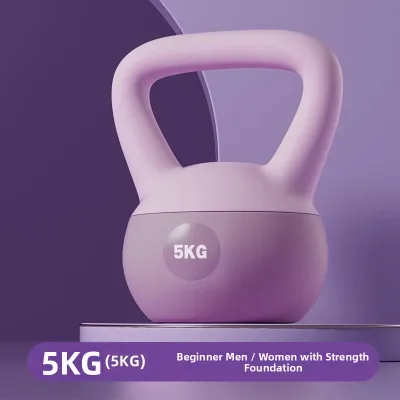
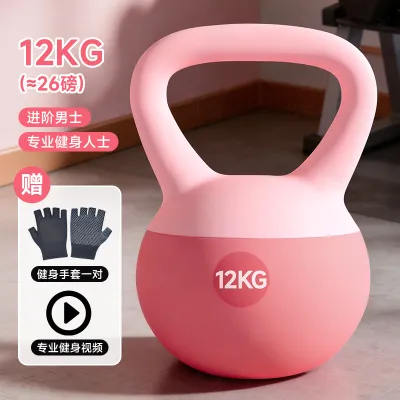
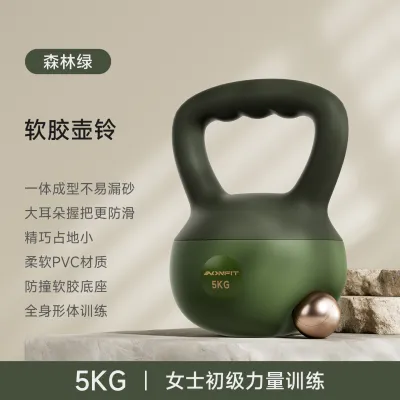
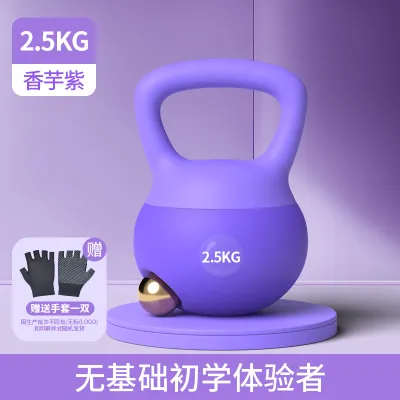
Prices are valid at publication and may change. Please refer to the product page for the latest price.
These physical dimensions directly affect handle thickness and the clearance space between the handle and the bell’s body. A smaller cast iron bell may have a narrower handle window, which can make two-handed grips challenging for some users. Conversely, the standardized handle of a competition bell is designed for single-handed transitions but offers a spacious window.
The base of the kettlebell also changes with the material. Cast iron and competition models typically feature machined flat bottoms that sit securely on the floor, making them stable platforms for floor-based exercises. Vinyl models, depending on the manufacturing quality, may have slightly rounded or uneven plastic bases that require careful placement to prevent tipping.
Vinyl Kettlebells: Evaluating Home Gym and Beginner Suitability
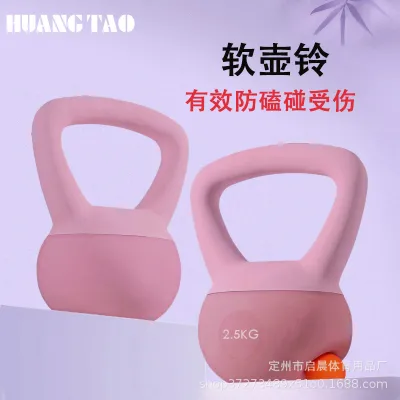
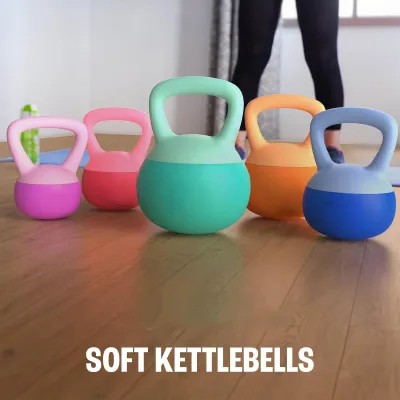
Vinyl kettlebells are highly popular for home workouts, particularly in high-density housing environments like Singapore apartments where floor impact and noise are major concerns. The exterior vinyl or plastic coating acts as a built-in buffer, reducing the risk of scratching tiled, laminate, or vinyl flooring when setting the weight down. This soft outer layer also helps muffle the metallic clatter that can disturb family members or neighbors during early morning or late-night sessions.
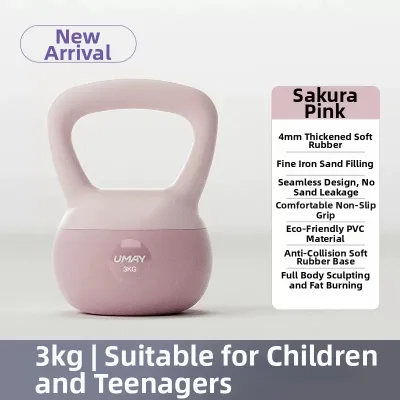
However, buyers must look closely at what lies beneath the vinyl shell. There is a major difference between vinyl-dipped solid iron kettlebells and vinyl-wrapped cement-filled models. Many budget-friendly 5kg vinyl kettlebells are filled with a mixture of cement, sand, or iron filings rather than solid cast iron. Because cement is far less dense than iron, these kettlebells require a much larger physical volume to reach the 5kg target. This increased bulk can make the bell feel awkward during ballistic movements like swings or cleans, as the oversized body may bump against your knees or forearms.
If you choose a vinyl-dipped solid iron kettlebell, you get the best of both worlds: a compact iron core with a protective outer layer. But if you opt for a cement-filled vinyl bell, be prepared for a significantly larger footprint. Durability is another key consideration when evaluating vinyl options. Over time, the outer plastic or vinyl sleeve can crack, peel, or separate from the inner filling, especially if stored in humid environments or subjected to frequent impacts. Additionally, the manufacturing process for vinyl-wrapped cement bells often leaves prominent seams along the handle. These rough plastic edges can cause friction and discomfort on your palms during high-repetition exercises, requiring you to manually sand down the seams or wear training gloves.
Cast Iron Kettlebells: The Traditional Choice for Strength Work
Solid cast iron is the time-tested standard for strength training, offering a compact profile that keeps the center of mass tightly concentrated. A 5kg cast iron kettlebell is remarkably small, allowing it to move cleanly between your legs and close to your body without interfering with your natural biomechanics. This compact size makes it highly manageable for classic exercises like goblet squats, single-arm presses, and halos.

The handle of a quality cast iron kettlebell is cast as a single piece with the body, eliminating weak points and seams. These handles are typically finished with a powder coating or a matte texture that holds gym chalk exceptionally well, providing a secure, non-slip grip even when your hands sweat. For users focusing on building grip strength and executing traditional hardstyle swings, the tactile feedback of cast iron is highly preferred.
However, the finish quality can vary significantly between manufacturers. A high-quality powder-coated finish offers a slightly textured surface that balances grip security with hand comfort. In contrast, cheaper cast iron bells may feature a glossy enamel paint that can become slippery when wet with sweat, or a rough, unfinished surface that can tear calluses.
The primary trade-off with cast iron is the lack of built-in cushioning. An uncoated iron base can easily chip floor tiles, dent hardwood, or scratch delicate surfaces if dropped or dragged. To use a cast iron bell safely at home, you must invest in protective flooring, such as high-density rubber tiles or a dedicated exercise mat. Additionally, while cast iron is incredibly durable, budget models with low-quality paint finishes may chip over time, exposing the raw iron underneath to moisture and potential rust in humid tropical climates.
Competition Kettlebells: Precision for Technique and Sport Standards
Competition kettlebells are engineered to meet strict international lifting standards, meaning every bell weighs and measures exactly the same regardless of its actual mass. A 5kg competition kettlebell will have the exact same outer dimensions, handle diameter, and window size as a 24kg or 32kg competition bell. This uniformity is achieved by using a hollow steel shell and calibrating the internal weight to the precise target.
For fitness enthusiasts, this standardized design offers a massive advantage in technique consistency. When you perform a clean, snatch, or rack hold, the kettlebell rests against your forearm in the exact same spot every time. As you build strength and transition from 5kg to heavier weights, your movement mechanics do not have to adapt to a changing bell size, reducing the learning curve and protecting your joints from awkward impact angles.
The handle of a competition kettlebell is made of unpainted, polished steel, designed to minimize friction and prevent blisters during high-repetition ballistic sets. The handle is also straighter and has a wider clearance than cast iron models, allowing for smooth hand transitions. Because the handle is unpainted, it requires regular maintenance to prevent surface rust, especially in humid environments.
However, because of their precise steel construction and calibration processes, competition kettlebells command a premium price point in S$. For casual home users who only plan to use a 5kg weight for light conditioning or warm-ups, the higher cost of a competition bell may not be a necessary investment. They are highly specialized tools designed for those committed to the sport of kettlebell lifting.
Decision Framework: Matching the 5kg Kettlebell to Your Setup
To choose the right 5kg kettlebell, you must evaluate your training goals, your home environment, and your budget.
Choose a Vinyl Kettlebell if you are a beginner looking for an affordable entry point into resistance training, and your primary concern is protecting your home’s flooring. This option is highly suitable for low-impact conditioning, basic mobility work, and workouts in shared living spaces where minimizing noise is a priority. Be prepared for a slightly bulkier design if you opt for a cement-filled model, and check the handle seams for smoothness before your first workout.
Choose a Cast Iron Kettlebell if you want a durable, compact, and long-lasting tool for traditional strength training. This is the best option if you plan to perform classic swings, presses, and squats, and you already have or plan to install protective rubber matting. Look for a powder-coated finish to ensure a comfortable, chalk-friendly grip that resists chipping.
Choose a Competition Kettlebell if you are serious about mastering kettlebell sport techniques, require absolute consistency in your movement mechanics, or plan to systematically progress to much heavier weights. The steel construction and standardized dimensions make it a premium tool for dedicated athletes, though it requires a larger initial budget.
Before making your purchase, always verify the handle specifications. At the 5kg weight mark, some cast iron handles can be exceptionally thin or narrow, which may cramp larger hands during two-handed swings. Measure your hand width and compare it to the manufacturer’s listed handle window clearance to ensure a comfortable, safe grip. Additionally, inspect the underside of the handle for any sharp casting seams or rough paint patches that could irritate your skin during use.
Frequently Asked Questions (FAQ)
Is a 5kg kettlebell too light for effective strength training?
A 5kg kettlebell is generally not intended for building maximal lower-body strength, but it is highly effective for other training modalities. It serves as an excellent tool for shoulder rehabilitation, rotator cuff strengthening, high-repetition cardiovascular endurance, and learning complex movement patterns like the Turkish get-up. For beginners, starting with a manageable 5kg weight allows you to master proper form and joint stabilization before moving to heavier loads.
Do I need a mat for a cast iron or competition kettlebell?
Yes, using a high-density rubber or foam mat is highly recommended when training with cast iron or steel competition kettlebells. Even a relatively light 5kg iron bell can cause cosmetic damage to tiled, laminate, or hardwood floors over time through repetitive placement or accidental drops. A dedicated mat not only protects your home’s surfaces but also dampens vibration and noise, creating a safer and more comfortable workout environment.

Community discussion
Share your experience or ask a question. Comments are reviewed before publication.