
An 8-strand braided line—often referred to as an 8-carrier braid—is a high-performance fishing line constructed by weaving eight individual micro-polyethylene (PE) fibers together. Compared to traditional four-strand alternatives, this manufacturing process creates a significantly rounder, smoother, and denser profile. For your fishing, this structural difference translates directly into longer casts, quieter performance through rod guides, and improved handling on both spinning and baitcasting reels. Whether you are casting lures into local reservoirs or targeting saltwater species along the coast, understanding how this line behaves under tension helps you make an informed choice for your setup.
The Construction of 8-Strand Braided Line Explained
To understand the physical makeup of an 8-strand braided line, look at how it is manufactured. Braided lines are created by weaving individual strands of synthetic fiber, typically ultra-high-molecular-weight polyethylene, around a central axis. In a standard four-strand line, four relatively thick fibers are woven together, resulting in a cross-section that is somewhat flat or square, with noticeable ridges along the surface.
In contrast, an eight-strand line utilizes eight much thinner individual fibers woven at a tighter pitch. Because there are more strands filling the gaps, the resulting line is much closer to a perfect circle in its cross-section. This roundness is the defining physical characteristic of 8-strand braid, giving it a highly consistent diameter along its entire length.
Products mentioned in this guide
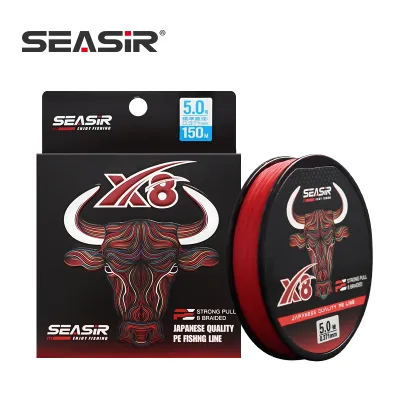
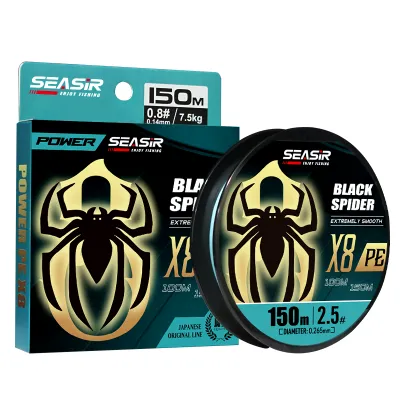
Prices are valid at publication and may change. Please refer to the product page for the latest price.
You can easily verify these structural differences through simple visual and tactile checks before spooling. Run a short section of the line between your thumb and index finger; a quality 8-strand line will feel remarkably smooth, almost like a single-strand monofilament, whereas a 4-strand line will feel slightly ribbed. Under bright light, inspect the weave tightness. A high-quality braid should show a uniform, tight pattern with no loose loops or inconsistent gaps, indicating a stable manufacturing process.
Practical Benefits on the Water
The rounder and smoother profile of an 8-strand braided line delivers immediate advantages on the water. Because the surface is exceptionally smooth, it generates far less friction as it travels through your rod guides. This reduction in friction allows the line to flow effortlessly during a cast, resulting in noticeably longer casting distances. This benefit is particularly valuable when throwing lightweight lures or finesse rigs that require maximum efficiency to reach distant feeding zones.

Another immediate benefit of this reduced friction is quietness. Anglers who spend hours casting and retrieving lures will appreciate how silently an 8-strand line glides through the guides. Traditional 4-strand lines often produce a distinct buzzing sound under tension, which can transmit unwanted vibrations down the rod blank. The silent operation of an 8-strand line ensures a highly focused fishing experience.
However, the structural design of 8-strand braid introduces a specific trade-off regarding abrasion resistance. Because the line is made from eight very thin strands rather than four thicker ones, the individual fibers are more vulnerable to shearing when dragged across sharp, abrasive surfaces. If you frequently fish around sharp rocks, concrete structures, or barnacle-encrusted pylons, a single nick can sever several of the thin strands, reducing the overall breaking strength.
On the other hand, the tight weave of an 8-strand line helps maintain excellent diameter consistency and limits water absorption. High-quality lines often feature specialized outer coatings that repel water, ensuring the line does not become heavy or waterlogged after hours of casting. This keeps your presentations natural and ensures your line behaves predictably in both freshwater reservoirs and coastal saltwater environments.
When to Choose 8-Strand Over Other Braids
Choosing between an 8-strand and a 4-strand braided line depends heavily on your target species, fishing environment, and gear configuration. An 8-strand line is the ideal choice for finesse fishing, light-tackle angling, and scenarios where casting distance and stealth are critical. If you are casting light lures in open water, working soft plastics in calm reservoirs, or jigging in deep water where line drag can affect your lure’s action, the smooth profile of an 8-strand line provides a distinct advantage.
Conversely, there are specific situations where a standard 4-strand braid remains the more practical and cost-effective choice. For heavy-cover applications—such as punching heavy jigs through thick mats of aquatic vegetation or pulling strong fish out of dense timber—the superior abrasion resistance of 4-strand line is highly beneficial. The thicker individual strands can grind against rough surfaces without failing, making them incredibly durable in harsh environments.
When matching your line to your tackle, consider your rod’s guide system and your reel type. Rods equipped with small micro-guides benefit immensely from the round, smooth profile of 8-strand line, as it minimizes guide wear and prevents line slap. On spinning reels, the supple nature of 8-strand line allows it to coil neatly on the spool, significantly reducing the occurrence of wind knots during rapid casting sequences.
Spooling and Maintenance Tips for Braided Lines
To maximize the lifespan and performance of your 8-strand braided line, proper spooling and routine maintenance are essential. Because braided line has virtually no stretch, it must be packed onto the reel spool under significant tension. If you spool the line too loosely, the outer layers can easily dig into the underlying wraps when you hook a strong fish, resulting in severe tangles on your next cast. Always use a damp cloth to grip the line firmly, maintaining steady tension as you wind it onto the reel.
Additionally, because braided line is exceptionally slick, it can slip around the metal spool arbor when subjected to drag pressure. To prevent this spool slip, always apply a few wraps of electrical tape to the bare spool hub before tying your line, or spool a backing layer of monofilament line first. This provides a high-friction surface that the braid can grip securely.
Regularly inspect the first few meters of your line for any signs of fraying, discoloration, or coating wear. Because the individual strands are so fine, even minor fraying can drastically reduce the line’s breaking strength. Simply trim away the worn section after a challenging trip, and consider reversing the line on your spool after a season of use to extend its overall lifespan.
Frequently Asked Questions (FAQ)
Does 8-strand braided line have more stretch than 4-strand?
No, braided lines made from polyethylene fibers inherently have near-zero stretch, regardless of whether they are constructed from four or eight strands. However, because 8-strand line has a tighter, rounder weave, it packs more densely on the spool and cuts through the water with less drag. This can make the line feel slightly more responsive and sensitive when detecting subtle bites at long distances.
Do I need a special knot for 8-strand braided line?
Because 8-strand braid is exceptionally smooth and slick, standard knots used for monofilament can slip under tension. It is highly recommended to use friction-based knots designed specifically for braided lines, such as the Palomar knot, the Double Uni knot, or the FG knot when connecting to a leader. Always wet the knot with water or saliva before pulling it tight slowly to ensure the wraps seat perfectly without generating friction heat that could weaken the line.
Is 8-strand braid more visible to fish than other lines?
The rounder profile and tighter weave of 8-strand braid can reflect light differently than flatter braids, sometimes making it slightly less conspicuous in the water column. However, all braided lines remain relatively visible in clear water. To maintain a stealthy presentation, especially when targeting easily spooked fish in clear reservoirs or shallow coastal waters, always tie a fluorocarbon or monofilament leader of appropriate length to the end of your main line.

Community discussion
Share your experience or ask a question. Comments are reviewed before publication.