
Fitting a home treadmill into a typical Singapore HDB flat bedroom or spare room requires balancing the machine’s physical footprint with the practical realities of high-density living. Most standard HDB bedrooms range from 9 to 12 square metres, meaning a full-sized commercial treadmill will quickly overwhelm the space. To maintain a functional room, you generally need a compact or foldable home treadmill with a setup footprint of no more than 160 centimetres in length and 70 centimetres in width. This size allows you to preserve essential walking paths and safety clearances while still enjoying a viable indoor running experience.
Choosing the right equipment is not just about finding a machine that physically fits between your bed and the wardrobe. You must also account for the vertical space required when the deck inclines, the clearance needed behind the belt to prevent injuries, and the structural constraints of your flat’s layout. By measuring your space systematically and understanding how different treadmill designs operate, you can select a model that supports your fitness routine without compromising your home’s comfort or safety.
Measuring Your HDB Room and Access Points
Before browsing online marketplaces or visiting fitness showrooms, you must establish the exact boundaries of your proposed workout area. Begin by measuring the clear floor length and width of the room using a standard measuring tape. Do not rely on general floor plan dimensions, as these do not account for baseboards, electrical trunking, or wall unevenness. Write down the absolute minimum dimensions of the rectangular space where the machine will sit, ensuring you have a completely flat surface free of obstructions.
Products mentioned in this guide
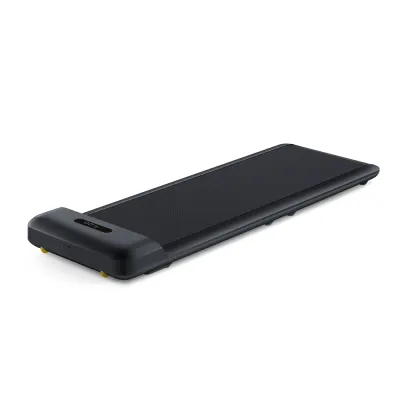

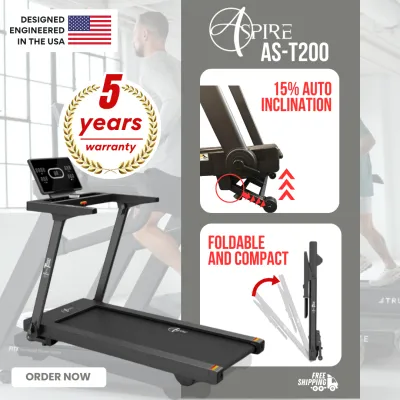
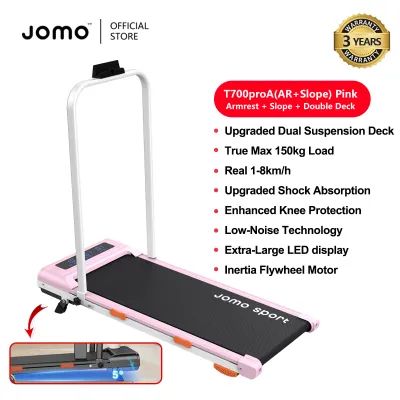
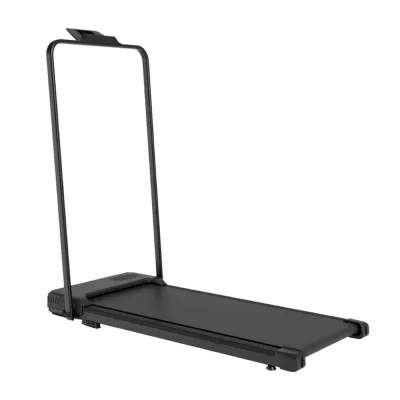
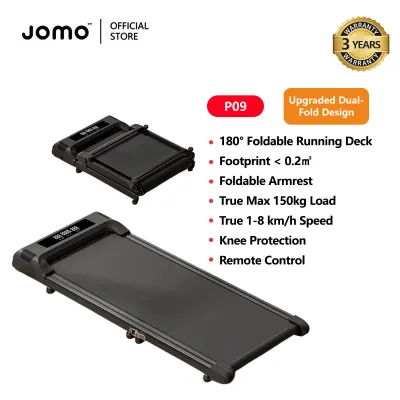
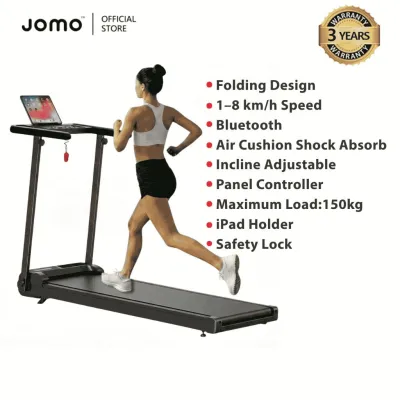
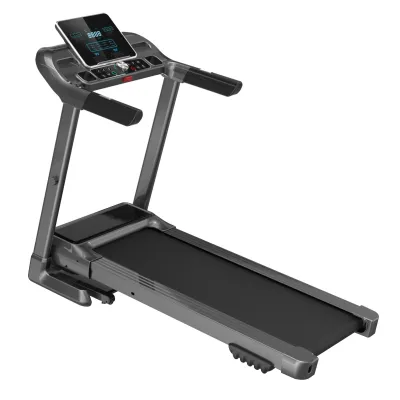
Prices are valid at publication and may change. Please refer to the product page for the latest price.
Vertical clearance is another critical factor that many homeowners overlook until the machine is assembled. Measure your ceiling height, then check the treadmill’s deck height, which is the distance from the floor to the running surface. You must add your own height, plus an extra 15 to 20 centimetres to account for your body’s vertical bounce while running. If you plan to buy a model with an incline feature, check the manufacturer’s specifications to see how much the deck rises at its maximum setting, and verify that your head will not clear the ceiling or interfere with ceiling fans and light fixtures.
Your measurements must also extend beyond the room itself to the delivery route. Measure the width of your main entrance door, bedroom doors, hallway corners, and any tight turns within your flat. If you live on a higher floor, measure the elevator door opening and the interior cabin dimensions to ensure the boxed treadmill can fit inside. For walk-up apartments or situations where the elevator is undergoing maintenance, check the stairwell clearance and ceiling heights to avoid delivery failures or costly return fees.
Finally, take note of fixed fixtures that reduce your usable floor area. Built-in wardrobes with swing doors require specific clearance to open fully, while sliding doors still need unobstructed access. Check the height of window sills to ensure a folding treadmill will not block natural light or ventilation when stored upright. Additionally, locate air-conditioner ledges, wall-mounted units, and existing furniture to ensure the treadmill’s console or handrails will not strike these items during setup or operation.
Calculating the True Treadmill Footprint and Safety Clearance
The physical dimensions listed on a product specification sheet only represent the machine’s static footprint. When in use, a home treadmill requires a significantly larger operational footprint to ensure user safety and proper machine function. The most critical safety zone is the area directly behind the running belt. Manufacturers typically recommend leaving a clear, unobstructed space of at least 1.5 to 2 metres behind the treadmill to prevent you from being trapped against a wall or furniture if you slip or fall off the moving belt.

Side clearances are equally important for safe mounting and dismounting. Aim for at least 50 to 60 centimetres of open space on both sides of the treadmill deck. This lateral clearance allows you to step onto the side rails easily before starting the belt and provides a buffer zone if you lose your balance. In a tight HDB spare room, placing one side of the treadmill directly against a wall might seem like a space-saving solution, but this limits your exit routes and can make routine maintenance, such as belt lubrication and alignment, highly difficult.
Your physical build and running style also dictate the minimum belt size you can safely use. Taller runners with longer strides require a longer running deck, typically at least 130 to 140 centimetres, to prevent their feet from clipping the front motor cover or slipping off the back of the roller. Shorter users or those who plan to use the machine primarily for walking can comfortably use a shorter deck of 110 to 120 centimetres. Ensure the belt width is at least 40 to 45 centimetres to allow for natural side-to-side movement without stepping onto the non-slip side rails.
To determine if a specific model fits your room, create a physical template on your floor. Use masking tape or newspapers to lay out the exact length and width of the treadmill, then mark the required safety clearances around it. Walk around this template to verify that you can still access wardrobes, open windows, and move through the room comfortably. If the template blocks major pathways or prevents doors from opening, you will need to consider a smaller model or a different room layout.
Evaluating Foldable and Compact Treadmill Designs
For multi-purpose HDB spare rooms or small bedrooms, a foldable home treadmill offers a practical compromise between workout utility and floor space. These machines generally fall into two categories: deck-folding models, where the running surface lifts upward toward the console, and flat-folding models, where the console folds down flat against the deck. Deck-folding models occupy less floor space when stored but remain tall, while flat-folding models can often be rolled under a bed or stood upright against a wall.
When evaluating foldable options, pay close attention to the folding mechanism and the physical effort required to operate it. Look for models equipped with hydraulic soft-drop systems, which assist in lifting the heavy deck and slowly lower it to the floor without manual lifting. This feature is crucial for preventing back strain and protecting your flooring from sudden impacts. Additionally, verify the weight of the machine and the configuration of its transport wheels; some models only roll forward and backward, while others have multi-directional wheels that make maneuvering in tight corners much easier.
Ultra-compact treadmills and walking pads have gained popularity for their minimal space requirements, but they come with distinct performance trade-offs. Walking pads often lack handrails or have simple, low-profile bars, making them unsuitable for high-speed running or users with balance concerns. These compact models also feature smaller motors, which may overheat if subjected to prolonged running sessions or heavier user weights. The running belts on ultra-compact units are also narrower and shorter, which can feel restrictive if you have a wide running gait.
Before choosing an ultra-compact model, check the manufacturer’s maximum weight capacity and recommended continuous usage limits. If your primary goal is high-intensity interval training or marathon preparation, a sturdier, fixed-frame treadmill or a heavy-duty folding model with a larger motor is necessary for stability and durability. If your goal is simply to increase your daily step count while working from home, a walking pad that slides under a desk may be the ideal space-saving solution.
Optimizing Placement and Protecting Your HDB Floors
Once you have selected a home treadmill that fits your room’s dimensions, proper installation is key to maintaining a harmonious living environment. HDB flats feature concrete slab floors covered with vinyl, laminate, parquet, or ceramic tiles. The heavy weight of a treadmill, combined with the high-impact force of running, can easily scratch, dent, or crack these floor surfaces. To prevent permanent damage, always place a high-density, non-slip equipment mat beneath the entire footprint of the machine to distribute the weight evenly.
Vibration-dampening mats are also essential for managing structure-borne noise. When you run, the impact of your feet sends shockwaves through the treadmill frame and into the concrete floor, which can easily travel to the flat downstairs. A thick rubber mat or specialized acoustic pads placed under the treadmill’s contact points will absorb a significant portion of this impact energy. To further minimize noise, position the treadmill away from shared partition walls and avoid running during early morning or late night hours when ambient noise levels are low.
Electrical safety and cable management are critical considerations in compact rooms. Position your treadmill as close as possible to a dedicated wall power outlet. Avoid using extension cords or multi-way adapters, as treadmills draw a high amount of electrical current during startup and peak operation, which can overload household circuits. Ensure the power cable is routed along the wall and secured with cable protectors to eliminate tripping hazards in narrow walkways around the machine.
Finally, plan for adequate ventilation to protect both yourself and the treadmill’s internal components. Treadmill motors generate heat during use, and operating the machine in a small, enclosed room with poor airflow can lead to premature motor failure. If you use the treadmill in an air-conditioned room, ensure there is sufficient clearance around the motor cover for air to circulate. Keeping a window slightly open or using a standing fan can help dissipate heat and keep the humidity levels low, preventing sweat from corroding the metal frame and electronic consoles.
Frequently Asked Questions (FAQ)
Can I place a treadmill directly on HDB vinyl or tile flooring?
Placing a heavy home treadmill directly on HDB vinyl, laminate, or tile flooring is not recommended. The concentrated weight of the machine’s leveling feet and wheels, combined with the dynamic impact of your running stride, can cause permanent indentations in vinyl, scratch laminate, or crack ceramic tiles. Furthermore, moisture from sweat can pool underneath the machine, potentially warping wood-based flooring over time. Always use a high-density rubber equipment mat to distribute the weight, absorb vibrations, and provide a protective barrier for your floors.
Will my downstairs neighbors hear the treadmill in an HDB flat?
Yes, without proper mitigation, your downstairs neighbors are highly likely to hear the treadmill. The primary source of disturbance is structure-borne noise, which occurs when the impact of your footstrikes vibrates through the machine’s frame directly into the concrete floor slab of your HDB flat. To minimize this noise transfer, use a thick, high-density vibration-dampening mat under the treadmill. Additionally, keeping the running belt clean, lubricating it according to the manufacturer’s instructions, and running at a steady, moderate pace rather than performing high-impact sprints will significantly reduce the sound transmitted downstairs.

Community discussion
Share your experience or ask a question. Comments are reviewed before publication.