
The thickness of the resistance band you need for pull-up assistance depends on your current body weight and your ability to perform unassisted pull-ups. Generally, individuals who cannot yet perform a single unassisted pull-up or who weigh more will require thick rubber bands (typically ranging from 44mm to 64mm in width) to provide sufficient upward force. As your strength improves or if you already weigh less, you can transition to medium (29mm to 32mm) or thin (13mm to 22mm) bands. Selecting the right band involves matching your physical baseline with the manufacturer’s specified tension range to ensure a safe, progressive workout.
Assess Your Current Pull-Up Ability and Body Weight
To find the right thick rubber bands for your training, you must first establish an accurate baseline of your physical capabilities. Start by testing how many unassisted pull-ups you can perform with strict, controlled form. If you cannot complete a single repetition, measure your dead hang duration on the bar instead. A dead hang of at least ten to fifteen seconds indicates that your grip strength and shoulder stability are ready to begin assisted pull-up training.
Your current body weight is the primary resistance force you must overcome during a pull-up. Heavier individuals require a greater amount of counterbalancing upward force to assist their muscles through the full range of motion. For example, a person weighing 90 kg will need a significantly thicker band to achieve the same relative assistance as someone weighing 60 kg with similar baseline strength.
Products mentioned in this guide
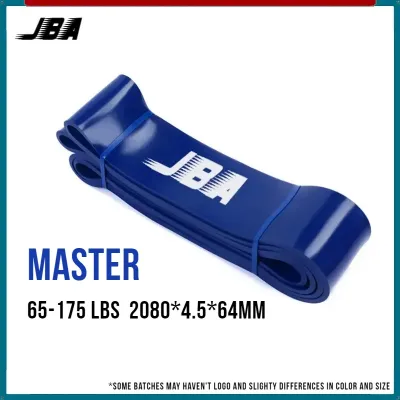
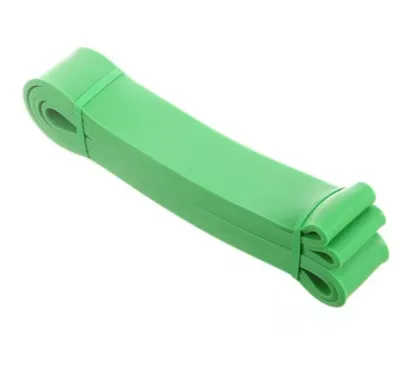
Prices are valid at publication and may change. Please refer to the product page for the latest price.
Clearly defining your primary training goal will also guide your selection. If your main objective is to learn your very first strict pull-up, you will need maximum assistance to build neurological pathways and muscle memory. Conversely, if you can already perform several pull-ups and want to increase your overall training volume or warm up your joints before heavy lifting, a much lighter band is appropriate.
Keep in mind that your strength can fluctuate based on fatigue, recovery, and workout frequency. Assessing your baseline under rested conditions ensures you do not select a band that is either too light to be helpful or too thick to allow your muscles to do meaningful work.
Understanding Rubber Band Thickness and Assistance Levels
In the fitness industry, thick rubber bands are designed to provide varying levels of upward assistance based on their physical dimensions. Generally, as the width and thickness of the rubber increase, the band becomes stiffer and offers higher resistance. When looped under your feet or knees, this resistance translates into a powerful upward push, making your body feel lighter as you pull yourself toward the bar.

However, you should never rely solely on the color of a band to determine its strength. Color coding is not standardized across different manufacturers; a red band from one brand might offer light assistance, while a red band from another might be highly resistant. Always check the manufacturer’s packaging, product label, or official specifications to verify the exact tension range, which is typically measured in kilograms or pounds.
The physical dimensions of the band—specifically its width, flat loop length, and thickness—directly dictate its performance. A wider band distributes the tension differently than a narrower, thicker band, affecting how the resistance curve feels during the exercise. Most high-quality assistance bands are made of layered latex rubber, which provides a smoother stretch and prevents sudden snapping compared to molded rubber.
Understanding the tension curve is crucial because a rubber band does not provide uniform assistance throughout the entire movement. The band is stretched the most at the bottom of the pull-up, where it provides the maximum upward boost. As you pull yourself up and the band contracts, the assistance decreases, requiring your muscles to work harder near the top of the bar.
Environmental factors can also influence how these materials behave. In warm, humid climates, natural latex can degrade more rapidly if exposed to sweat and moisture without proper care. Understanding these material properties helps you select a durable product that maintains its tension profile throughout its usable lifespan.
Matching Band Thickness to Your Fitness Level
Selecting the correct band thickness requires a systematic approach that matches your self-assessment to the physical properties of the band. For beginners who cannot yet perform a single unassisted pull-up, the priority is safety and learning the correct movement pattern. In this stage, look for the thickest available bands, often measuring between 44mm and 64mm in width, which offer the maximum upward assistance to help you complete full-range repetitions.
Intermediate lifters who can perform between one and five unassisted pull-ups should transition to medium-thickness bands. These bands, typically ranging from 29mm to 32mm in width, provide just enough support to help you complete higher-volume sets without taking over the entire workload. This level of assistance allows you to focus on maintaining strict form, keeping your shoulders depressed, and engaging your core throughout the set.
Advanced athletes who can comfortably complete five or more unassisted pull-ups generally use thin bands, usually measuring 13mm to 22mm in width. At this level, the band is not used to make the exercise easy, but rather to facilitate high-repetition endurance sets, perform explosive variations like muscle-ups, or serve as a gentle warm-up tool to activate the shoulders and upper back.
Instead of purchasing a single band, consider investing in a multi-band set containing various thicknesses. Having access to multiple bands allows you to customize your assistance level based on your daily energy levels and specific workout goals. This set also enables a seamless progression strategy, allowing you to combine or swap bands as your strength steadily improves over time. Gradually reducing the band thickness ensures that your muscles continuously adapt to carrying more of your actual body weight, preventing you from becoming overly dependent on a single level of assistance.
Safe Setup, Usage, and Progression Strategies
To ensure your safety during training, you must set up your thick rubber bands correctly on the pull-up bar. Begin by throwing one loop of the band over the center of the bar. Pull the bottom loop through the top loop, creating a secure girth hitch knot, and slide it to the center to prevent the band from sliding or rolling sideways during your exercise.
Once the band is securely anchored, carefully place either your foot or your knee into the bottom loop. Placing your foot in the band provides the maximum stretch and assistance, while placing your knee reduces the stretch and offers slightly less help. Always maintain a tight, active core and keep your legs straight or slightly bent to prevent the band from slipping off your foot and snapping upward.
As you train consistently, you must monitor your progress to know when it is time to downgrade to a thinner band. An excellent indicator is when you can easily complete your target number of repetitions and sets with perfect form and minimal fatigue. When this occurs, swap your current band for the next thinnest option in your set to continue challenging your muscles and forcing adaptation.
Exiting the band safely at the end of a set is just as important as the setup. Avoid letting go of the bar while your foot is still in the band, as the sudden release of tension can cause the band to snap violently. Instead, keep a firm grip on the bar, carefully lower your free foot to the ground, and slowly release the tension from the banded leg.
Regular equipment inspections are vital to prevent sudden failures and potential injuries. Before every workout, inspect the entire surface of the rubber band for visible signs of wear, such as micro-tears, discoloration, dry rot, or a noticeable loss of elasticity. If you detect any small cuts along the edges, stop using the band immediately and replace it, as these imperfections can quickly lead to a complete snap under tension.
Frequently Asked Questions (FAQ)
Can I combine two thinner bands instead of using one thick band?
Yes, you can combine two thinner bands to customize your total upward assistance. Stacking bands allows you to create intermediate resistance levels that might not be available with a single band. However, you must ensure both bands are perfectly centered and secured with a proper knot around the bar to prevent them from rubbing against each other, which can cause premature wear or slipping during your set.
How long does a thick rubber assistance band typically last?
The lifespan of a thick rubber band depends heavily on usage frequency, environmental conditions, and maintenance. Typically, with regular home or gym use, a high-quality latex band can last between six months to a year before showing signs of degradation. To maximize its lifespan, store the band in a cool, dry place away from direct sunlight, extreme heat, and sharp objects, and avoid stretching it beyond its specified limit.
Should I use the band for other exercises besides pull-ups?
Thick rubber bands are highly versatile tools that can be used for a wide variety of exercises beyond pull-ups. They are excellent for providing assistance during dips, adding resistance to push-ups, or performing mobility and stretching routines for the shoulders and hips. Always verify that your anchor point is completely stable and that the band’s resistance is appropriate for the specific movement to ensure a safe workout.

Community discussion
Share your experience or ask a question. Comments are reviewed before publication.