
Starting out in angling can feel overwhelming due to the sheer volume of gear available. A beginner fishing accessories set offers a convenient way to acquire the necessary terminal tackle, tools, and storage solutions in one go. However, not all pre-packaged kits are created equal. A truly practical starter set must balance essential rigging components with durable hand tools, allowing you to adapt to different water conditions and target species without cluttering your tackle box with useless filler.
To get the most value, you need to know exactly which items are indispensable and how to evaluate their quality. A complete set should empower you to rig your line, manage your depth, handle your catch safely, and keep your gear organized. Understanding these core components ensures you do not waste time or money on kits that fail during your first outing.
Core Tackle and Terminal Gear
Terminal tackle refers to the equipment attached to the very end of your fishing line. For beginners, this gear is the foundation of every presentation, directly influencing whether a fish bites and how successfully you can secure it. A well-rounded fishing accessories set must include a versatile selection of hooks, weights, and floats designed for basic rigging techniques.
Products mentioned in this guide
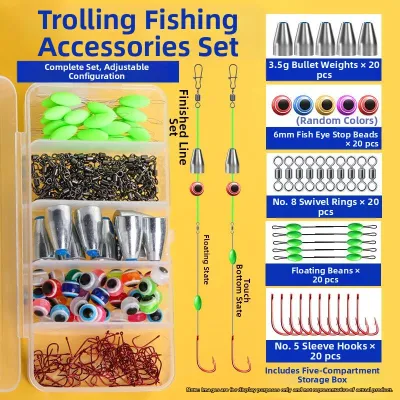
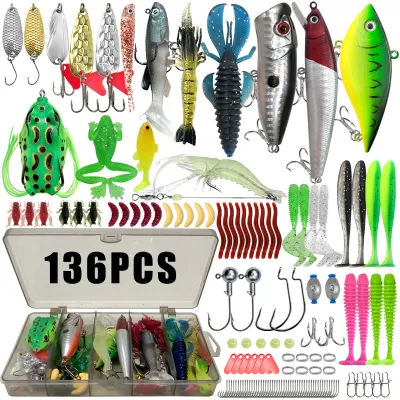

Prices are valid at publication and may change. Please refer to the product page for the latest price.
Hooks are the most critical component of your terminal tackle. A beginner set should feature a range of hook styles, such as classic bait holder hooks, wide-gap octopus hooks, and versatile circle hooks. Bait holder hooks, characterized by small barbs on the shank, are excellent for keeping live or soft bait secure. Circle hooks are highly recommended for beginners because their unique design helps hook fish automatically in the corner of the mouth, reducing the likelihood of deep hooking and facilitating safer catch-and-release. Look for a size range spanning from small sizes (such as size 8 or 10) for panfish or small estuary species, up to larger sizes (such as size 1/0 or 2/0) for targeting larger freshwater or coastal species.
Adjusting the depth and presentation of your bait requires reliable sinkers. Split shot weights are small, round weights with a slit down the middle, allowing you to crimp them directly onto your line using pliers. These are essential for making minor weight adjustments to counter slow currents or to help your bait sink naturally. Egg sinkers, which feature a hole through the center for your line to slide through, are ideal for bottom-fishing setups. They allow a fish to take the bait without feeling the immediate resistance of the weight, increasing your chances of a successful hookset.
Visual bite indicators, commonly known as bobbers or floats, are indispensable for monitoring activity beneath the surface. Classic round plastic clip-on bobbers are easy to attach and work well in still waters like ponds or calm reservoirs. For moving water or deeper presentations, slip floats are a superior choice, as they slide freely along the line until stopped by a pre-tied knot, allowing you to fish at precise depths. Your accessories set should include a few different sizes of floats to match the weight of your bait and the turbulence of the water.
Essential Tools for Rigging and Handling
While terminal tackle gets the fish to bite, hand tools are what keep your operations running smoothly on the water. Attempting to cut line with your teeth or remove hooks with bare hands is inefficient and poses safety risks. A functional fishing accessories set must include dedicated tools designed for rigging, cutting, and safe fish handling.

Line cutters or specialized clippers are the first tools you will reach for when rigging. Standard scissors often fray modern fishing lines, particularly braided lines, which can weaken your knots. Dedicated line clippers or compact snips provide clean, flush cuts close to the knot, reducing drag and preventing loose tag ends from catching weeds. Many sets include clippers on a retractable lanyard, keeping them easily accessible while keeping your hands free to manage your rod.
Long-nose pliers serve multiple roles in rigging and maintenance. You will need them to crimp split shot weights securely onto your line, open split rings when changing hooks on lures, and straighten slightly bent wire hooks. Look for pliers made from corrosion-resistant materials, featuring ergonomic, non-slip grips that remain secure even when wet. Some pliers also feature integrated line cutters, combining two essential tools into one compact device.
Safe fish handling is paramount for both the angler’s safety and the survival of the fish. Hook removers or long forceps are critical for extracting hooks from a fish’s mouth, especially when the hook is set deep or when dealing with species that have sharp teeth or spiny fins. Using forceps allows you to maintain a firm grip on the hook shank and apply precise pressure to back the hook out cleanly, minimizing tissue damage to the fish and keeping your fingers away from sharp teeth and hook points.
Storage and Organization Solutions
An unorganized tackle box leads to tangled lines, lost components, and wasted fishing time. Proper storage solutions protect your investment from moisture, rust, and physical damage. A high-quality fishing accessories set should not just provide the gear, but also offer a structured system to keep everything organized and accessible.
The main tackle box serves as the central hub for your gear. Look for boxes featuring adjustable dividers, which allow you to customize the compartment sizes to fit larger items like lures, spare line spools, and tools. Transparent lids are highly beneficial, enabling you to locate specific items quickly without opening multiple compartments and exposing the contents to wind or spray.
For smaller terminal tackle, individual utility boxes or pocket-sized wallets are essential. Loose hooks, sinkers, and swivels can easily migrate and mix together if stored in large, open compartments. Small utility boxes with secure, independent latches keep these tiny components separated by size and style. Some sets utilize specialized tackle wallets with clear plastic sleeves, which are excellent for organizing pre-tied rigs and leader lines without causing kinks.
Managing loose fishing line is another common challenge for beginners. Spool bands or elastic line keepers are simple yet highly effective accessories that wrap around your spare line spools. They prevent the line from unravelling inside your bag, saving you from the frustration of clearing bird’s nests before you even reach the water.
How to Evaluate a Pre-Packaged Fishing Accessories Set
Many pre-packaged kits available on online marketplaces look impressive because they contain hundreds of pieces. However, many of these pieces are often low-quality filler items designed to inflate the piece count rather than provide actual utility. Evaluating a set requires looking past the quantity and focusing on material quality, durability, and practical relevance to your local fishing environment.
To identify filler items, look closely at the variety of components included. Kits that feature dozens of identical, tiny plastic beads, low-grade plastic lures that mimic bait poorly, or oversized hooks that do not match local target species are often padded. A high-quality set prioritizes variety in functional sizes and styles over sheer volume. If a kit contains hundreds of pieces but the vast majority are simple plastic beads, you are likely paying for packaging rather than useful gear.
Material specifications are a critical indicator of longevity. Check the product labels and specifications to verify if the metal components are rated for freshwater or saltwater use. Saltwater environments are highly corrosive; standard steel hooks and brass swivels will rust rapidly after a single exposure. For saltwater fishing, prioritize sets that feature stainless steel, high-carbon steel with specialized anti-corrosion coatings, or nickel-plated components. Even if you plan to fish primarily in freshwater, opting for corrosion-resistant materials ensures your gear remains sharp and reliable over multiple seasons.
Consider your local fishing conditions before purchasing a pre-packaged set. If you plan to fish in fast-flowing rivers, a kit dominated by light bobbers and tiny split shots will not perform well; you would be better off purchasing a basic set and supplementing it with heavier egg sinkers or specialized drift floats. Conversely, if you are targeting small pond fish, heavy saltwater rigs and large circle hooks will be useless. Match the kit’s contents to your intended venue and target species rather than assuming one set fits all scenarios.
Finally, evaluate the physical durability of the storage containers included in the set. The hinges, latches, and seals on tackle boxes are common failure points. Look for boxes with thick, molded hinges rather than thin plastic living hinges that degrade and snap over time. Secure, heavy-duty latches prevent the box from accidentally opening inside your backpack, which can scatter hundreds of tiny hooks and weights. If you plan to fish from a kayak or in rainy conditions, look for storage boxes that feature a silicone O-ring seal to keep water out entirely.
Frequently Asked Questions (FAQ)
Do I need different accessories for freshwater and saltwater fishing?
Yes, the primary difference lies in the corrosive nature of saltwater. Saltwater accelerates rust and structural degradation, meaning terminal tackle and tools must be constructed from highly corrosion-resistant materials like stainless steel or coated high-carbon steel. Always check the manufacturer’s specifications on the fishing accessories set to confirm saltwater compatibility. Regardless of the material, it is essential to establish a post-trip routine: rinse all used hooks, pliers, and lures in clean freshwater and allow them to dry completely before returning them to your tackle box. If you notice any terminal tackle beginning to rust, retire it immediately, as weakened metal can snap under the tension of a fish, leading to lost gear and broken lines.
How often should I replace the hooks and sinkers in my starter set?
Hooks should be inspected before every fishing trip and replaced whenever they lose their sharpness or show signs of structural damage. You can test hook sharpness by gently drawing the point across your fingernail; if it slides without catching, it is dull and needs to be sharpened or replaced. Bending, rust, or visible cracks in the metal are immediate indicators that a hook must be discarded. Sinkers generally last much longer because they do not rely on sharpness, but lead split shots can deform after multiple uses and lose their grip on the line. Always dispose of damaged hooks and weights safely in designated recycling bins or secure containers to prevent injury to wildlife and other anglers.

Community discussion
Share your experience or ask a question. Comments are reviewed before publication.