
Selecting the right 1kg dumbbells or weight plates requires balancing your specific fitness goals with material durability, grip security, and storage constraints. While a 1kg weight might seem light, it serves as a foundational tool for physical therapy, high-repetition cardiovascular training, shadowboxing, and progressive resistance warm-ups. In Singapore’s warm and humid climate, choosing the wrong material can lead to rapid rust, peeling coatings, or unpleasant chemical odors in your living space. Evaluating these factors beforehand ensures your equipment remains safe, functional, and comfortable over years of consistent use.
Dumbbells vs. Weight Plates: Which 1kg Format Fits Your Routine?
Deciding between a fixed 1kg dumbbell and a 1kg weight plate depends heavily on your training style and the equipment you already own. Fixed dumbbells are self-contained, single-piece units that are ready to use immediately. They are highly efficient for fast-paced workouts, such as high-intensity interval training (HIIT), barre, Pilates, or aerobic classes, where you need to transition between exercises without pause. Because they do not require assembly or collar adjustments, they offer a seamless user experience and eliminate the risk of loose parts shifting during dynamic, high-velocity movements.
In contrast, 1kg weight plates are designed to be loaded onto a compatible barbell, EZ-curl bar, or adjustable dumbbell handle. These plates are highly versatile if you practice progressive overload, as they allow you to add resistance in small, manageable increments. For upper-body exercises like lateral raises, rear delt flies, or overhead presses, a 2kg jump can sometimes be too aggressive, making a pair of 1kg plates the perfect micro-loading solution. However, using plates requires you to own compatible bars and secure collars, which adds to the initial setup time and overall equipment footprint.
Products mentioned in this guide
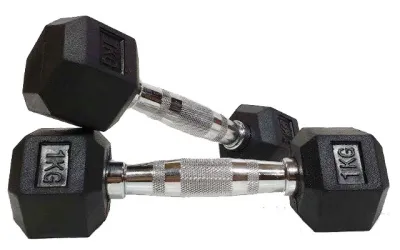
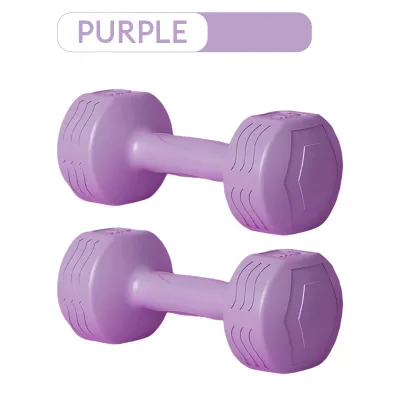
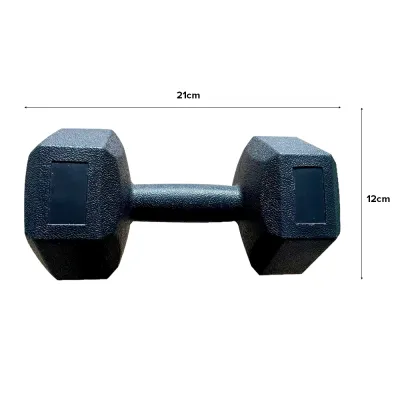
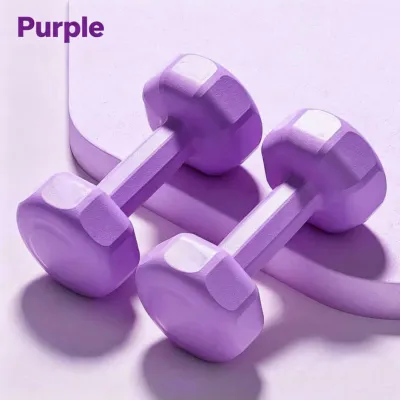
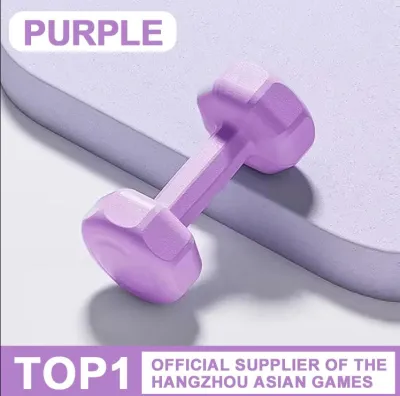
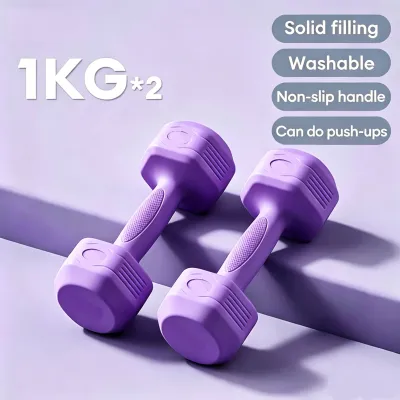
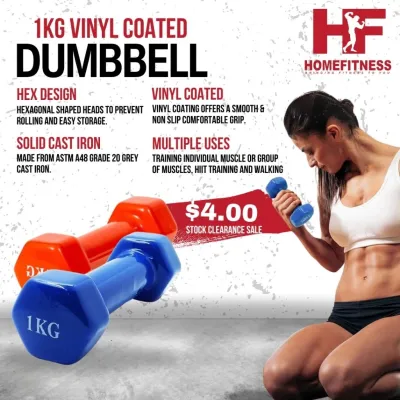
Prices are valid at publication and may change. Please refer to the product page for the latest price.
For those living in compact Singapore apartments, such as HDB flats, space efficiency is a primary concern. Fixed dumbbells must be stored as individual units, which can accumulate bulk if you collect multiple pairs. Weight plates, being flat and uniform, can be stacked vertically in a small drawer, under a bed, or on a compact plate tree, making them highly space-efficient. Your choice should align with whether you prefer the grab-and-go simplicity of dumbbells or the modular flexibility of a plate-based system.
| Workout Type | Recommended Format | Space Requirement | Equipment Synergy |
|---|---|---|---|
| HIIT & Aerobic Cardio | Fixed Dumbbell | Low | None (Standalone) |
| Physical Therapy & Rehab | Fixed Dumbbell | Low | None (Standalone) |
| Progressive Strength Training | Weight Plate | Medium | Requires adjustable dumbbell handles |
| Barbell Micro-loading | Weight Plate | High | Requires standard or Olympic barbell |
Key Quality Factors to Evaluate Before Purchasing
To ensure your 1kg weights provide long-term value, you must look beyond the surface and evaluate the physical and material attributes that dictate their performance. The right combination of core materials, outer coatings, and handle designs directly influences how comfortable the weights are to hold, how well they withstand daily wear, and how safely they interact with your home environment.

Material and Coating Durability
The core of a 1kg weight is typically constructed from either cast iron or solid steel. Steel cores are denser and allow for a slightly more compact physical profile, whereas cast iron is the traditional standard for strength equipment. If left bare, both materials are highly susceptible to oxidation when exposed to sweat and atmospheric moisture. In Singapore, where relative humidity levels regularly exceed 80%, an unprotected metal core will begin to rust quickly, leading to structural degradation and unsightly orange staining on your hands and clothes.
To combat moisture, manufacturers apply various protective coatings, each offering distinct advantages and trade-offs:
- Neoprene: This synthetic rubber coating provides a soft, matte, and slightly textured finish. It offers an excellent, non-slip grip that feels comfortable in bare hands, even when wet with perspiration. However, neoprene is slightly porous, meaning it can absorb sweat and skin oils over time. If not wiped down and dried thoroughly after every session, it can harbor bacteria or develop a musty odor.
- Rubber: Standard rubber coatings are highly durable and offer excellent impact resistance. They are highly effective at protecting your floors from scratches and dents. However, low-grade recycled rubber can emit a strong, pungent chemical off-gassing odor. In enclosed, air-conditioned rooms, this smell can quickly become overwhelming, so it is vital to check user feedback regarding odor levels before buying.
- Polyurethane (PU): Often considered the premium choice, polyurethane is virtually odorless, highly resistant to tears, and does not degrade under UV exposure. It provides a sleek, non-marking surface that is incredibly easy to clean. While PU-coated weights carry a higher price tag in S$, their longevity and lack of odor make them an excellent investment for indoor home gyms.
- Bare Metal or Chrome: Some weights feature a polished chrome or painted finish. While aesthetically classic, these finishes can chip over time. Once the outer layer is compromised, humidity will inevitably find its way to the underlying iron or steel, initiating the rusting process.
Floor protection is another critical consideration for home workouts. Many Singaporean homes feature ceramic tiles, vinyl planks, or polished parquet flooring. Dropping a bare metal weight, even a light 1kg one, can easily crack a tile or leave deep dents in wooden floors. Opting for a thick, high-quality rubber, neoprene, or PU coating acts as a vital shock absorber, dampening the impact and reducing the noise transmitted to neighbors living directly below you.
Grip Ergonomics and Handle Design
The design of the handle determines how securely you can hold the weight during high-repetition movements. For 1kg dumbbells, handle diameters generally range between 25mm and 28mm. A handle that is too thick can cause premature forearm fatigue, especially for users with smaller hands, while a handle that is too thin can lead to over-gripping and hand cramping. Testing the feel of the handle or checking the manufacturer’s specified diameter ensures a comfortable fit.
You will also need to choose between contoured and straight handles. Contoured handles are thicker in the center and taper toward the ends, matching the natural arch of your closed palm to distribute weight evenly. Straight handles maintain a uniform thickness across the entire grip area, which some lifters prefer because it allows for consistent hand placement during dynamic movements like dumbbell swings or cleans.
Surface texture plays a pivotal role in preventing slips. For metal handles, knurling—the cross-hatched pattern cut into the steel—provides mechanical friction against your skin. For a 1kg weight, a light to medium knurling pattern is ideal, offering sufficient grip without being overly abrasive. For coated dumbbells, look for textured patterns molded directly into the neoprene or rubber surface. Avoid weights with completely smooth, glossy plastic finishes, as they become incredibly slippery once your hands begin to sweat.
Finally, inspect the weights for manufacturing defects along the grip area. Low-quality molded weights often have prominent seam lines, plastic mold flashes, or sharp metal ridges left over from the casting process. These imperfections rub against your skin during repetitive exercises, quickly causing painful blisters or calluses. A high-quality weight should have smooth, seamless transitions along the entire handle.
Sizing, Shape, and Storage Considerations
The physical shape of your 1kg weights affects both their safety during workouts and how easily they can be stored when not in use. Round dumbbells are classic, but they roll easily on uneven surfaces. If you set a round dumbbell down on a slightly sloped floor or accidentally nudge it with your foot, it can roll away, creating a tripping hazard or damaging nearby glass doors and furniture.
Hexagonal dumbbells feature flat, multi-sided edges that prevent rolling entirely. This design makes them exceptionally stable, allowing you to safely perform floor-based exercises like plank rows, push-ups, or mountain climbers while holding onto the handles. The flat edges also make them much easier to store, as they can be lined up neatly on a shelf, inside a drawer, or stacked on top of one another without shifting.
For 1kg weight plates, thickness and diameter are the key spatial metrics. Thinner plates allow you to fit more weight onto a single dumbbell handle or barbell sleeve, which is beneficial if you plan to progress to heavier loads later. If you are storing your plates in a drawer or a compact storage bin, look for plates with a flat, uniform profile that stack tightly together to minimize wasted vertical space.
Color-coding is a highly practical feature if you plan to expand your home gym setup in the future. Many manufacturers use distinct colors to represent different weight increments (for example, pink or yellow for 1kg, purple for 2kg, and blue for 3kg). This visual system allows you to quickly identify and grab the correct weight mid-workout without having to search for small, embossed numbers on the side of the weight, keeping your training momentum high.
Where to Buy and How to Verify Authenticity in Singapore
When purchasing fitness equipment in Singapore, choosing the right retail channel is essential for securing a durable, accurately calibrated product. Specialized local sports retailers and official brand stores are generally the safest options. They allow you to physically inspect the weights, test the grip comfort, check for chemical odors, and verify the overall build quality before making a purchase. They also provide reliable customer service and clear warranty terms.
While general online marketplaces and ecommerce platforms offer unmatched convenience and competitive pricing, they require a higher level of consumer vigilance. Be cautious of listings featuring exceptionally low prices in S$. Extremely cheap weights often utilize low-grade sand, concrete, or iron-filing mixtures encased in thin plastic shells. These filled weights are significantly bulkier than solid metal equivalents, making them awkward to handle, and the outer plastic shells are prone to cracking and leaking filler material over time.
Another common issue with substandard weights is poor calibration. A poorly manufactured “1kg” weight can actually weigh anywhere from 800g to 1.2kg. While a couple of hundred grams might seem negligible, a significant weight discrepancy between your left and right sides can create muscle imbalances and place uneven strain on your joints during bilateral movements. To protect yourself, look for online listings with verified customer reviews that mention scale-testing the weights, or prioritize sellers that explicitly guarantee a tight calibration tolerance (such as within 1% to 3% of the nominal weight).
Additionally, always review the seller’s return and exchange policies. A reputable seller should offer a straightforward return window if your weights arrive damaged, heavily rusted, or with severe manufacturing defects. Confirming these details before checking out protects your investment and ensures a hassle-free purchasing experience.
Building Your 1kg Weight Setup: A Conditional Checklist
To streamline your buying process, use this step-by-step checklist to identify the exact specifications you need based on your personal training environment and goals:
- Step 1: Define Your Primary Workout Style
- For cardio, HIIT, barre, or physical therapy: Choose fixed 1kg dumbbells for quick transitions and maximum safety during fast movements.
- For progressive strength training or barbell work: Choose 1kg weight plates to allow for micro-loading and modular weight adjustments.
- Step 2: Verify Equipment Compatibility
- If buying plates, measure your existing barbell or dumbbell sleeve diameter. Ensure you choose standard plates (typically 25mm to 28mm center hole) or Olympic plates (50mm center hole) to match your bars.
- Confirm you have secure collars (spring collars, lock-jaw collars, or spin-lock collars) to hold the plates firmly in place.
- Step 3: Assess Your Training Environment
- If training on tiled, vinyl, or wooden floors: Prioritize thick rubber, neoprene, or polyurethane (PU) coatings to prevent floor damage and dampen noise.
- If training in a small, enclosed room: Avoid cheap recycled rubber to prevent strong chemical odors; opt for neoprene or odorless PU instead.
- If performing floor exercises (e.g., plank rows): Choose hexagonal dumbbells to prevent rolling and provide a stable base.
- Step 4: Confirm Seller Credibility and Quality
- Check customer reviews for feedback on weight accuracy, coating durability, and packaging quality.
- Verify that the seller offers a clear return policy in Singapore in case the product arrives with defects or rust.
Frequently Asked Questions (FAQ)
Can I use 1kg weights for muscle building?
While 1kg weights are highly effective for muscular endurance, cardiovascular conditioning, and rehabilitation, they are generally too light to stimulate significant muscle hypertrophy (muscle building) for most individuals. To build muscle, you must subject your muscle fibers to progressive overload, which requires lifting weights that challenge you near muscular failure within a moderate repetition range. Once you can easily perform more than 20 to 25 repetitions of an exercise with 1kg weights without experiencing significant fatigue, you should transition to heavier loads to continue stimulating muscle growth.
How do I clean and maintain coated 1kg dumbbells?
To extend the lifespan of your coated dumbbells, wipe them down with a damp cloth and a mild, diluted soap solution after every workout to remove sweat, body oils, and dirt. Avoid using harsh chemical solvents, bleach, or alcohol-based sanitizers, as these substances can degrade neoprene, rubber, or polyurethane coatings, causing them to become sticky, crack, or peel. After cleaning, dry the weights thoroughly with a clean towel. Pay close attention to any exposed metal parts, such as chrome handles or inner plate rings, to prevent moisture from trapping and initiating rust.
Do 1kg weight plates fit all standard barbells?
No, 1kg weight plates do not fit all barbells universally. Weight plates are manufactured with specific center hole diameters to match different barbell sleeve standards. Standard plates typically feature a 1-inch (approximately 25mm to 28mm) center hole, designed for standard home gym barbells and adjustable dumbbell handles. Olympic plates feature a larger 2-inch (approximately 50mm) center hole, designed to fit commercial-grade Olympic barbells. Always check the exact sleeve diameter of your bar and match it to the plate’s inner hole specifications before purchasing to avoid mismatched equipment.

Community discussion
Share your experience or ask a question. Comments are reviewed before publication.