
Selecting an 8 kg dumbbell in Singapore requires balancing your personal fitness goals with the unique constraints of tropical urban living. An 8 kg weight occupies a crucial sweet spot in strength training: it is heavy enough to provide meaningful resistance for intermediate isolation movements like bicep curls, overhead tricep extensions, and lateral raises, yet manageable enough for high-rep endurance protocols, core integration, and physical rehabilitation. However, a dumbbell is not merely a lump of metal; variations in material composition, grip ergonomics, weight tolerance, and physical shape directly impact your training safety, floor longevity, and the lifespan of the equipment itself. In Singapore’s dense housing landscape, where shared walls and delicate flooring are the norm, making an informed choice is essential to prevent costly floor damage and avoid the rapid rust accumulation caused by high ambient humidity.
Quick Guide: Essential Features to Check Before You Buy
Before committing to a purchase, buyers should evaluate four primary pillars: material coating, grip design, weight accuracy, and physical shape. Each of these factors influences how the dumbbell performs during workouts and how well it integrates into your home environment.
- Material and Coating: For typical Singapore residential settings like HDB flats or condominiums, floor protection and noise reduction are paramount. Coated options like neoprene, rubber, or urethane shield surfaces from impact and dampen noise, whereas bare metal or chrome requires dedicated protective matting.
- Grip Ergonomics: The handle's diameter, shape, and knurling (the textured pattern) determine your control and safety. A secure grip prevents slippage when hands become sweaty in warm tropical weather.
- Weight Accuracy: Low-quality dumbbells often suffer from significant weight discrepancies, sometimes off by more than 10%. Ensuring a tight weight tolerance is critical for balanced muscular development and safe progression.
- Physical Shape: Hexagonal dumbbells remain stationary when placed on the floor, making them ideal for floor-based exercises like renegade rows, while round dumbbells are better suited for traditional storage racks and specific lifting angles.
- Environmental Factors: Singapore's average relative humidity often exceeds 80%, making non-resistant materials highly susceptible to rust. Choosing corrosion-resistant finishes or implementing a strict post-workout maintenance routine is vital to preserve your investment.
Material and Coating: Balancing Durability with Floor Protection
The outer layer of your 8 kg dumbbell dictates its long-term durability, tactile feedback, and compatibility with your flooring. Understanding the trade-offs between metallic finishes and synthetic coatings helps prevent premature wear and household damage.
Products mentioned in this guide
![[BULKY]Hex Dumbbell Rubber Coated Chrome Dumbbell / Home Gym / Indoor Gym/Fitness/Weights (Not Sold in pair)](https://img.lazcdn.com/g/p/9cecb653fdef1b69b19d212d76b0c30a.jpg_400x400q80.jpg_.webp)
Prices are valid at publication and may change. Please refer to the product page for the latest price.

Bare Cast Iron and Chrome
Traditional bare cast iron and chrome-plated dumbbells are favored by purists for their classic aesthetic and near-indestructible nature. Under normal conditions, solid cast iron can last a lifetime without structural degradation. However, Singapore’s high-humidity climate poses a constant threat of oxidation. Without a protective barrier, bare cast iron will inevitably develop surface rust when exposed to ambient moisture and salty sweat. Chrome plating offers superior corrosion resistance compared to unfinished iron, but cheap plating can chip or flake over time, exposing the raw metal underneath and creating sharp edges that risk cutting your hands.
Furthermore, metallic dumbbells present significant acoustic and structural challenges in high-density apartments. Dropping a bare metal dumbbell, even from a height of a few centimeters, can easily crack ceramic tiles, dent vinyl planks, or shatter engineered timber floors. The metallic clatter of iron hitting iron or hard flooring can also cause noise disturbances for neighbors. If you opt for bare cast iron or chrome, you must invest in high-density rubber gym mats (at least 15mm to 20mm thick) to absorb the impact and isolate the sound.
Rubber, Neoprene, and Urethane Coatings
Coated dumbbells are highly practical for home use because they act as built-in shock absorbers. Rubber, neoprene, and polyurethane (urethane) coatings protect both the dumbbell’s inner core and your flooring from impact damage, while significantly reducing the noise of accidental drops or floor contact.
- Rubber: Extremely durable and cost-effective, rubber-coated dumbbells (often featuring hexagonal heads) are highly popular. However, cheap recycled rubber can emit a strong, pungent chemical odor that lingers in enclosed, air-conditioned rooms. For indoor use, look for "virgin rubber" or low-odor formulations to avoid respiratory discomfort.
- Neoprene: This synthetic rubber coating offers a soft, textured, matte finish that is exceptionally comfortable to hold. Neoprene provides an inherently slip-resistant surface, making it excellent for high-rep cardiovascular workouts where hands get sweaty. The downside is that neoprene can tear if scraped against sharp metal racks, and it tends to absorb sweat and skin oils, requiring regular sanitization to prevent odors.
- Urethane: Premium polyurethane is the gold standard for commercial and high-end home gyms. Urethane is highly resistant to tearing, UV damage, and chemical degradation. It does not emit the strong odors associated with cheap rubber and maintains its clean appearance for years. While urethane-coated dumbbells carry a higher price tag in Singapore, their longevity and superior resistance to tropical humidity make them a highly reliable long-term investment.
Grip Design and Handle Ergonomics for Safe Lifting
The handle is your sole point of contact with the weight, making grip design a critical safety and performance factor. A poorly designed handle increases forearm fatigue, compromises form, and raises the risk of dropping the dumbbell during dynamic movements.
- Handle Diameter and Hand Size: The thickness of a dumbbell handle typically ranges from 25mm to 35mm. For an 8 kg dumbbell, a handle diameter of 28mm to 30mm is standard and fits most hand sizes comfortably. If the handle is too thick, your forearm muscles must work excessively hard just to hold the weight, leading to premature grip failure before your target muscles (like the shoulders or back) are fully fatigued. Conversely, a handle that is too thin can dig into your palms, causing localized pressure points and discomfort.
- Knurling Patterns and Friction: Knurling refers to the cross-hatched metal pattern cut into the handle to increase friction between your skin and the steel. Knurling is categorized by its depth and shape. Aggressive or deep knurling features sharp, pyramid-like peaks that bite deeply into the skin. While excellent for heavy lifting where slippage is dangerous, aggressive knurling can be overly abrasive during high-rep, dynamic movements with an 8 kg weight, potentially causing blisters or tears. Medium or light knurling offers a textured, cross-hatched surface without sharp peaks, making it ideal for an 8 kg dumbbell by providing sufficient grip security when hands are sweaty without causing skin abrasion during high-rep shoulder presses or lateral raises. Smooth or painted handles should be avoided entirely, as sweat acts as a lubricant, making smooth handles highly slippery and dangerous during overhead movements.
- Contoured vs. Straight Handles: Contoured (tapered) handles are thicker in the middle and taper toward the ends. This design matches the natural curvature of a closed fist, distributing pressure evenly across your palm and reducing wrist strain. Straight cylindrical handles maintain a uniform diameter across the entire length. Straight handles are preferred by some lifters who perform movements requiring them to shift their hand position, but they can concentrate pressure on the center of the palm during heavy pushing exercises.
- Grip Security and Safety Checks: Grip security is a critical safety verification item. Before performing any overhead movements, verify that your hands are free of excess sweat and that the handle's knurling provides sufficient friction. Equipment cannot replace proper lifting technique; if your grip begins to slip or your wrist alignment collapses, stop the exercise immediately to avoid injury.
Weight Accuracy and Build Quality: Avoiding Poor Construction
Not all 8 kg dumbbells actually weigh 8 kg. Manufacturing tolerances vary widely, and poor structural design can lead to premature failure or injury.
- Weight Tolerance Margins: Commercial-grade dumbbells typically guarantee a weight tolerance of +/- 1% to 2% of the stated weight, meaning an 8 kg dumbbell will weigh between 7.84 kg and 8.16 kg. In contrast, budget home-use dumbbells can have tolerances as loose as +/- 10%, resulting in a weight that could be under 7.2 kg or over 8.8 kg. If you purchase a pair of dumbbells with mismatched weights, you risk developing muscular imbalances and placing uneven stress on your joints. When shopping, check if the manufacturer specifies their weight tolerance standard.
- One-Piece Cast vs. Welded or Filled Designs: The safest and most durable dumbbells are made by casting the handle and heads as a single solid piece of iron, or by securely press-fitting and welding a solid steel handle into solid iron heads. These designs will not loosen, rattle, or separate, even after years of use. Budget dumbbells often feature heads that are threaded or lightly welded onto the handle. Over time, the repeated impact of putting the weights down can loosen these connections, causing the heads to spin or wobble. This wobble alters the center of gravity during lifts and poses a severe safety hazard if a head detaches mid-exercise. Filled vinyl or plastic dumbbells, often filled with sand, concrete, or iron filings, are highly economical but bulky. The internal filling can shift over time, throwing off the balance of the dumbbell. Furthermore, the plastic outer shell is prone to cracking, which can leak sand or concrete dust onto your floor.
- Balance and Center of Mass: A well-made dumbbell has its center of mass located precisely in the geometric center of the handle. If the weight is unevenly distributed between the two heads, the dumbbell will attempt to rotate in your hand during lifts. This rotational torque forces your wrist stabilizers to work excessively, increasing the risk of tendonitis or acute wrist strain. Before lifting, perform a quick structural check: inspect the joint where the handle meets the dumbbell head. If you detect any movement, rattling, or structural hairline cracks, do not use the dumbbell, especially for overhead exercises.
Shape and Style: Choosing the Right Form Factor for Your Space
The physical shape of the dumbbell heads and the overall system configuration affect how you store your equipment and the types of exercises you can perform.
Hexagonal vs. Round Heads
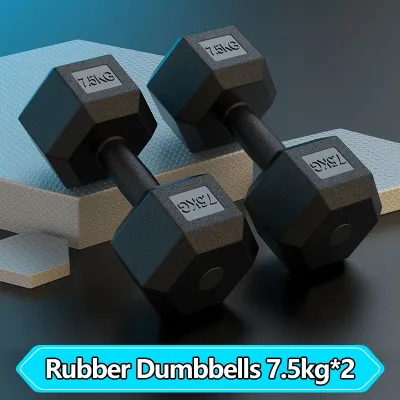
Hex dumbbells feature flat, six-sided faces. The primary benefit of this design is stability; they will not roll away when placed on the floor. This is a critical safety feature if your home floor is slightly uneven, and it enables you to perform floor-based movements like renegade rows, push-ups on dumbbells, and dumbbell planks safely. Additionally, hex dumbbells are easier to stack neatly in a closet or corner without requiring a dedicated rack.
Round dumbbells are the classic choice found in commercial facilities. Because they have no flat edges, they are more comfortable when resting against your thighs before initiating a lift (such as a seated shoulder press). However, they will roll freely on flat surfaces, which can create a tripping hazard or damage baseboards if left unsecured on the floor. Round dumbbells almost always require a dedicated rack with cradles to keep them organized and safe.
Fixed vs. Adjustable Dumbbells
A fixed dumbbell is a single, solid unit permanently set to 8 kg. The primary advantages are mechanical simplicity, extreme durability, and instant readiness. You do not need to spend time adjusting pins, dials, or collars between sets. Fixed dumbbells are highly drop-resistant and have no moving parts that can break. If 8 kg is a weight you use constantly for multiple exercises, buying a dedicated fixed pair is highly practical.
Adjustable dumbbell systems allow you to change the weight of a single handle using selector dials, pins, or plates. While the upfront cost of a premium adjustable dumbbell set is significantly higher than a single pair of fixed 8 kg weights, they save an immense amount of space by replacing a full rack of dumbbells (e.g., ranging from 2 kg to 24 kg). However, adjustable systems are highly complex and contain delicate internal gears or locking mechanisms. They must never be dropped, as an impact can damage the selector mechanism, rendering the unit unusable or causing plates to fall off during a lift.
Brand Reliability and Warranties: Protecting Your Investment
When investing in strength equipment, evaluating the manufacturer’s reputation and local support in Singapore ensures you receive a safe, high-quality product and reliable after-sales assistance.
- Warranty Scope and Exclusions: Always read the warranty terms carefully before purchasing. A reputable manufacturer should offer at least a 1-year warranty covering structural defects, such as the handle separating from the head or severe casting flaws. Be aware that cosmetic wear, including paint chipping, superficial rust on chrome, or minor scuffs on rubber coatings, is almost always excluded from warranty coverage, as these are considered normal results of regular use.
- Local Support and Delivery Logistics: Dumbbells are heavy, dense items. Buying from a retailer with an established local presence in Singapore simplifies the delivery process and reduces the hassle of returns. Ensure the seller offers clear delivery terms, as some couriers may charge additional fees for carrying heavy packages up stairs if your building lacks elevator access. A reliable local customer service team can quickly resolve issues if your product arrives damaged or missing parts, saving you the complex process of international return shipping.
- Evaluating User Reviews: When researching dumbbells online, look past the initial five-star ratings and focus on reviews written after six months to a year of regular use. Pay close attention to feedback regarding structural integrity (e.g., "the heads began to wobble," "the rubber coating started peeling," or "the chrome flaked off") and chemical odors. Reviews that complain about a persistent, toxic rubber smell indicate the use of low-grade recycled materials, which may not be suitable for small, air-conditioned Singapore apartments.
Frequently Asked Questions (FAQ)
Is an 8 kg dumbbell heavy enough for building muscle?
An 8 kg dumbbell is highly effective for building muscle (hypertrophy) in smaller muscle groups and during isolation exercises, such as bicep curls, tricep extensions, lateral raises, and rear delt flies. For these movements, 8 kg provides ample resistance to reach muscular fatigue within the optimal 8 to 15 repetition range. However, for larger compound movements that recruit massive muscle groups—such as squats, deadlifts, chest presses, and bent-over rows—an 8 kg weight may quickly become too light to stimulate significant muscle growth for intermediate or advanced lifters. To continue building muscle in these larger patterns, you will eventually need to transition to heavier weights or utilize advanced training techniques like unilateral (one-sided) variations, slower eccentric tempos, and increased training volume.
How do I maintain my dumbbells in a humid climate?
To protect your dumbbells from Singapore’s high humidity, implement a simple post-workout maintenance routine. After every training session, wipe down the handles and weights with a dry microfiber cloth or a slightly damp cloth with mild soap to remove corrosive sweat, salt, and skin oils. Avoid using harsh chemical solvents, which can degrade rubber or neoprene coatings. Always store your dumbbells in a dry, well-ventilated indoor area, away from direct sunlight, which can cause rubber and neoprene to dry out, crack, and fade. Avoid leaving your weights on damp balcony floors or in unventilated storage rooms where moisture can accumulate and accelerate rust formation on exposed metal components.

Community discussion
Share your experience or ask a question. Comments are reviewed before publication.