
Fitting an Aspire treadmill into a Singapore Housing & Development Board (HDB) flat requires balancing your fitness goals with the physical realities of compact urban living. Because HDB layouts prioritize efficient use of space, choosing the right cardio machine is not just about finding an open corner. It involves verifying the machine’s exact footprint, folding mechanism, and safety clearances against your specific room dimensions.
To determine which Aspire model fits your home, you must compare the manufacturer’s official specification sheet with your measured floor space, ceiling height, and entry pathways. Taking a systematic approach to these measurements ensures your treadmill remains a functional, safe, and accessible addition to your living space rather than an obstructive hazard. This guide walks you through the essential steps to measure your flat, evaluate treadmill specifications, and prepare your home for a seamless installation.
Assessing Your HDB Flat Space and Clearances
Before browsing specific Aspire models, you must establish the physical boundaries of your designated workout area. Start by measuring the maximum floor footprint where the treadmill will sit when fully extended. Use a physical measuring tape to map out the length and width on your floor, marking the corners with painter’s tape to help visualize the physical impact on the room. This visual aid is especially helpful in multi-purpose rooms where the treadmill must coexist with desks, beds, or wardrobes.
Products mentioned in this guide
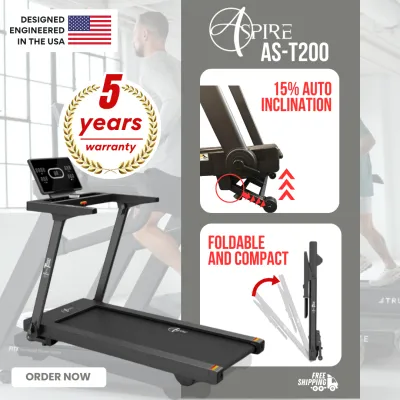
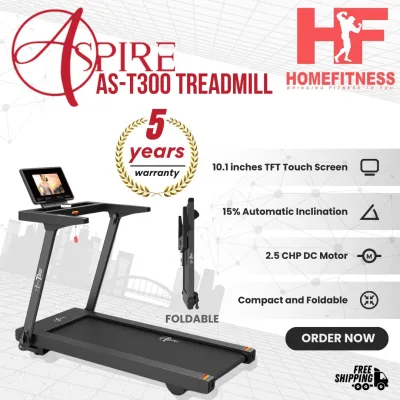
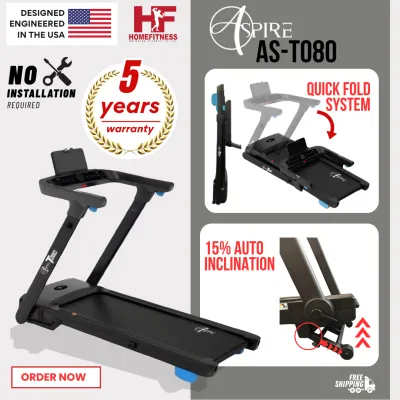
Prices are valid at publication and may change. Please refer to the product page for the latest price.
Ceiling height is another critical factor in standard HDB flats, which typically have a floor-to-ceiling height of about 2.6 meters. Measure from the floor to the lowest point of your ceiling, taking into account any low-hanging light fixtures, ceiling fans, or structural beams. Remember that you will stand on an elevated running deck, so you must add your own height plus a safety buffer of at least 30 centimeters to ensure you do not strike your head during a workout.
Safety clearances are non-negotiable when installing motorized exercise equipment. Manufacturers typically recommend leaving a clear, unobstructed zone of at least two meters behind the treadmill deck and at least 0.5 meters on both sides. This open space is vital to prevent severe injury if you lose your balance, slip, or need to dismount quickly while the belt is running.
Finally, map out the delivery route from the building entrance to your room. Measure the width and height of your HDB lift door, the main entrance door, any hallway turns, and the bedroom doorway. Compare these dimensions with the boxed shipping dimensions of your chosen Aspire model to ensure the delivery team can safely transport the machine into your home without damaging your walls or the equipment.
Evaluating Aspire Treadmill Dimensions and Folding Mechanisms
Once you have your home measurements, you can begin evaluating the specifications of different Aspire treadmill models. Start by comparing the unfolded, in-use footprint against your marked operating area. Ensure the length of the running deck is long enough to accommodate your natural running or walking stride. A stride that is too long for a compact deck can force you too close to the front motor cover or the rear roller, increasing the risk of tripping.

Because space is at a premium in an HDB flat, a folding model is often the most practical choice. You must verify both the folded depth and the folded height on the product specification sheet. Ensure that when the treadmill is folded upright, it does not block essential walkways, built-in wardrobe doors, or window access in your room. A folded treadmill that obstructs a primary pathway can quickly become a daily frustration and a safety hazard.
Different Aspire models utilize different folding mechanisms, which affect how easily and safely you can store the machine. Look for models equipped with hydraulic assist systems, often referred to as soft-drop or easy-fold mechanisms. These systems reduce the physical effort required to lift the deck and prevent the heavy deck from crashing down onto the floor when unfolding, protecting both your flooring and your hands.
Additionally, check the total weight of the machine on the manufacturer’s spec sheet. While HDB floors are designed to support standard residential loads, heavy commercial-grade treadmills can be difficult to move and position. Verifying the machine’s weight helps you determine if you can safely relocate the treadmill for cleaning or if it requires a permanent, stationary position. Models with transport wheels are highly desirable for HDB flats, as they allow you to roll the machine out of the way when not in use.
Placement, Ventilation, and Power Requirements
The physical placement of your treadmill affects its longevity, safety, and relationship with your neighbors. Position the machine in a well-ventilated area, leaving ample space around the motor housing at the front of the deck. Adequate airflow prevents the motor from overheating during extended workouts, while keeping the machine out of direct sunlight protects the console electronics and rubber belt from premature degradation. Avoid placing the treadmill in damp areas or near bathrooms where moisture can accumulate.
Electrical safety is paramount when operating high-draw fitness equipment in an HDB flat. Always plug your treadmill directly into a dedicated, grounded wall outlet. Avoid using extension cords, multi-way adapters, or portable power strips, as these can cause voltage drops that damage the treadmill’s motor and control board, or even pose a fire hazard in residential wiring. Ensure the power cord is routed away from the treadmill’s moving parts and does not cross walkways where it could become a tripping hazard.
Living in close proximity to neighbors means you must also manage noise and vibration transfer. The impact of your feet striking the running deck can send low-frequency vibrations through the concrete floor slab of your HDB flat, potentially disturbing neighbors living below or adjacent to your unit. Planning for vibration isolation is essential to maintain a peaceful living environment. Choosing a treadmill with built-in deck cushioning can help absorb some of this impact energy before it reaches the floor.
Common Space-Matching Mistakes to Avoid
One frequent error is failing to account for the swing radius of the folding deck. When you lower the treadmill deck from its upright storage position, it does not just drop straight down; it swings outward in an arc. If you place the folded machine too close to a wall, cabinet, or glass door, the deck may strike and damage these surfaces during the unfolding process. Always leave enough clearance in front of the folded machine to accommodate this downward swing.
Another common oversight is ignoring the impact of the treadmill’s incline feature on your ceiling clearance. When you elevate the deck to its maximum incline setting, the running surface rises significantly, reducing the distance between your head and the ceiling. Taller users must calculate this maximum deck height plus their own height to avoid running out of headroom during intense incline workouts. Check the manufacturer’s specifications for the maximum deck height at full incline to make this calculation accurately.
Finally, do not assume that a model labeled “compact” or “foldable” will automatically fit through standard HDB bedroom doors. Some models have wide, non-folding handlebars or bulky console assemblies that cannot be easily disassembled. Always cross-reference the widest part of the assembled treadmill with your narrowest doorway before finalizing your purchase. If the assembled width exceeds your doorway clearance, verify if the machine can be assembled inside the room or if it must be transported in its shipping box.
Frequently Asked Questions (FAQ)
Can I place an Aspire treadmill on an HDB balcony?
Placing a treadmill on an HDB balcony is generally not recommended due to environmental exposure. Singapore’s high humidity, heavy rain blow-in, and intense sunlight can quickly damage the sensitive electronic consoles, rust the steel frame, and degrade the running belt. Additionally, you must check the manufacturer’s warranty terms, as outdoor or semi-outdoor placement often voids the coverage. If you do consider this option, you must ensure the balcony has a certified structural load limit that supports the combined weight of the machine and the runner, and that any power outlet used is fully weatherproofed.
Do I need a special equipment mat for my Aspire treadmill in an HDB flat?
Yes, using a high-density equipment mat is highly recommended for any treadmill installed in an HDB flat. A thick rubber or PVC mat protects your vinyl, laminate, or tile flooring from permanent indentations, scratches, and sweat accumulation. More importantly, the mat acts as a crucial dampening layer that absorbs impact energy, significantly reducing the transmission of noise and vibrations to the neighbors living directly below you. Remember to include the thickness and slightly larger footprint of the mat in your initial space measurements to ensure a proper fit.

Community discussion
Share your experience or ask a question. Comments are reviewed before publication.