
Finding the right badminton net depends on where you play—whether it is a windy open-air concrete court in a housing estate, a sheltered condominium multi-purpose hall, or a grassy backyard. The ideal setup balances your physical space constraints with how often you plan to assemble and dismantle the equipment. By matching your specific environment to the correct net design, you can ensure a stable, safe game without damaging your surroundings or violating local property guidelines.
Assess Your Playing Space and Usage Frequency
Before purchasing any equipment, grab a measuring tape to assess your designated playing area. A standard singles court requires a length of 13.4 meters and a width of 5.18 meters, while doubles extends the width to 6.1 meters. Beyond the ground footprint, look upward to check for overhead obstructions. Tree branches, low-hanging balcony ceilings, and outdoor light fixtures can severely restrict high clears and lifts, so aim for a clear vertical space of at least 7.5 to 9 meters if you want an unhindered game.
The ground surface dictates how you will secure the net poles. Grassy lawns allow for ground stakes, whereas concrete driveways, tiled condo patios, or indoor parquet floors require free-standing, weighted bases to prevent sliding. If you are playing in shared residential spaces, check the estate rules regarding temporary structures to ensure you do not damage common property or block pedestrian pathways.
Products mentioned in this guide

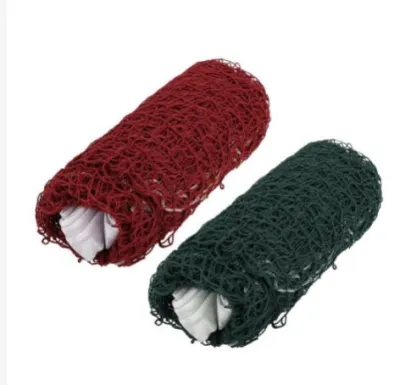

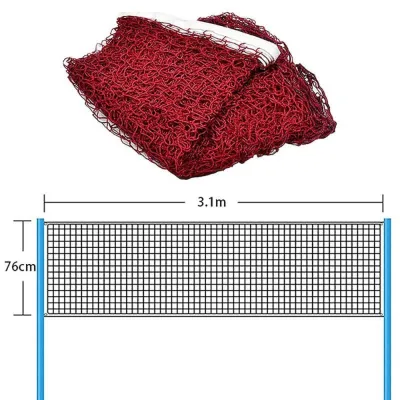
![[SG FREE ] 6.1mX0.76m Professional Sport Training Standard Badminton Net Outdoor Tennis Net Mesh Volleyball Net Exercis](https://img.lazcdn.com/g/p/2cc3f2f415b7b4810b7ff3f785fdb0cd.jpg_400x400q80.jpg_.webp)
Prices are valid at publication and may change. Please refer to the product page for the latest price.
Consider how often you will use the net and how much time you want to spend on assembly. If you only play a casual game once a month, a lightweight, highly portable system that packs away in minutes is ideal. For daily training or dedicated home courts, investing in a heavier, semi-permanent system with robust ground sleeves or heavy-duty wheeled bases will save you the hassle of constant recalibration.
Finally, account for local weather conditions. In tropical environments, sudden downpours, high humidity, and strong afternoon drafts are common. An outdoor net must be able to withstand moisture without rusting, while indoor or sheltered corridor setups can prioritize lightweight materials since they are shielded from wind and rain.
Compare Common Badminton Net Types
Portable Pop-Up Nets: These are the go-to choice for casual, multi-use spaces such as neighborhood parks or backyard lawns. They typically feature a pre-connected elastic-cord frame, similar to modern camping tents, allowing a single person to set them up in under three minutes. While incredibly convenient and lightweight, these nets rely on flexible fiberglass or thin steel poles, which means they cannot support high net tension and may sag slightly in the middle.

Retractable and Adjustable Nets: Excellent for tight spaces, shared corridors, or driveways, these models often feature telescoping poles or adjustable-width nets. They allow you to scale down the court size to fit narrow areas where a full-sized net would block traffic. When the game is over, the net retracts into a compact casing or the poles collapse down, making them exceptionally easy to store in small apartment utility closets.
Permanent and Regulation Pole Nets: Designed for dedicated indoor halls or permanent outdoor courts, these systems offer the ultimate playing experience. They utilize heavy steel or aluminum posts anchored into ground sleeves or supported by massive, weighted cast-iron bases. This structural rigidity allows you to pull the net taut to meet official tension standards, ensuring the shuttlecock behaves predictably when clipping the tape.
Weighing the Trade-offs: Choosing between these types requires balancing stability against convenience. Portable nets offer rapid setup but struggle in breezy conditions, whereas permanent systems provide professional-grade stability at the cost of high weight, higher initial investment (often costing upwards of S$150 to S$300 for quality club-grade bases), and a permanent footprint. Assess your tolerance for setup time and storage space before making a final decision.
Essential Specifications and Build Quality to Verify
When browsing options on an online marketplace, do not rely solely on product photos; instead, verify the exact specifications listed on the manufacturer’s label. If you want to practice under realistic conditions, check that the poles can be adjusted to or are fixed at the standard regulation height. Look for models that explicitly state their height measurements rather than generic “standard size” marketing claims.
Examine the mesh material and top border tape specifications. High-quality nets typically feature durable nylon or polyethylene mesh with a tight weave (around 15mm to 20mm double-knotted mesh) to prevent the shuttlecock from getting stuck or passing through. The top border should be reinforced with double-stitched PVC or canvas tape, which houses the tension cable and protects the net from wearing out due to repeated racket contact.
Evaluate the pole stability features carefully. For free-standing portable nets, check the base design; wide, U-shaped frames or hollow bases that can be filled with water or sand offer much better tip resistance than simple T-bars. If you are opting for a staked system, ensure the kit includes heavy-duty metal stakes rather than flimsy plastic pegs that bend easily in hard soil.
Always read the manufacturer’s guidelines regarding weight limits, wind resistance thresholds, and recommended surface types. A quality product manual will specify the maximum wind speed the net can safely handle and outline the correct tensioning procedure to avoid bending the support poles.
Environment-Specific Setup and Safety Checks
Setting up your net safely requires matching your anchoring method to the specific ground surface. On grass, drive stakes at a 45-degree angle away from the net to maximize holding power. On hard concrete or indoor flooring, use rubber-bottomed weighted bases or place protective mats under metal frames to prevent scratching the surface or slipping during intense play.
Wind is the primary enemy of outdoor badminton. Always check the weather forecast before setting up, and plan to take the net down immediately if sudden gusts occur. If your portable net starts to lift or lean, do not attempt to weigh it down with makeshift heavy objects like bricks or flowerpots, which can become dangerous projectiles if the net collapses; instead, pack the system away until conditions improve.
Trip hazards are a major concern in shared residential areas or family backyards. Keep guy lines, tension ropes, and base frames clearly visible by using brightly colored ribbons or cones, especially if children or pets are nearby. Ensure all excess cordage is neatly coiled and tucked away rather than left sprawling across the court boundaries.
Establish a quick pre-game inspection routine to keep your setup safe. Check all frame joints and push-button connectors to ensure they are fully locked in place. Inspect the net mesh for tears that could catch a racket, and verify that the tension cable is securely anchored to the posts without fraying.
Frequently Asked Questions (FAQ)
Can I use an indoor badminton net outdoors?
While you can physically set up an indoor net outside on a calm day, doing so long-term is not recommended. Indoor nets and poles generally lack UV-resistant coatings and rust-proof plating, meaning prolonged exposure to sun and rain will quickly degrade the mesh and corrode the metal frame. Additionally, lightweight indoor frames are highly susceptible to wind damage. Always check the manufacturer’s environmental usage labels to confirm if a net is rated for outdoor use.
How do I keep a portable net from blowing over in the wind?
To stabilize a portable net on hard surfaces, use manufacturer-approved sandbags or water-filled weight bags draped over the base frame. On grass or soil, secure the frame using heavy-duty metal ground stakes driven deep into the earth. If the wind speed exceeds the product’s stated limits, the safest course of action is to dismantle the net to prevent structural damage or injury.
What is the standard height for a badminton net?
According to official regulations, a badminton net must stand at a height of 1.55 meters at the outer posts. At the center of the court, the net should dip slightly to a height of 1.524 meters. When setting up your net, adjust the tensioning system to achieve this precise center dip without putting excessive strain on the support poles.

Community discussion
Share your experience or ask a question. Comments are reviewed before publication.