
Choosing your first tennis grip is a critical step in establishing control, comfort, and confidence on the court. For beginners exploring the Tourna lineup, the ideal starting point depends primarily on how much your hands sweat during play and whether you prefer a dry, paper-like texture or a sticky, cushioned feel. If you play in a hot, humid environment like Singapore, where sweat can quickly compromise your hold on the racket, the classic Tourna Original is often the most reliable starting point due to its specialized moisture-absorbing properties. Conversely, if you have dry hands or prefer a grip that clings to your palm, a tacky variant like Tourna Mega Grip will serve you better. Understanding these basic distinctions prevents the common beginner mistake of playing with a racket that slips out of alignment during a swing.
Identifying Your Comfort and Handling Needs as a Beginner
Before purchasing any grip accessory, you must assess how your hands behave during a typical practice session. Some players experience minimal perspiration, while others find their palms damp after just a few warm-up swings. In tropical climates or poorly ventilated indoor courts, humidity accelerates sweat production, making a secure hold difficult to maintain. If moisture causes your racket to twist in your hand when hitting off-center shots, your priority should be moisture management rather than pure cushioning.
Your preference for tactile feedback also dictates your choice. A dry-feel grip is typically thin and paper-like, allowing you to feel the sharp bevels of the racket handle clearly. Feeling these bevels is highly beneficial for beginners who are still learning to transition between different grip positions, such as moving from a continental grip for serves to an eastern or semi-western grip for forehands. On the other hand, if you are sensitive to racket vibrations or prone to blisters, you may prefer a cushioned grip that prioritizes shock absorption and a softer, more forgiving surface.
Products mentioned in this guide
![Tourna Grip XL 3-IN-1 Original Dry Feel Tennis Grip [TG-1-XL]](https://img.lazcdn.com/g/p/de8f0fa9722e0c4848b28ac3d78793d3.jpg_400x400q80.jpg_.webp)
![[3 COLOURS] Tourna Tac 3-in-1 Tennis Overgrip [TG-2-XL]](https://img.lazcdn.com/g/p/d9336173ad5a1cdf55c436ecadc7ece9.png_400x400q80.png_.webp)


![[2 SIZES] Tourna Tuff Grip XL](https://img.lazcdn.com/g/p/cca898070b0b2e9e21615a807f6ddf96.png_400x400q80.png_.webp)
Prices are valid at publication and may change. Please refer to the product page for the latest price.
Finally, evaluate your racket’s current handle size. If the handle already feels slightly too large for your hand, adding a thick, cushioned overgrip will only exacerbate the problem, potentially leading to wrist strain. If the handle feels a bit too small, you can use a thicker overgrip or even layer multiple wraps to build up the base to a comfortable size. Take a moment to grip your racket naturally; there should be a gap roughly the width of your index finger between your ring finger and your palm. If this gap is missing or excessively wide, you will need to adjust your grip selection accordingly.
Matching Tourna Grip Variants to Your Playing Style
Tourna Original
Tourna Original is widely recognized for its distinct light blue color and dry, suede-like texture. Unlike traditional grips that become slippery when wet, this variant is designed to become grippier as it absorbs moisture. When inspecting the packaging, look for labels indicating “dry feel” or “maximum sweat absorption.” This variant is highly suitable for players who sweat heavily or play in high-humidity environments. However, because it is relatively thin, it offers minimal cushioning, meaning you will feel the vibrations of the racket frame more directly during contact.

Tourna Mega Grip
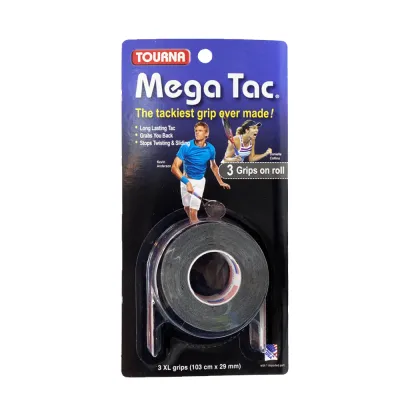
If you do not experience heavy hand sweat and prefer a sticky, secure sensation, Tourna Mega Grip is a more appropriate choice. This variant features a polyurethane coating that provides a high level of tackiness, helping the racket cling to your hand with minimal squeezing effort. Check the manufacturer specifications on the packaging to verify the thickness, as tacky grips are often slightly thicker than dry-feel options. This added thickness provides extra comfort and shock absorption, but you must ensure it does not make the handle too bulky for smaller hands.
Tourna Armor and Textured Options
For beginners who want a balance of durability and physical feedback, Tourna offers textured and reinforced options, such as those featuring tread patterns or raised ridges. These physical textures provide clear reference points for your fingers, which can help you maintain a consistent hand placement during drills. When inspecting these options at a local sports retailer or on an online marketplace, note that the raised patterns will alter how the flat bevels of the handle feel. While they offer excellent slip resistance and durability, they may make it slightly harder to sense subtle grip transitions.
When comparing these variants, rely on the physical characteristics stated on the product labels rather than unverified performance claims. Focus on simple indicators: dry versus tacky, thin versus thick, and smooth versus textured. A beginner who struggles with racket slippage due to sweat should opt for a dry-feel wrap, while a beginner seeking a soft, secure hold in dry conditions should choose a tacky, cushioned option.
Checking Sizing, Thickness, and Racket Compatibility
Before finalizing your purchase, you must verify that the grip dimensions match your racket and physical needs. Grip packaging typically displays specifications for length, width, and thickness. Standard overgrips are designed for traditional racket handles, but if you use an extra-long racket or play with a two-handed backhand, you should look for labels marked “XL” or “XXL” to ensure the wrap covers the entire length of the handle without leaving exposed gaps.
It is also essential to distinguish between overgrips and replacement grips. Overgrips are thin wraps designed to be applied directly over the existing factory grip to manage sweat and protect the base material. Replacement grips are much thicker, feature an adhesive backing, and are meant to replace the original factory grip entirely when it becomes worn or compressed. Beginners should avoid wrapping a replacement grip over another replacement grip, as this will make the handle excessively bulky, round out the bevels, and compromise your control over the racket face.
If you wrap your racket and find that the handle feels uncomfortable, stop and assess the fit before heading to the court. A grip that is too thick prevents your fingers from wrapping around securely, forcing your forearm muscles to work harder and increasing the risk of fatigue. Conversely, a grip that is too thin can cause the racket to twist painfully on impact. If you cannot achieve a comfortable fit after adjusting your wrapping technique, stop using the racket and consult a tennis coach or a professional pro shop for assistance.
Installation Basics and Knowing When to Replace Your Grip
Applying a new grip correctly is just as important as choosing the right variant. Begin by preparing the handle: peel off the old overgrip, clean the base grip with a dry cloth to remove any dirt or sweat residue, and ensure the surface is completely dry. If the base grip underneath is crumbling, sticky, or severely compressed, you should replace it with a new replacement grip before applying your overgrip.
To install the overgrip, start at the butt cap of the racket. Secure the tapered end of the grip with the small piece of adhesive backing, then begin wrapping upward, rotating the racket slowly. Maintain consistent, moderate tension as you wrap; pulling too tightly will thin out the material and reduce its cushioning, while wrapping too loosely will cause the grip to bunch up and slide during play. Overlap each turn by approximately two to three millimeters to ensure even coverage, cut the excess material at an angle at the top of the handle, and secure it firmly with the included finishing tape.
Knowing when to replace your grip is vital for maintaining safe and effective play. Rather than following a strict calendar schedule, monitor the grip for observable signs of degradation. For Tourna Original, the light blue color will fade to a dull grey or dark blue as it saturates with sweat and dirt, and the surface will eventually begin to fray or pill. For tacky grips like Mega Grip, the surface will lose its stickiness, becoming smooth, shiny, or slippery. If you notice any tearing, peeling, or if the racket begins to slip during your practice swings, it is time for a replacement.
Playing with a worn-out, slippery grip is a safety hazard that can cause the racket to fly out of your hand, potentially injuring yourself or others nearby. If you notice your grip slipping, stop play immediately to re-wrap the handle. Additionally, never use household glues, duct tape, or unverified industrial solvents to secure a loose grip. These substances can damage the underlying handle material, ruin the base grip, and cause skin irritation or allergic reactions on your hands.
Frequently Asked Questions (FAQ)
Can beginners use Tourna Original if they have dry hands?
While Tourna Original is highly popular, it may not be the most comfortable option for players with very dry hands. Because it relies on moisture to activate its grip properties, a dry-feel wrap can feel papery, rough, or even slippery if your hands do not perspire. If you have dry hands, it is advisable to test a small sample of the material first or opt for a tacky variant like Tourna Mega Grip, which provides a secure, clingy hold without requiring moisture.
How often should a beginner replace their Tourna overgrip?
Instead of relying on a fixed timeframe, you should replace your overgrip based on visual and tactile indicators of wear. If you play once a week in a cool environment, a single overgrip may last several weeks before losing its effectiveness. However, if you play multiple times a week in hot, humid conditions, you may need to replace the grip every few sessions. Look for signs of wear such as color fading, fraying edges, smooth patches, or a noticeable loss of friction during your swings.

Community discussion
Share your experience or ask a question. Comments are reviewed before publication.