
For a beginner stepping onto the tennis court, selecting the right equipment is the first step toward building confidence and developing consistent stroke mechanics. While much attention is naturally given to choosing a racket, the tennis ball you play with has an equally profound impact on your learning curve. Using a ball that bounces too fast, too high, or too unpredictably can lead to frustration, poor swing habits, and physical strain. Wilson, as a long-standing manufacturer in the sporting goods industry, offers a wide array of tennis balls designed for different skill levels, court surfaces, and training environments.
Identifying the most suitable Wilson tennis ball requires understanding your current physical capabilities, your practice setup, and how the ball behaves upon impact. For adult beginners, the choice typically comes down to standard pressurized recreational balls or durable pressureless options that can withstand hours of repetitive drilling. For younger players or absolute novices who need more time to react, low-compression transition balls provide a slower pace of play that makes learning the fundamentals much more accessible. By matching the ball’s characteristics to your specific stage of development, you can ensure a more productive and enjoyable introduction to the sport.
Understanding Tennis Ball Types for Beginners
To make an informed decision, it is essential to understand the fundamental differences between the three primary categories of tennis balls: pressurized, pressureless, and transition balls. Each type is engineered with a specific internal structure and felt composition, resulting in distinct performance trade-offs regarding feel, bounce height, and overall durability.
Products mentioned in this guide
![[BUY 4 CANS AT PRICE OF 3] Wilson US Open Green Tournament 3 Ball Can (4 Pack) Tennis Balls](https://img.lazcdn.com/g/p/86fde86638e317c874fb17b3dd893d90.jpg_400x400q80.jpg_.webp)
![[BUY 4 CANS AT PRICE OF 3] Wilson Championship Extra Duty Tennis Balls (4 Pack) 12 Tennis Balls - WRT100101](https://img.lazcdn.com/g/p/e4c5d48ca16e86c119d985bee3f966ee.jpg_400x400q80.jpg_.webp)
![[BUY 4 CANS AT PRICE OF 3] Wilson Roland Garros Official Tennis Ball (4 pack) 12 Tennis Balls - WRT126400](https://img.lazcdn.com/g/p/4b52d391f3793ac32a46d48e692bb110.jpg_400x400q80.jpg_.webp)
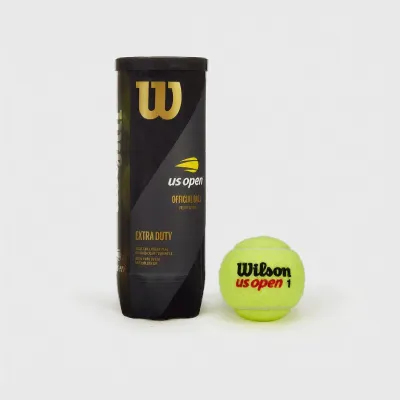
Prices are valid at publication and may change. Please refer to the product page for the latest price.
Pressurized tennis balls are the industry standard for competitive and recreational play alike. These balls are filled with compressed air or nitrogen, which exerts outward pressure against the inner rubber core. This internal pressure gives the ball a crisp, lively feel off the racket strings and a highly responsive bounce. However, because the rubber core is naturally porous, this pressurized gas slowly leaks out over time, even when the balls are left unused in an opened container. As a result, pressurized balls have a relatively short peak performance lifespan, gradually becoming flat after a few matches or weeks of exposure to the air.
In contrast, pressureless tennis balls do not rely on internal gas pressure for their bounce. Instead, they feature a much thicker, heavier, and more elastic rubber core that provides bounce through its structural shape and material memory. Because there is no internal air to escape, pressureless balls never go flat. In fact, as the outer felt wears down over time, the ball actually becomes slightly lighter and bouncier, though it can feel stiffer and heavier on impact compared to a fresh pressurized ball. For beginners focused on high-repetition practice, such as using a ball machine or practicing serves, pressureless balls offer unmatched longevity and consistency over months of use.
For absolute novices, particularly children, standard tennis balls often bounce too fast and too high, making it difficult to establish a rally. This is where transition or low-compression balls play a vital role. These balls are color-coded to indicate their compression level and speed. Red transition balls (Stage 3) are the largest and slowest, bouncing about 75% slower than standard balls, making them ideal for very young children playing on short courts. Orange transition balls (Stage 2) bounce 50% slower than standard balls and are designed for mid-sized courts. Green transition balls (Stage 1) are standard-sized but bounce 25% slower, offering a highly forgiving option for older children and adult beginners transitioning to full-court play.
Beyond internal pressure, beginners must also pay attention to court-surface designations on product packaging. Wilson tennis balls are typically labeled as “Extra Duty,” “Regular Duty,” or “All Court.” Extra Duty balls are specifically designed for abrasive hard courts, featuring a thicker, more durable felt blend that resists wearing down on concrete or asphalt surfaces. Regular Duty balls are designed for softer clay or indoor courts, utilizing a tighter felt weave that prevents the ball from absorbing excessive moisture or clay particles. Choosing the correct felt type for your local practice environment ensures the ball maintains its intended flight and bounce characteristics for as long as possible.
Matching Wilson Tennis Balls to Player Age and Skill Level
Selecting the right tennis ball is not a one-size-fits-all decision; it must be tailored to the player’s age, physical strength, and specific training goals. By utilizing a conditional decision framework, you can easily identify which Wilson ball category aligns with your current needs.

For adult beginners, the primary goal is usually to transition to standard full-court play as smoothly as possible. If you are practicing with a coach or a partner who can consistently feed balls, starting with standard pressurized recreational balls, such as the Wilson Championship series, is highly effective. These balls provide the realistic feel and bounce height you will encounter as you progress. However, if you are practicing solo, using a rebounder wall, or working on your serve, a basket of Wilson pressureless balls is a far more practical choice. The durability of pressureless balls allows you to hit hundreds of shots without needing to constantly replace flat balls, making your practice sessions much more cost-effective.
For junior and child beginners, the selection process must be guided by physical development rather than personal preference. Standard tennis balls bounce at a height that is often level with a child’s head or shoulders, forcing them to swing with improper, high-to-low mechanics that can lead to joint strain. To prevent this, parents and coaches should select the appropriate Wilson transition stage based on the child’s age, height, and racket size. Red Stage 3 balls are perfect for children aged 5 to 8 using 19- to 23-inch rackets. Orange Stage 2 balls suit children aged 8 to 10 using 23- to 25-inch rackets. Green Stage 1 balls are ideal for children aged 9 to 11, as well as adult beginners who want to practice slow-paced rallies on a full-sized court using standard 27-inch rackets.
Before making a purchase, it is always wise to verify the age and skill recommendations printed on the packaging against standard guidelines established by international tennis federations. These guidelines ensure that the equipment you choose supports healthy physical development and proper technical progression. By aligning your ball selection with these recognized standards, you can avoid the common pitfall of introducing standard, high-velocity balls to young players before they are physically ready to handle them.
Key Features to Check Before Buying
When shopping for Wilson tennis balls, understanding how to read the packaging and verify product specifications can save you from purchasing unsuitable or degraded stock. Because tennis balls are highly sensitive to time and environmental conditions, a few simple checks can ensure you get the best value for your money.
First, consider the packaging format: pressurized cans versus bulk bags. Pressurized balls are almost always sold in sealed metal or plastic cans, which are pressurized to match the internal pressure of the balls. This seal prevents the balls from losing pressure while sitting on retail shelves. Once you break the metal pull-tab, the depressurization process begins immediately. Bulk bags, on the other hand, typically contain pressureless or transition balls. Because these balls do not rely on pressurized gas, they do not require airtight packaging and can be stored indefinitely without losing their bounce. If you play occasionally, buying individual pressurized cans is best; if you practice in high volumes, bulk bags of pressureless balls are much more economical.
Second, check the physical integrity of the packaging before leaving the store or accepting an online delivery. For pressurized cans, gently squeeze the plastic container if it is transparent. It should feel firm and rigid; if the can feels soft or easily compresses, the airtight seal may have been compromised, meaning the balls inside are likely flat. Additionally, when you open a pressurized can, listen closely for a distinct “hiss” of escaping gas. The absence of this sound is a clear indicator of dead stock that has lost its pressure over time. While tennis balls rarely feature explicit manufacturing dates, buying from high-volume sports retailers increases the likelihood of receiving fresh, recently manufactured inventory.
Finally, look for visual cues on the packaging that indicate the ball’s intended play level and felt durability. Wilson categorizes its balls into recreational, championship, and professional tiers. Recreational options are designed with a focus on longevity and value, making them highly forgiving for beginners. Championship options offer a balanced middle ground, providing consistent performance for club play. Professional or tournament-grade packaging often features prominent branding, such as “US Open” or “Tour,” indicating balls engineered for maximum speed, spin, and consistency. While tempting, these premium options are often less durable under the off-center hits common to beginners, making recreational or championship tiers the smarter choice for those still mastering their swing.
Practice and Maintenance Tips for New Players
Once you have purchased the right Wilson tennis balls, proper maintenance and regular testing can significantly extend their usable lifespan, ensuring your practice sessions remain productive and safe.
For pressurized balls, learning how to perform simple physical tests will help you determine when they are no longer fit for play. The most common method is the squeeze test: hold the ball in one hand and attempt to compress the core with your thumb. A fresh pressurized ball should feel firm and offer substantial resistance. If the ball compresses easily, it has lost its internal pressure and will no longer bounce to the correct height. You can also perform a drop test on a hard court surface. Drop the ball from a height of approximately 1.8 meters; a healthy pressurized ball should bounce back up to about chest height. If the bounce is noticeably low, the ball is flat and should be retired from active play.
For pressureless balls, which do not go flat, wear is determined primarily by the condition of the outer felt. Over hours of play, the friction against the court surface and racket strings will cause the felt to wear thin, a process known as balding. When a pressureless ball loses its felt, it becomes smooth and shiny. This bald surface reduces aerodynamic drag, causing the ball to fly much faster and more unpredictably through the air. Furthermore, bald balls cannot grip the racket strings, making it nearly impossible to practice spin control. Once the felt begins to bald or split, the ball should be replaced to maintain consistent practice conditions.
Proper storage is also critical to protecting your investment, especially in warm or highly humid climates. Moisture is the enemy of tennis ball felt; wet or damp felt makes the ball heavy, sluggish, and highly abrasive to your racket strings. Always store your tennis balls in a cool, dry place away from direct sunlight. Avoid leaving your tennis bag in the trunk of a car, as extreme heat can accelerate the breakdown of the rubber core in both pressurized and pressureless balls, causing them to lose their structural integrity prematurely. Keeping your balls in a dedicated, dry compartment of your gear bag will help preserve their playability for as long as possible.
Frequently Asked Questions (FAQ)
Can beginners use professional tournament tennis balls?
While beginners can technically play with professional tournament tennis balls, such as the Wilson US Open Extra Duty, doing so is generally not recommended or cost-effective. Professional-grade balls are engineered for maximum speed, spin responsiveness, and strict consistency under high-intensity play. However, to achieve this level of performance, they utilize a premium felt that is designed to be replaced frequently—often after just one match. For a beginner, the subtle performance advantages of tournament balls are unnoticeable, while the faster wear rate and higher cost make them an impractical choice. Advancing beginners should wait until their swing path and contact point are consistent before upgrading to tournament-tier balls.
How many tennis balls should a beginner buy at once?
The ideal quantity depends entirely on your practice style. If you are playing casual matches or practicing rallies with a partner, starting with two to three pressurized cans (six to nine balls total) is perfect. This provides enough fresh balls for a session without risking unused cans losing pressure in storage. Conversely, if you are practicing solo, using a tennis ball hopper, or working on serve drills, buying a bulk bag of 12 to 72 pressureless balls is highly recommended. This allows you to hit a large volume of shots consecutively without stopping to collect balls, maximizing your active practice time.
Do Wilson tennis balls come with a warranty or guarantee?
Because tennis balls are consumable sporting goods that naturally wear out with use, they do not carry a performance warranty or lifespan guarantee once opened. However, if you purchase a pressurized can and find that the balls are completely flat upon opening—indicated by a lack of pressure when squeezing the can or no audible hiss when breaking the seal—this points to a manufacturing defect or a compromised packaging seal. To ensure you can get a replacement or refund for defective, dead-on-arrival stock, always purchase your tennis equipment from authorized sports retailers or official brand outlets rather than unverified third-party sellers on online marketplaces.

Community discussion
Share your experience or ask a question. Comments are reviewed before publication.