
Fitting a cardio machine like the JOMO T610A into a Singapore Housing & Development Board (HDB) flat is entirely possible, but it requires careful planning around spatial limits, structural capacities, and neighborly consideration. Because HDB layouts prioritize efficient use of space, introducing a major piece of fitness equipment demands more than just finding an empty corner. You must evaluate the machine’s static footprint, its dynamic operational clearance, and the physical path it must travel from the delivery truck to your designated workout spot. By systematically measuring your home and understanding the physical requirements of the equipment, you can safely integrate this machine into your living space without disrupting your daily routine or your neighbors.
Understanding the JOMO T610A Footprint
Before making a purchase or clearing out a corner of your living room, you must verify the exact physical dimensions of the JOMO T610A from the manufacturer’s official specification sheet. Cardio machines vary widely in size, and relying on visual estimates from online photos can lead to major installation headaches. Start by locating the official length, width, and height of the fully assembled unit. This represents the absolute minimum static space the machine will occupy when it is ready for use.
However, the static footprint is only part of the equation. You must also account for the dynamic space required during active exercise. If the JOMO T610A is a treadmill, the running belt requires clearance behind it to prevent injury in case of a slip or fall. If it is an elliptical trainer, you must account for the pedal stride length and the handlebar path, both of which often extend beyond the physical base of the machine during use. Additionally, consider the vertical clearance; your ceiling height must accommodate the height of the machine’s deck plus your own height, along with a safety buffer of at least 20 to 30 centimeters to prevent your head from coming too close to the ceiling or ceiling fans during a workout.
Products mentioned in this guide
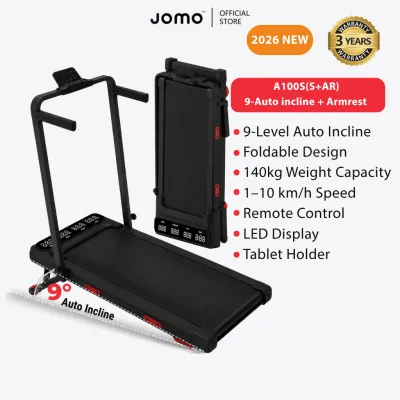
Prices are valid at publication and may change. Please refer to the product page for the latest price.
Many modern home cardio machines feature a folding mechanism to help save space when not in use. You should verify whether this specific model folds and, if so, check its folded dimensions. A folding design can significantly reduce the floor space required between workouts, but it often increases the vertical height or depth of the unit. Ensure that your intended storage area can accommodate these folded dimensions safely without the risk of the machine tipping over.
Measuring Your HDB Room and Access Routes
Once you have the official dimensions of the equipment, you must carefully measure your intended room and the path the delivery team will take. Begin by measuring the designated floor area in your HDB flat, whether it is in the living room, a study, or a bedroom. Use a physical measuring tape rather than relying on floor plans, as baseboards, built-in wardrobes, and existing furniture can reduce the actual usable space. Be sure to account for door swings, wardrobe doors, and the daily walking paths of your household members to ensure the machine does not block essential thoroughfares.

The next critical step is mapping out the delivery route. Many homeowners forget to measure the entry points, leading to situations where a machine fits perfectly in the room but cannot get through the front door. Measure the clear width and height of your HDB main gate, the main wooden door, and the specific bedroom door frame. Do not forget to check the dimensions of the lift cabin, the lift door opening, and any tight corners in the common corridor. Compare these measurements against the manufacturer’s boxed shipping dimensions, as the machine will likely arrive disassembled in one or more large, heavy cartons.
Finally, locate the nearest power outlet in your chosen room. Cardio machines require a stable, grounded power source to operate safely. Measure the distance from the machine’s power entry point to the wall socket to ensure the power cord can reach without being stretched taut. Avoid using light-duty extension cords or running the cable across high-traffic walking paths, as this creates a severe tripping hazard and can damage the cord over time. If necessary, plan to use a heavy-duty, surge-protected extension strip designed for high-draw appliances, and secure it flat against the floor or baseboard.
Managing Floor Load, Noise, and Vibration
Operating heavy fitness equipment in a multi-story residential building like an HDB block requires careful management of weight and acoustics. First, you must consider the structural floor load. Standard HDB flats are designed to support a domestic floor load limit of 150 kilograms per square meter. To ensure safety, calculate the combined weight of the JOMO T610A and the heaviest user in your household. While most standard home cardio machines fall well within this structural limit when stationary, the dynamic impact of running or stepping can concentrate force on specific points of the floor.
To protect your HDB flooring—whether it is vinyl, laminate, or ceramic tiles—and to distribute the weight more evenly, you should invest in a high-density equipment mat. A specialized rubber or dense foam mat acts as a protective barrier against scratches, indentations, and sweat. More importantly, a high-quality mat plays a crucial role in absorbing operational vibrations. The repetitive impact of running or the mechanical hum of a motor can easily travel through the concrete floor slab, turning your floor into a giant speaker that transmits low-frequency noise directly to the neighbors living below you.
To maintain good relations with your neighbors, place the machine strategically within your flat. Avoid positioning the equipment directly against shared party walls, as structural noise can easily transfer horizontally into your neighbor’s living space. If possible, place the machine in a room that is not directly above a downstairs neighbor’s bedroom, or restrict your high-intensity workouts to reasonable daytime and early evening hours.
Safety Clearances and Operational Setup
Creating a safe workout environment requires maintaining adequate safety clearances around the machine. Manufacturers typically recommend leaving a clear safety zone of at least 1 to 2 meters behind a treadmill and at least 0.5 meters on either side. This clearance is vital for emergency dismounts; if you lose your balance or need to stop suddenly, you must have unobstructed space to step off safely without colliding with walls, furniture, or glass windows.
Proper environmental conditions are also essential for the longevity of your equipment and your own comfort. Ensure the room has adequate ventilation, whether through open windows, a standing fan, or air conditioning. Cardio machine motors generate heat during operation, and a confined, unventilated space can cause the motor to overheat, leading to premature component failure. Good airflow also helps manage humidity and sweat, keeping your workout space hygienic.
Avoid placing your fitness equipment in high-humidity areas, such as directly adjacent to a bathroom, on an open balcony exposed to rain, or directly beneath an air-conditioning unit that is prone to condensation leaks. Excess moisture can penetrate the machine’s console and motor housing, causing electrical short circuits, rust on the metal frame, and damage to the sensitive electronic control boards. Keeping the machine in a dry, climate-controlled indoor environment is the best way to protect your investment.
Frequently Asked Questions (FAQ)
Do I need to inform my HDB town council before installing a heavy treadmill?
Generally, standard portable cardio equipment designed for home use does not require official structural approval or a permit from your HDB town council. These machines are classified as household appliances and fall well within the standard domestic floor load limits of HDB flats. However, if you are planning to install exceptionally heavy commercial-grade equipment, or if the combined weight of the machine and the user approaches structural limits, it is wise to consult your estate’s town council or a qualified structural engineer. Additionally, always ensure that the equipment is kept strictly within your flat and never placed in common corridors or lift lobbies, as this violates fire safety regulations.
Can the JOMO T610A be delivered and assembled inside a standard HDB bedroom?
Yes, most home cardio machines can be delivered and assembled inside a standard HDB bedroom, provided you plan ahead. Because the boxed dimensions of these machines are often too large to navigate tight bedroom door frames or corridor corners, you should request in-room assembly from your retailer or delivery service. While some retailers include this in the purchase price, others may charge an assembly fee ranging from S$50 to S$120. The delivery team will typically transport the components in their individual, smaller packaging units or partially assembled states into your bedroom, where they will complete the final setup. Always measure your bedroom door width and ensure there is enough clear floor space inside the room for the technicians to work safely during the assembly process.

Community discussion
Share your experience or ask a question. Comments are reviewed before publication.