
Choosing between the Wilson Championship, US Open, and Roland Garros tennis balls depends primarily on your most frequently played court surface, your playing frequency, and your preference for ball feel. Rather than searching for a single “best” option, the right decision aligns the ball’s felt type and core construction with your specific playing conditions. For casual, high-volume recreational play on hard courts, the Championship line offers a practical, cost-effective option. If you want a premium, consistent bounce that matches tournament standards on hard courts, the US Open is the benchmark. For clay courts or players seeking a softer feel that resists moisture pickup, the Roland Garros line is specifically engineered to perform on clay. Aligning your choice with your local court surface and playing frequency ensures you get the best performance and lifespan out of every can.
Decoding the Wilson Tennis Ball Lineup
Understanding the market positioning of Wilson’s primary tennis ball lines helps clarify why they perform differently on the court. Each model is engineered with specific player profiles and playing environments in mind, ranging from casual weekend matches to high-stakes tournament play. By recognizing these distinctions, you can avoid paying a premium for features you might not need, or conversely, avoid the frustration of using a ball that degrades too quickly for your level of play.
The Wilson Championship is the brand’s entry-level pressurized ball, widely utilized for recreational play, coaching sessions, and casual practice. It is designed to offer a balance of playability and value, making it a staple in tennis bags for players who prioritize affordability. The core and felt are constructed to meet standard play requirements without the specialized enhancements found in tournament-grade options.
Products mentioned in this guide
![[BUY 4 CANS AT PRICE OF 3] Wilson US Open Green Tournament 3 Ball Can (4 Pack) Tennis Balls](https://img.lazcdn.com/g/p/86fde86638e317c874fb17b3dd893d90.jpg_400x400q80.jpg_.webp)
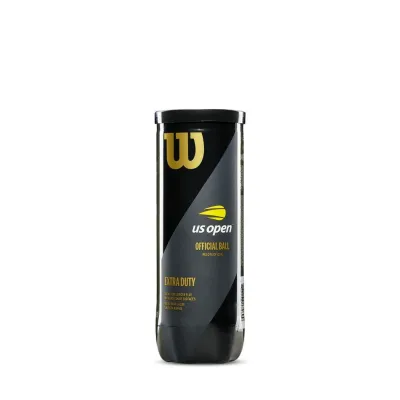
![[BUY 4 CANS AT PRICE OF 3] Wilson US Open Extra Duty Tennis Balls (4 Pack) 12 Balls - WRT106200](https://img.lazcdn.com/g/p/36c84ee42d3b582024ff3184f3ed2f6e.jpg_400x400q80.jpg_.webp)
![[BUY 4 CANS AT PRICE OF 3] Wilson Championship Extra Duty Tennis Balls (4 Pack) 12 Tennis Balls - WRT100101](https://img.lazcdn.com/g/p/e4c5d48ca16e86c119d985bee3f966ee.jpg_400x400q80.jpg_.webp)
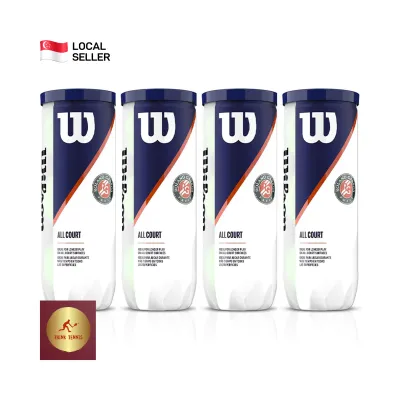
![[BUY 4 CANS AT PRICE OF 3] Wilson Roland Garros Official Tennis Ball (4 pack) 12 Tennis Balls - WRT126400](https://img.lazcdn.com/g/p/4b52d391f3793ac32a46d48e692bb110.jpg_400x400q80.jpg_.webp)
Prices are valid at publication and may change. Please refer to the product page for the latest price.
The Wilson US Open represents the premium tier of the lineup and has served as the official ball of the US Open Grand Slam tournament for decades. This model is engineered for high-performance match play, featuring a high-grade rubber core and premium felt designed for maximum consistency and flight accuracy. It is the preferred choice for competitive club players, tournament organizers, and advanced players who demand a predictable bounce and crisp feel off the racket stringbed.
The Wilson Roland Garros line is designed to meet the rigorous demands of clay-court tennis, reflecting its association with the famous French Open. While Wilson produces both clay-court and all-court versions under this name, the line is celebrated for its specialized felt that resists moisture and dirt accumulation. This makes it highly suitable for clay courts, soft outdoor surfaces, or damp playing conditions where standard balls quickly become heavy and sluggish.
When purchasing these balls, reading the packaging labels carefully is essential. Look for indicators such as “Extra Duty,” “Regular Duty,” or “High Altitude” printed on the can. Additionally, check for official approval stamps from governing bodies like the International Tennis Federation (ITF) or the United States Tennis Association (USTA), which verify that the balls meet strict weight, size, deformation, and bounce standards.
Court Surface Compatibility and Felt Selection
The interaction between a tennis ball’s felt and the court surface is the single most critical factor determining how long the ball will last and how it will behave during play. Tennis ball felt is not merely cosmetic; it controls the ball’s speed through the air and its friction against the court surface upon bouncing. Choosing the wrong felt type for your local court conditions can lead to rapid wear, altered ball physics, and an overall poor playing experience.

The primary distinction in felt construction lies between Regular Duty and Extra Duty classifications. Regular Duty felt features a tighter, thinner weave with a higher percentage of wool. This design is optimized for soft surfaces like clay, indoor clay, or indoor carpet courts. The tight weave prevents the loose fibers of the court or clay dust from embedding in the felt, which would otherwise make the ball heavy and slow.
Extra Duty felt, on the other hand, is engineered with a thicker, looser weave that incorporates a higher proportion of synthetic fibers. This construction is specifically designed to withstand the highly abrasive nature of outdoor hard courts, such as the acrylic-coated concrete or asphalt courts commonly found in public parks, schools, and condominiums across Singapore. The durable synthetic fibers help prevent the felt from wearing down to the rubber core too quickly on rough surfaces.
Mapping the Wilson lineup to these surface types is straightforward but requires verification. The Wilson US Open and Championship lines are most commonly sold in Extra Duty configurations, making them ideal for hard courts. The Wilson Roland Garros line is typically optimized for clay courts, utilizing Regular Duty felt (often labeled as “Clay Court”). However, because manufacturers sometimes release “All Court” variations under these brand names, you should always verify the specific duty type printed on the can before purchasing.
Using the wrong felt type on a mismatched surface carries immediate consequences. If you play with a Regular Duty ball on a rough hard court, the abrasive surface will quickly shred the thin felt, exposing the black rubber core within a few games and rendering the ball useless. Conversely, if you use an Extra Duty ball on a clay court, the loose felt will rapidly fluff up, trapping clay dust and moisture from the ground. This extra weight slows the ball down significantly, reduces bounce height, and increases the physical strain on your elbow and shoulder.
Evaluating Durability, Bounce, and Playability
Evaluating the performance of a tennis ball involves looking beyond marketing claims to assess how the ball actually behaves over multiple games. Durability is not just about whether the ball remains intact; it is about how well the ball retains its internal pressure, its structural shape, and its felt consistency over time. A ball that retains its felt but loses its bounce is just as unplayable as a bouncy ball that has lost all its felt.
Premium tournament balls, such as the Wilson US Open and Roland Garros, utilize high-grade wool felt that provides a cleaner, more aerodynamic flight and a highly predictable bounce. However, because wool is a natural fiber, it can fluff up more noticeably in high-humidity environments, such as the tropical climate of Singapore. Standard recreational balls like the Wilson Championship often use a higher ratio of synthetic fibers, which may resist fluffing longer but can result in a stiffer, harder feel on impact, which some players find less comfortable.
To evaluate the quality of a tennis ball before playing, perform a few simple visual and physical checks when opening a fresh can. First, inspect the seams where the two halves of the felt meet; they should be clean, flat, and free of excess adhesive or visible gaps. Second, feel the thickness and uniformity of the felt across the entire surface of the ball. Finally, give the ball a firm squeeze; the rubber core should feel uniform and resistant to compression, without any soft spots or excessive give.
The bounce characteristics of a ball are determined by the quality of its pressurized rubber core. Premium cores are designed to limit gas diffusion, allowing them to maintain their internal pressure through heavy hitting and long rallies. For recreational players, testing a single can in your typical playing environment is the most reliable way to assess playability. Observe how the bounce height and speed change from the first game to the end of a two-hour session, and note whether the ball begins to feel “dead” or heavy off the strings.
Decision Framework: Choosing Your Ideal Wilson Tennis Ball
To finalize your decision, it is helpful to align your purchase with your specific playing frequency, budget, and court environment. No single ball is perfect for every scenario, but selecting the model that matches your primary playing conditions will maximize both your enjoyment and your investment.
Choose the Wilson Championship if you are a beginner or intermediate player looking for a cost-effective ball for casual practice, social doubles, or serving drills. If you play multiple times a week and go through cans quickly, the lower price point of the Championship line makes it a highly practical choice. It performs adequately on hard courts and provides a solid, durable option for players who do not require tournament-grade precision.
Choose the Wilson US Open if you play competitive matches, participate in league play, or simply prefer a premium, crisp feel with a highly consistent bounce. This ball is ideal for intermediate to advanced players who play on hard courts and want to train with the same ball used in professional tournaments. While it comes at a higher price point, the superior felt quality and core consistency justify the cost for serious players.
Choose the Wilson Roland Garros if you primarily play on clay courts, artificial grass, or soft outdoor surfaces. If you frequently play in damp morning conditions or on courts that collect dirt, the specialized felt of the Roland Garros line will help maintain a clean, lively bounce without absorbing excessive moisture.
Verify first if you play in high-humidity or high-temperature environments. In tropical climates like Singapore, the combination of heat and humidity can accelerate pressure loss once a can is opened. Always inspect the cans upon delivery or purchase. Ensure the metal pull-tab is completely sealed and intact. When opening the can, listen for a sharp, distinct “hiss” of escaping gas; a weak hiss or no sound at all indicates that the pressurized seal has been compromised, which will result in a flat, unplayable ball.
Frequently Asked Questions (FAQ)
How should I store pressurized tennis balls to maintain their bounce?
To preserve the internal pressure of unopened tennis ball cans, store them in a cool, dry place away from direct sunlight and extreme temperature fluctuations. Avoid leaving tennis balls in a hot car trunk or an outdoor storage locker, as high temperatures cause the air inside the balls to expand, accelerating the rate at which gas leaks through the porous rubber core. Once a can is opened, the balls will naturally begin to lose pressure; storing them in a specialized pressurized storage container can help extend their playable lifespan by maintaining an external pressure equilibrium.
What is the difference between pressurized and pressureless tennis balls?
Pressurized tennis balls rely on internal gas pressure to achieve their bounce, offering a lively, lightweight feel and excellent speed off the racket. However, because gas slowly leaks through the rubber core, pressurized balls have a limited lifespan and will eventually go flat, even if left unused in an opened can. Pressureless tennis balls rely entirely on the elasticity of a thicker, heavier rubber core for their bounce. They do not lose pressure over time and actually become bouncier as the outer felt wears away, making them highly durable and ideal for ball machines, coaching carts, or high-volume beginner practice, though they feel stiffer and heavier on impact.

Community discussion
Share your experience or ask a question. Comments are reviewed before publication.