
Wilson Trainer tennis balls are specialized practice balls designed to offer consistent performance, high durability, and predictable flight paths during training sessions. Unlike standard match balls that lose pressure and bounce quickly, these trainer balls are engineered to withstand high-repetition drills, making them an excellent choice for beginners learning basic strokes, players practicing serves, and coaches running drills. By understanding their unique physical properties, you can determine exactly when to integrate them into your practice routine to accelerate your skill development.
Key Characteristics of Wilson Trainer Balls
To get the most out of your practice sessions, it helps to understand how trainer balls differ from standard pressurized match balls. Standard tennis balls rely on internal pressurized gas to achieve their bounce, which gradually leaks out over time, especially after the can is opened. Many trainer balls, including those in Wilson’s training lineup, are designed with modified pressure levels or pressureless cores. This design ensures they maintain a consistent bounce height over a much longer period, allowing you to focus on your swing timing and ball tracking without adjusting to a dying bounce.
The felt construction and overall durability of these balls are tailored for high-frequency use. Trainer balls typically feature extra-durable felt that resists fraying and wearing down, even when subjected to repetitive impacts on hard outdoor courts. In humid climates like Singapore, where moisture can quickly degrade standard felt and make balls heavy, choosing a durable trainer ball helps maintain consistent playability during outdoor practice sessions.
Products mentioned in this guide
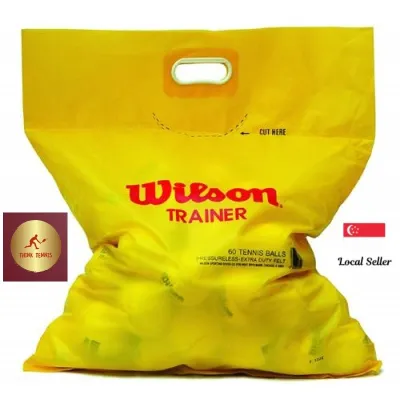
![Wilson Trainer Tennis Balls [12 Balls]](https://img.lazcdn.com/g/p/2deef53e3ac2f2de38bf72a8f079bb2f.jpg_400x400q80.jpg_.webp)
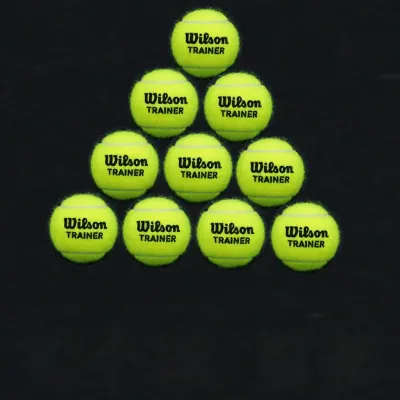
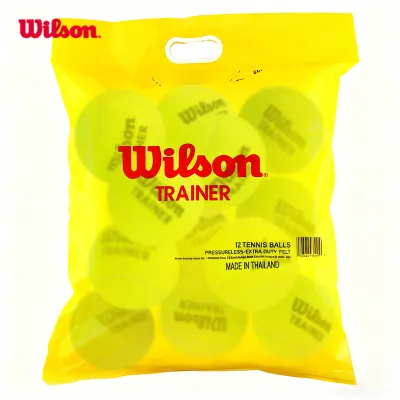
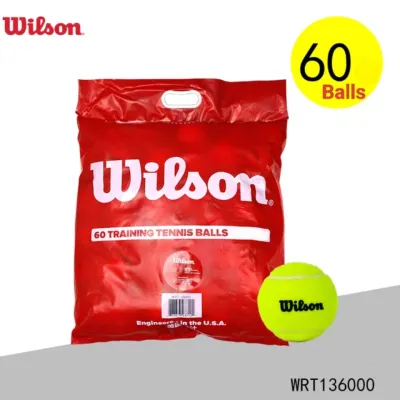
Prices are valid at publication and may change. Please refer to the product page for the latest price.
Visual design is another key element of these training aids. Many trainer balls feature distinct high-visibility felt colors or specific printed markings. These visual cues are not just cosmetic; they assist your eyes in tracking the ball’s flight path and observing the rotation of the ball. This immediate visual feedback is highly beneficial when you are trying to master spin control or improve your reaction time on the court.
Ideal Practice Scenarios for Trainer Balls
Trainer balls excel in structured practice environments where repetition is key to building muscle memory. One of the most common uses is for high-volume serve practice. Because serving requires hitting dozens of balls in a single session, using standard match balls can quickly become expensive as they lose their bounce. Trainer balls provide a reliable, uniform bounce every time you drop or toss them, allowing you to focus entirely on your toss height, racket drop, and contact point.

For beginners, these balls are highly effective for developing fundamental groundstrokes. The predictable flight path and stable bounce speed give new players more time to prepare their stance, track the ball’s trajectory, and execute a clean follow-through. This predictability reduces the frustration of erratic bounces, helping beginners build confidence and establish proper footwork patterns early in their tennis journey.
Intermediate players can also benefit from trainer balls when isolating and refining specific technical mechanics. If you are working on adding topspin or slice to your shots, using a consistent training ball allows you to focus on your racket face angle and swing path without the distraction of unpredictable match-speed reactions. By slowing down the training environment with a predictable ball, you can make conscious adjustments to your grip and wrist release before testing those skills in a competitive setting.
Transitioning from Trainer Balls to Standard Match Balls
While trainer balls are excellent for skill acquisition, transitioning back to standard match balls is essential for competitive readiness. You can evaluate your readiness to transition by observing your consistency on the court. If you can regularly make clean contact, maintain balanced footwork, and control the direction of your shots with trainer balls, you are likely ready to introduce standard pressurized balls back into your sessions.
Relying solely on trainer balls for too long can create specific performance gaps. Standard match balls travel faster, bounce livelier, and react more sharply to spin than most training models. If you only practice with trainer balls, you might find yourself late on your swings or struggling to control the depth of your shots when you return to a standard match environment.
To bridge this gap, consider blending both ball types within a single practice session. You can start your warm-up and technical drills with trainer balls to establish your rhythm and mechanics. Once you feel dialed in, switch to a fresh can of standard pressurized match balls for point play or live rallies. This progressive approach helps your muscles and eyes adjust to the increased speed and varied bounce of competitive play without sacrificing the benefits of high-repetition training.
What to Check Before Buying Wilson Trainer Balls
Before purchasing trainer balls in bulk, it is important to verify their specifications to ensure they match your training goals. Start by checking the packaging labels provided by the manufacturer. These labels often specify the intended skill level, age group, and court surface compatibility. For instance, some training balls are specifically pressurized for junior players on smaller courts, while others are full-size, pressureless options designed for adult training on hard courts.
Performing a quick physical inspection of a sample ball can also save you from purchasing the wrong product. Check for a uniform round shape, secure seam integrity, and even felt distribution. High-quality seams prevent the ball from splitting during hard hits, while uniform felt ensures a true bounce and predictable aerodynamics.
Finally, pay attention to storage guidelines to maximize the lifespan of your training equipment. Even pressureless trainer balls can degrade if exposed to extreme temperatures or high humidity. Store your practice balls in a cool, dry place away from direct sunlight. In tropical environments, keeping them in a breathable mesh bag rather than a sealed plastic container can help prevent moisture buildup, preserving the felt and maintaining consistent playability over time.
Frequently Asked Questions (FAQ)
Are Wilson Trainer balls suitable for use with a tennis ball machine?
Yes, many trainer balls are highly compatible with tennis ball machines due to their consistent bounce and durable construction. However, you should always check your specific ball machine manufacturer’s guidelines first, as some machines require specific ball weights or pressure levels to feed properly. Keep an eye on the felt wear rate, as the mechanical wheels of a ball machine can accelerate fraying. You may need to adjust the machine’s speed or spin settings to compensate for the slightly different weight and grip of training balls compared to standard match balls.
Do trainer balls feel different on the racket strings compared to regular balls?
Trainer balls, particularly pressureless or low-compression models, often feel slightly heavier or stiffer upon impact than standard pressurized match balls. This difference can alter the tactile feedback and vibration felt through your racket handle. If you find the impact feel too harsh, you might consider adjusting your racket string tension or consulting a qualified racket technician to find a string setup that dampens vibration. When switching frequently between ball types, pay close attention to your arm comfort to avoid strain.

Community discussion
Share your experience or ask a question. Comments are reviewed before publication.