
Selecting the right yoga mat thickness is a balancing act between joint comfort and physical stability. Yoga mats generally fall into three primary thickness categories: ultra-thin travel mats (1 to 2 mm), standard mats (3 to 5 mm), and thick or extra-thick mats (6 mm or more). The ideal thickness for your practice depends on your chosen yoga style, where you practice, and your body’s unique joint support needs. While a thicker mat offers plush cushioning for sensitive knees, a thinner mat provides the solid ground connection required for balancing poses.
Understanding Standard Yoga Mat Thickness Categories
To choose the right mat, it helps to understand how the industry categorizes thickness and the specific purposes each tier serves. Yoga mats are structurally distinct from Pilates mats, which are typically much thicker (10 mm to 15 mm) to support rolling exercises on the spine. Using a Pilates mat for yoga can severely compromise your balance, making it essential to stick to dedicated yoga mat categories.
Travel and thin mats, measuring between 1 mm and 2 mm, are designed primarily for portability and maximum ground feedback. These mats are highly compressible, often foldable, and lightweight enough to slip into a backpack or carry-on bag. They offer minimal cushioning, meaning you will feel the hardness of the floor beneath you, but they excel at keeping you stable during standing sequences.
Products mentioned in this guide
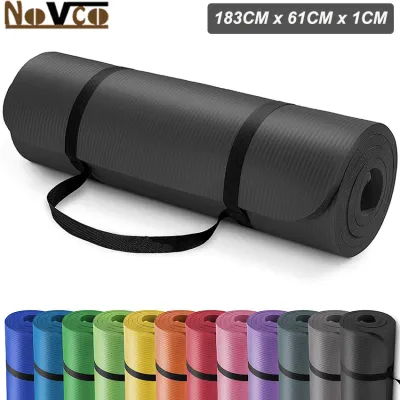
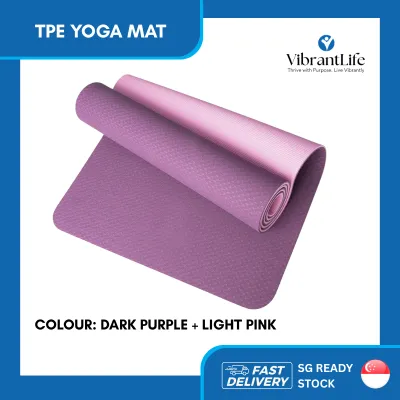
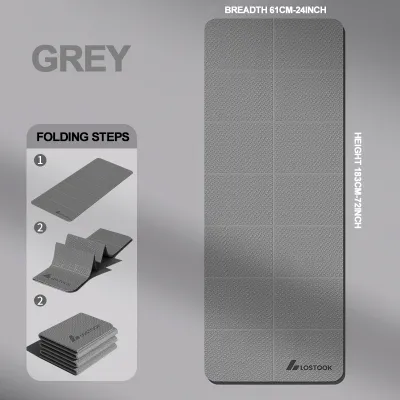
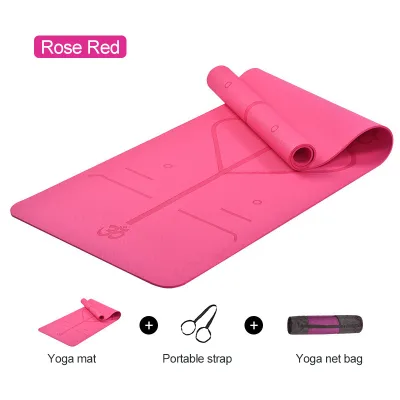

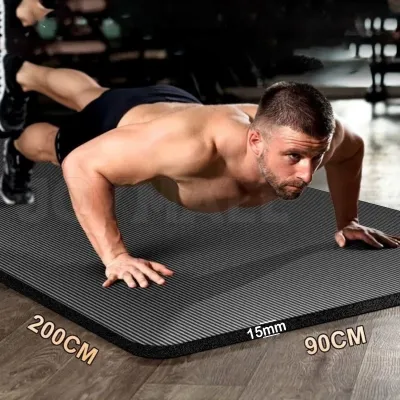
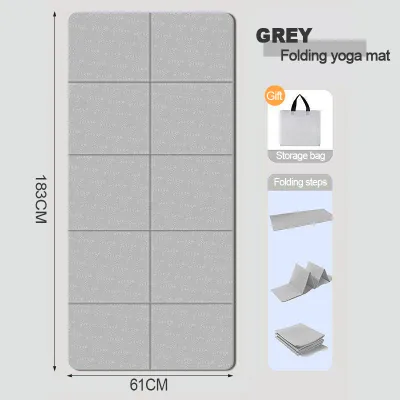
Prices are valid at publication and may change. Please refer to the product page for the latest price.
Standard mats, ranging from 3 mm to 5 mm, represent the industry baseline and are the most common choice for practitioners of all levels. A 4 mm mat is widely considered the sweet spot, offering a balanced compromise. It provides just enough compression to protect your knees and elbows during floor poses while remaining firm enough to prevent wobbling during balancing sequences.
Thick and extra-thick mats, which measure 6 mm or more, prioritize joint protection and comfort above all else. These mats are ideal for restorative practices, yin yoga, or individuals recovering from joint sensitivity. However, this added comfort comes with increased bulk and weight, making them less suitable for daily commuting and more challenging for standing balance poses.
How Yoga Mat Brands Structure Their Thickness Options
When shopping for a yoga mat, you will find that different manufacturers approach thickness options in distinct ways. Some specialty brands focus almost exclusively on a single signature thickness, developing a dense, high-performance material that they design to suit the vast majority of yogis. Other comprehensive brands offer a diverse product line, providing the same mat model in multiple thickness variations to cater to different lifestyles and practice environments.

To ensure you get the exact support you need, always verify the manufacturer’s specifications on the product label or official packaging. Do not rely solely on visual estimation, as different materials can look thicker or thinner than they actually are. Look for the precise millimeter measurement listed in the product details, and check whether the brand specifies the mat’s weight, which is a strong indicator of its material density.
It is also important to recognize that a brand’s “standard” label is not universal. One manufacturer’s standard mat might be 3 mm, while another’s is 5 mm. Because of these variations, physically testing a mat or carefully reviewing the seller’s return policy is essential. This ensures you can exchange the mat if the thickness does not feel right under your hands and knees during your initial home trial.
Matching Mat Thickness to Your Practice and Body Needs
Your choice of mat thickness should align closely with the style of yoga you practice and your physical environment. Dynamic, flowing practices such as Vinyasa, Ashtanga, or Power Yoga require a stable foundation. In these styles, you constantly transition between standing poses, inversions, and arm balances. A thinner mat (3 mm to 4 mm) prevents your hands and feet from sinking too deeply, which helps maintain ankle alignment and reduces the risk of wrist strain.
Conversely, ground-based and restorative practices like Yin Yoga, Restorative Yoga, or gentle hatha sequences benefit greatly from a thicker mat (5 mm to 6 mm or more). In these styles, you hold poses on the floor for several minutes at a time. Extra cushioning under your knees, hips, and spine prevents bruising and allows your body to relax fully into the postures without the distraction of a hard floor pressing against your joints.
Your physical body and local environment also play a major role in this decision. If you have sensitive joints, past injuries, or thin skin, a standard 3 mm mat may feel uncomfortable, making a 5 mm or 6 mm mat a more appropriate choice. Additionally, consider your practice surface. If you practice at home on hard parquet, marble, or homogeneous tiles—common in Singapore apartments—you will likely appreciate a thicker, denser mat. If you practice on carpeted floors or use a dedicated studio space with sprung wood flooring, a thinner mat will easily suffice.
Beyond Thickness: Evaluating Density, Material, and Grip
Thickness is only one part of the comfort equation; material density is equally critical. A common mistake is assuming that a thicker mat is automatically more cushioned. In reality, a cheap, extra-thick mat made of low-density foam will compress completely under your weight, leaving your joints pressing directly against the hard floor. Conversely, a dense, high-quality 4 mm natural rubber or polyurethane mat can offer highly effective joint support because it resists bottoming out under pressure.
The material of your mat also dictates its grip and texture, which becomes even more important as thickness increases. On a softer, thicker mat, your hands and feet can slide more easily if the surface lacks traction. In humid climates like Singapore, where sweat can quickly compromise your grip, choosing a material with reliable wet-traction—such as open-cell natural rubber or polyurethane—is vital to prevent slipping during dynamic transitions.
Finally, consider the trade-offs regarding weight and portability. Dense, high-quality materials like natural rubber are significantly heavier than synthetic alternatives like TPE (Thermoplastic Elastomer) or PVC. A dense 5 mm natural rubber mat can weigh upwards of three kilograms, making it a chore to carry on public transport or during a daily commute to a downtown studio. If you travel frequently or commute, you may need to balance your desire for thickness with the practical need for a lightweight, packable option.
Decision Framework: Which Yoga Mat Thickness Should You Choose?
To finalize your decision, evaluate your primary use case against these clear, conditional guidelines:
Choose a thin or travel mat (1 mm to 2 mm) if portability is your absolute priority, if you commute frequently via public transport, or if you plan to use it as a hygienic layer over a studio-provided mat. This option is highly suitable for experienced practitioners who prefer maximum ground feedback and have no joint sensitivities.
Choose a standard mat (3 mm to 5 mm) if you practice a versatile mix of standing, balancing, and floor-based poses. This is the most adaptable option for general studio classes, offering a reliable balance of stability and joint protection for most body types.
Choose a thick mat (6 mm or more) if your practice is primarily floor-based, slow-paced, or restorative, or if you require significant joint cushioning on hard home floors. Ensure you select a high-density material to prevent sinking and instability.
Before purchasing, always verify the material density, read user reviews regarding how much the mat compresses under pressure, and confirm the retailer’s return policy so you can test the mat’s feel in your own practice space.
Frequently Asked Questions (FAQ)
Can I use a thick yoga mat for standing and balancing poses?
While you can use a thick mat, it is generally not recommended for standing and balancing sequences. Soft, highly compressible surfaces reduce your proprioception—your body’s ability to sense its position in space—making it much harder to balance. This instability can cause your ankles to wobble and roll, increasing the risk of joint strain. If you must use a thick mat for joint comfort during floor work, consider stepping off the mat onto the solid floor during challenging standing balance poses like Tree Pose or Warrior III.
Does a thicker yoga mat always mean it is more durable?
No, physical thickness does not directly equate to product longevity. A mat’s durability is determined by its material composition, structural density, and resistance to friction and sweat over time. For example, a thin 2 mm mat made of high-grade natural rubber or dense polyurethane will often outlast a cheap 8 mm mat made of low-density PVC or NBR foam, which can easily tear, flake, or permanently compress after a few months of regular use. Focus on material quality rather than thickness when evaluating durability.

Community discussion
Share your experience or ask a question. Comments are reviewed before publication.