
Selecting the ideal badminton racket from a legendary lineup requires a clear understanding of your own playing style, physical conditioning, and budget. The Yonex Arcsaber 11 series is highly regarded for its even-balanced control, but the manufacturer offers it in three distinct tiers—Pro, Tour, and Play—to accommodate different segments of the badminton community. There is no single universal winner among these three options; instead, the right choice depends entirely on your skill level, physical strength, and financial allocation.
The Pro version is engineered specifically for advanced players who demand precise control and have the technique to handle a stiff shaft, while the Tour version serves intermediate club players seeking a balanced middle ground of performance and cost. For beginners and recreational players, the Play version provides a highly forgiving, durable, and budget-friendly entry point into the Arcsaber family. By analyzing the structural and material differences between these models, you can make an informed decision that directly benefits your on-court performance.
Decoding the Arcsaber 11 Tier System
To navigate the Yonex Arcsaber 11 lineup effectively, you must first understand the structural hierarchy and target audience of the manufacturer’s tier system. Yonex utilizes the Pro, Tour, and Play designations to categorize its rackets based on manufacturing complexity, material sophistication, and player capability. This systematic division ensures that players do not end up with a racket that is either too demanding for their current physical limits or lacking the precision required for competitive play.
Products mentioned in this guide
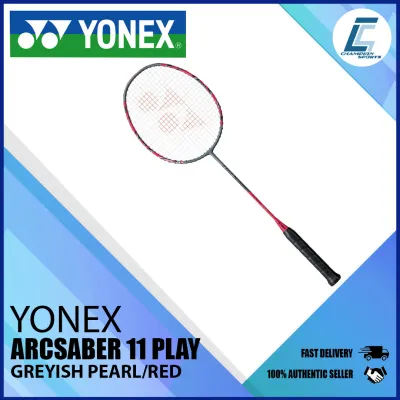
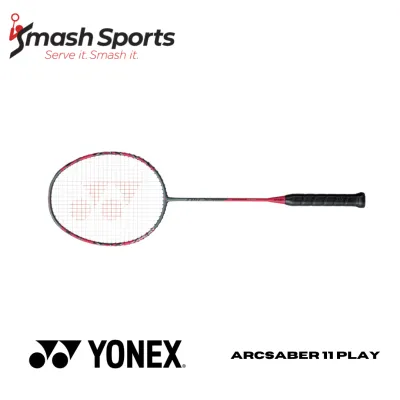
Prices are valid at publication and may change. Please refer to the product page for the latest price.
The Pro tier represents the flagship model, designed for advanced and competitive tournament players who require absolute consistency and rapid frame recovery. The Tour tier is the mid-range offering, tailored for intermediate club players who want a taste of high-end performance characteristics without the premium price tag. The Play tier is the entry-level version, specifically engineered for beginners and casual recreational players who need a racket that is easy to swing and highly forgiving on off-center hits.
Manufacturing locations and quality control standards also vary across these tiers. The Pro version is typically crafted in Japan, utilizing the brand’s most advanced manufacturing facilities and tightest quality tolerances. The Tour and Play versions are generally manufactured in other regional facilities, such as Taiwan or China, which allows the manufacturer to lower production costs while maintaining reliable structural integrity.
Before purchasing, you can visually verify the tier version by inspecting the racket’s decals and physical markings. The Pro model features premium paint finishes, distinct colorways, and the word “PRO” clearly printed on the shaft and frame, alongside the country-of-manufacture stamp on the cone. The Tour model displays “TOUR” on the shaft decals, while the Play model is easily identified by the “PLAY” label. Checking these markings at your local sports retailer is an essential step to ensure you are getting the exact model you intend to buy.
Materials, Construction, and Durability
The performance and longevity of any badminton racket are deeply rooted in its material composition and construction methods. When comparing the three Arcsaber 11 tiers, the differences in graphite grades and resin technologies become highly apparent. The Pro version utilizes premium high-modulus graphite combined with specialized resin systems designed to enhance frame elasticity and hold the shuttle on the string bed longer for superior control.

In contrast, the Tour version employs standard high-modulus graphite, which offers excellent stiffness and responsiveness but lacks some of the proprietary resin enhancements found in the flagship model. The Play version is constructed from standard graphite materials. While standard graphite does not offer the same ultra-crisp feedback or rapid recovery speed as high-modulus carbon, it is highly robust and less brittle, making the Play version exceptionally durable against accidental frame clashes.
Frame construction and joint technology also evolve as you move up the tiers. The Pro model features a highly refined, slim shaft and a seamless built-in T-joint that minimizes frame twisting during high-speed impacts. The Tour model retains a similar slim profile but utilizes a slightly simplified joint construction. The Play model features a thicker frame and shaft profile, which increases wind resistance slightly but provides the structural reinforcement necessary to withstand the rough handling typical of recreational play.
One of the most critical safety and maintenance checks you must perform is verifying the recommended string tension limits printed on the racket shaft. The Pro and Tour versions are engineered to support higher tension ranges, often accommodating up to 27 or 28 lbs, which advanced players use to maximize control. The Play version typically has a lower recommended maximum tension, often around 20 to 27 lbs depending on the specific weight classification. Exceeding these manufacturer-specified limits can warp or crack the frame, immediately voiding your warranty, so always instruct your professional stringer to stay within the printed boundaries.
Handling, Stiffness, and On-Court Feel
On-court feel is heavily dictated by how a racket bends and recovers during a swing. The Arcsaber 11 series is famous for its even-balance distribution, but the shaft stiffness varies dramatically across the three tiers. The Pro version features a stiff shaft that requires rapid swing speeds and excellent wrist technique to flex. When swung by an advanced player, this stiffness translates into immediate energy transfer and pinpoint shuttle placement, but a beginner may find it feels like swinging a solid wooden board.
The Tour version offers a medium-stiff shaft, providing a helpful compromise for developing players. This moderate flex allows the shaft to bend slightly more during the swing, assisting with power generation on clears and smashes while still maintaining a high level of directional control. The Play version is designed with a flexible shaft, acting like a spring to help players with slower swing speeds clear the shuttle from baseline to baseline with minimal physical strain.
Shock absorption and vibration dampening also differ based on the materials integrated into the frame. The Pro model incorporates advanced dampening materials within the frame core to filter out harsh vibrations, resulting in a smooth, comfortable feel even during heavy impact. The Tour model offers decent dampening but transmits slightly more feedback to the hand. The Play model, while highly flexible and comfortable, does not feature advanced internal dampening materials, meaning off-center hits will produce a more noticeable vibration through the handle.
When selecting your racket, you must also match the available weight options with your physical capabilities. The Pro and Tour models are commonly available in both 3U (approximately 85 to 89 grams) and 4U (approximately 80 to 84 grams) weight classes. A 3U racket offers more mass behind the shuttle for powerful smashes but demands greater shoulder and wrist strength, whereas a 4U racket is highly maneuverable in fast-paced doubles defense. The Play version is predominantly offered in the lighter 4U category, making it highly accessible and reducing the risk of fatigue or repetitive strain injuries for casual players.
Price Positioning and Value Assessment
Evaluating the cost-to-benefit ratio of each Arcsaber 11 tier requires looking beyond the initial purchase price to consider your playing frequency and long-term development. Because retail prices fluctuate based on promotions and regional availability, you should check current pricing at authorized sports retailers or official brand stores to establish a local baseline. Generally, the price progression from Play to Tour, and Tour to Pro, represents significant steps in financial investment.
For a recreational player or someone just starting their badminton journey, spending a premium on the Pro version rarely makes financial or practical sense. The advanced high-modulus graphite in the Pro model is more susceptible to fracturing during accidental doubles partner clashes or ground scrapes. The Play version, costing a fraction of the flagship price, offers outstanding value because its standard graphite construction is highly resilient, ensuring a long lifespan under casual playing conditions.
As your skills progress, the value equation shifts. If you find yourself playing multiple times a week in competitive club sessions, upgrading to the Tour version offers a highly noticeable return on investment. The Tour model provides the increased stiffness and aerodynamic efficiency needed to elevate your game, without requiring the steep financial outlay of the Pro model. It serves as an excellent high-performance workhorse for serious club players.
For tournament players and advanced club competitors, the Pro version justifies its premium price tag through performance consistency. When matches are decided by millimeters, the superior torsional stability, advanced vibration dampening, and precise manufacturing tolerances of the Pro model provide the competitive edge required at high levels of play. At this stage, the investment is not just for a racket, but for the confidence that the equipment will perform flawlessly under extreme athletic stress.
How to Choose the Right Arcsaber 11 for Your Game
To finalize your decision, you should systematically match your current playing profile, physical strength, and frequency of play against the specific attributes of each Arcsaber 11 tier. Choosing a racket that is too advanced can hinder your skill development and lead to physical discomfort, while choosing one below your skill level can limit your competitive potential.
You should choose the Arcsaber 11 Pro if you are a competitive tournament player or an advanced club member with refined hitting technique. You must possess the wrist strength and quick swing speed required to bend a stiff shaft effectively. If your game relies on precise shuttle placement, tight net play, and rapid defensive counters, the Pro’s exceptional torsional stability and premium dampening will complement your skills perfectly.
You should choose the Arcsaber 11 Tour if you are an intermediate player who participates in regular club matches and is actively working on advanced techniques. If you want a racket that offers a professional feel, excellent control, and moderate power assistance without stretching your budget to the absolute limit, the Tour version represents the ideal sweet spot of performance and affordability.
You should choose the Arcsaber 11 Play if you are a beginner, a casual weekend player, or someone purchasing a backup racket on a budget. If your primary goals are durability, ease of use, and high forgiveness on mistimed hits, the flexible shaft and robust frame of the Play version will make your time on the court highly enjoyable without demanding perfect physical execution.
If you remain undecided about the ideal weight class, grip size, or shaft stiffness for your playing style, it is highly recommended to visit a local specialist shop. Testing a demo racket or consulting with a professional stringer can provide invaluable personalized insights. Taking the time to verify these physical specifications beforehand will ensure your chosen Arcsaber 11 model becomes a seamless extension of your arm on the court.
Frequently Asked Questions (FAQ)
Is the Yonex Arcsaber 11 suitable for beginners?
Only the Play tier of the Arcsaber 11 lineup is highly recommended for beginners. The Play version is specifically engineered with a flexible shaft and a forgiving frame construction, which helps novice players generate depth on their clears without requiring flawless technique or explosive wrist strength. Beginners should actively avoid starting with the Pro version; its stiff shaft and demanding physical requirements can lead to rapid fatigue, poor habits, and an increased risk of shoulder or wrist strain.
Can I use the same string and tension across all three tiers?
While you can physically use the same string type across all three models, you must adjust the tension to match the specific structural limits of each tier and your personal skill level. You must always check the maximum tension limits printed on the racket shaft, as the Play version cannot safely support the ultra-high tensions that the Pro and Tour versions are built to withstand. Furthermore, pairing a flexible racket like the Play with excessively high tension can result in a highly unforgiving sweet spot, so it is best to use moderate tensions (such as 20 to 24 lbs) for lower tiers and reserve higher tensions for the stiffer Pro and Tour models.

Community discussion
Share your experience or ask a question. Comments are reviewed before publication.