
Choosing the right badminton racket from a single lineup can be challenging when a brand releases multiple versions of the same model. The choice between the Yonex Arcsaber 7 Pro, Tour, and Play ultimately depends on aligning the racket’s construction tier with your individual skill level, court frequency, and budget. While they share a similar visual identity and the signature even-balance, control-oriented DNA of the Arcsaber family, these three models represent a clear hierarchy. The Pro stands at the peak as a professional-grade instrument, the Tour serves as a high-performing intermediate option, and the Play offers an accessible, entry-level entry point. Understanding how these tiers differ in materials, manufacturing, and on-court behavior is the key to selecting the racket that will actually elevate your game rather than hinder it.
Decoding the Arcsaber 7 Tiers: What Pro, Tour, and Play Actually Mean
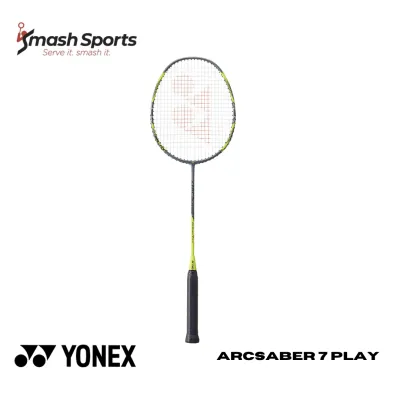
To make an informed decision, it is essential to understand how the manufacturer structures its product lineup. The Arcsaber 7 series is divided into three distinct tiers, each engineered with a specific player profile in mind. The Pro version is designed for advanced and highly competitive players who demand maximum precision, rapid recovery, and subtle feedback during intense rallies. The Tour version targets intermediate players and regular club members who require a reliable, high-quality racket that supports developing techniques without the extreme demands of a professional-grade frame. The Play version is tailored specifically for beginners, casual weekend players, or those returning to the sport who need a forgiving, durable racket that is easy to swing.
This naming convention directly reflects a manufacturing and material hierarchy. Higher tiers utilize more advanced graphite composites, specialized resin systems, and tighter manufacturing tolerances, which typically result in a more cohesive and responsive feel on impact. Lower tiers simplify these materials to keep production costs manageable while maintaining the overall frame shape and balance profile. When shopping for these rackets, players should look for authentic models through authorized sports retailers or official brand stores. Counterfeit rackets are common in the badminton market, and purchasing from verified channels ensures that the racket meets the safety, durability, and performance standards set by the manufacturer.
Products mentioned in this guide
![Yonex Arcsaber 7 Pro [Free String and Grip]](https://img.lazcdn.com/g/p/cf9006ddc250dcaf8ece8272152b7b21.jpg_400x400q80.jpg_.webp)
Prices are valid at publication and may change. Please refer to the product page for the latest price.
Comparing Materials, Shaft Stiffness, and On-Court Feel
The physical and structural differences between the Pro, Tour, and Play models directly dictate how they perform on the court. While all three models share the classic Arcsaber frame geometry designed for control and shuttle hold, the materials used in their construction vary significantly. The Pro model typically incorporates premium high-modulus graphite combined with proprietary resin technologies designed to enhance frame elasticity and stability. The Tour model uses standard high-modulus graphite, offering a balance of performance and durability. The Play model relies on standard graphite, which provides excellent durability for players who may occasionally clash rackets or mishit the shuttle. Players should always verify the exact graphite compositions and technologies on the official manufacturer specification sheet before purchasing.

Shaft stiffness and flex are critical factors that influence power transfer and control during a swing. The Arcsaber 7 Pro features a highly refined, stiff-to-medium shaft that requires a fast swing speed and precise timing to generate power, rewarding players who have developed proper hitting technique. The Tour model offers a slightly more forgiving medium flex, which assists intermediate players in generating depth on their clears even when their timing is not perfectly dialed in. The Play model is designed with a more flexible shaft, making it highly accessible for beginners who need the extra whip effect to clear the shuttle from baseline to baseline with less physical effort.
On-court feel is also heavily influenced by the weight and balance point of each individual racket. It is a common misconception that all rackets within a specific model line feel identical. Players must check the product label on the cone or shaft for specific weight indicators (such as 3U or 4U) and grip size indicators (such as G5 or G6) rather than assuming a uniform feel across the entire lineup. A heavier 3U racket will offer more stability and power but requires more wrist strength, while a lighter 4U racket provides quicker maneuverability at the net, which is highly beneficial in fast-paced doubles play.
Matching the Racket to Your Skill Level and Playing Frequency
Selecting a racket that matches your current physical conditioning and playing frequency is vital for both performance and injury prevention. Casual or beginner players who step onto the court once or twice a month will find the Play version highly suitable. Its more flexible shaft and forgiving frame construction mean that off-center hits are less likely to transmit harsh vibrations up the arm, reducing the risk of shoulder or elbow strain. Additionally, the robust construction of the Play version is highly resilient, making it a practical choice for players who are still mastering their spatial awareness and court positioning.
Intermediate players who participate in regular club sessions multiple times a week will benefit greatly from upgrading to the Tour version. At this stage of development, players are beginning to execute more complex shots, such as drop shots, slices, and fast drives. The Tour version provides the enhanced feedback and consistency required to refine these skills. The slightly stiffer shaft offers better control over shuttle placement compared to the Play version, allowing players to feel the contact point more clearly and adjust their technique accordingly during long rallies.
Advanced and competitive players who train intensely and play in tournaments require the precise control and rapid responsiveness of the Pro version. In high-level matches, rallies are incredibly fast, and even a millisecond of delayed racket recovery can result in a lost point. The premium materials in the Pro version ensure that the frame recovers its shape almost instantly after impact, allowing for rapid follow-up shots. However, players must possess the physical strength, wrist speed, and technical proficiency to unlock the benefits of the Pro version; otherwise, the stiffer shaft may feel unresponsive and lead to premature fatigue.
Evaluating Budget and Long-Term Value
When deciding which tier to purchase, it is important to weigh the financial investment against your actual playing habits. In the local market, prices are typically structured in clear tiers, with the Play version being highly affordable, the Tour version sitting in the mid-range, and the Pro version representing a premium investment. While it can be tempting to purchase the top-tier Pro model simply because it is used by professional athletes, this may not represent the best value for every player.
A useful way to evaluate this investment is through the concept of cost-per-use. If you only play occasionally, a premium racket like the Pro may spend most of its time in a bag, making it a low-value purchase. Conversely, for a dedicated player who spends several hours on the court every week, investing in the Pro or Tour version makes long-term sense as the superior durability of the premium graphite and the refined playing experience justify the higher upfront cost in S$.
For many intermediate players, saving money by choosing the Tour or Play version is a highly strategic decision. The money saved can be allocated toward essential ongoing maintenance, such as high-quality strings, professional restringing services, and replacement grips. A mid-tier racket fitted with high-performance strings tailored to your preferred tension will almost always perform better than a premium Pro racket with worn-out, low-tension factory strings.
Final Decision Guide: Which Arcsaber 7 Should You Buy?
To finalize your decision, consider these straightforward guidelines based on your skill level, playing frequency, and budget:
Choose the Arcsaber 7 Pro if you are an advanced or highly competitive player who demands maximum control, possesses excellent swing speed, plays multiple times a week, and is willing to invest in a premium, professional-grade tool.
Choose the Arcsaber 7 Tour if you are an intermediate club player looking for a balanced mix of performance, control, and moderate shaft flex, and you want a high-quality racket without paying the premium price of the Pro model.
Choose the Arcsaber 7 Play if you are a beginner, casual player, or budget-conscious shopper who wants an easy-to-use, durable, and forgiving racket that helps generate power with minimal physical strain.
Before finalizing your purchase at checkout, always verify the specific weight class (such as 4U) and grip size (such as G5) to ensure the physical dimensions match your hand size and physical preferences. Remember that the racket frame is only one component of your setup. Selecting the correct string type and tension is critical for realizing the racket’s intended feel and performance on the court.
Frequently Asked Questions (FAQ)
Do I need to restring the Arcsaber 7 Tour or Play immediately?
Factory strings on lower-tier models like the Play and sometimes the Tour are generally installed at a low tension primarily for display and basic testing purposes. These strings may lack the responsiveness, control, and durability required for regular play. If you are a beginner, the factory strings are usually sufficient to get started. However, intermediate and regular players should inspect the string condition and consider restringing the racket immediately with a high-quality string at their preferred tension to optimize the racket’s performance and feel.
How do I verify the correct weight and grip size before buying?
You can verify these specifications by checking the product labels, which are typically located on the cone just above the handle or printed on the shaft. Weight is represented by a number followed by ‘U’ (with 4U being lighter than 3U), while grip size is indicated by ‘G’ followed by a number (where G5 is a standard size in many markets, and higher numbers indicate thinner grips). If you are unsure which combination suits you, it is highly recommended to visit a local sports store to physically hold different weights and grip sizes, as the correct fit is essential for comfort and preventing wrist injuries.

Community discussion
Share your experience or ask a question. Comments are reviewed before publication.