
Selecting the right badminton racket requires looking past marketing buzzwords and analyzing how physical specifications translate to on-court performance. The Yonex Arcsaber 7 Tour is engineered specifically as a mid-tier, control-oriented racket, making it a popular option for intermediate players who prioritize maneuverability, defensive recovery, and precise shuttle placement. Unlike head-heavy power rackets designed for raw smashing, this model focuses on frame stability and shuttle hold, allowing players to dictate the pace of rallies from all areas of the court.
Understanding how the weight, balance, and shaft flexibility of this racket interact with your physical capabilities is essential before making a purchase. Equipment cannot replace proper training, physical conditioning, or technical stroke play, but choosing a racket that aligns with your current skill level can prevent unnecessary fatigue and reduce the risk of repetitive strain injuries.
Decoding the Core Specifications
To understand how the Yonex Arcsaber 7 Tour behaves during a rally, you must first look at its weight classification. Typically available in a 4U weight distribution (averaging around 83 grams), this racket sits in the sweet spot for modern, fast-paced play. A lighter 4U frame allows for rapid defensive reactions and quick transitions at the net, though it inherently offers less built-in momentum for heavy smashes compared to a heavier 3U alternative. Players must rely more on their own forearm rotation and wrist snap to generate high shuttle speed.
Products mentioned in this guide
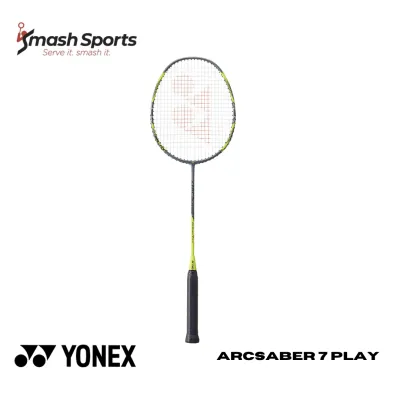
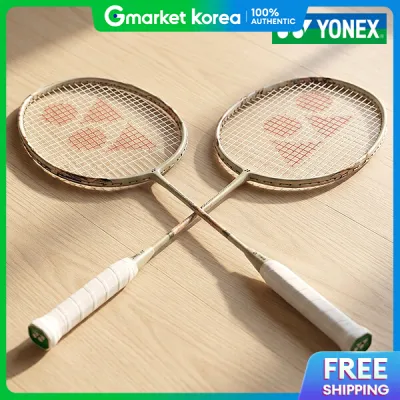
Prices are valid at publication and may change. Please refer to the product page for the latest price.
The balance point of the Arcsaber 7 Tour is classified as even-balance. In practice, an even-balance racket distributes its weight proportionally across the frame and shaft, avoiding the extreme head-heavy feel of attacking rackets or the ultra-light head feel of purely defensive models. This neutral distribution provides a highly predictable swing path, allowing you to switch seamlessly between defensive blocks, flat drives, and drop shots without feeling a heavy drag on your wrist.
Shaft flexibility is another critical performance factor, and this model features a medium-flex shaft. A medium flex is highly forgiving because it acts like a spring, bending slightly during the swing to assist players with moderate swing speeds in generating depth on their clears. Stiffer shafts require exceptionally fast arm speed and precise timing to unlock their potential; a medium shaft lowers this technical barrier, making it easier to maintain a consistent length during high-pressure rallies.
When evaluating this racket, you will also encounter secondary specifications such as cosmetic colorways and paint finishes. While a sleek aesthetic can boost your confidence on court, these visual elements have zero impact on the physical performance, weight distribution, or aerodynamics of the frame. Focus your decision-making on the verified weight, balance, and flex ratings rather than the visual design of the current model year.
Matching the Racket to Your Playing Style and Skill Level
The Arcsaber series is built around the concept of control and shuttle hold, meaning the frame is designed to flex slightly inward upon impact to keep the shuttle on the string bed a fraction of a second longer. This design philosophy makes the Arcsaber 7 Tour highly compatible with tactical, control-oriented playstyles. If your game relies on precise drop shots, tight net play, and deceptive cross-court slices to force opponent errors, the frame characteristics will support your tactical intentions.

Conversely, players who favor an aggressive, attack-from-the-back style may find the racket limits their raw power output. Because it lacks the head-heavy momentum of dedicated attacking lines, generating steep, piercing smashes requires excellent personal technique and physical power. If your physical conditioning or overhead stroke mechanics are still developing, relying on a control racket to hit winning smashes can lead to over-swinging, which increases the risk of shoulder and elbow strain.
From a skill-level perspective, intermediate players stand to benefit the most from this configuration. The combination of a 4U weight and a medium-flex shaft provides enough assistance to help developing players clear baseline-to-baseline, while still offering the precise feedback needed to refine net play. Advanced players with highly developed wrist speed might find the medium shaft slightly too slow to recover during rapid, consecutive drives, often preferring the stiffer response of high-end professional models.
In terms of discipline, the racket is highly versatile but excels particularly in doubles play. The fast-paced nature of doubles demands quick reflex blocks and rapid flat exchanges, where a heavy racket head is a distinct disadvantage. The even-balance design allows you to defend body smashes effectively and transition quickly to the front of the court to intercept weak returns. In singles, it provides the consistent control needed to move your opponent to all four corners, though you must be prepared to work harder to finish rallies.
Pre-Purchase Verification and Fit Checklist
Before purchasing the Yonex Arcsaber 7 Tour, it is crucial to verify that the physical grip size matches your hand ergonomics. Most models in Asian markets are distributed in G5 or G6 grip sizes, which are relatively thin. A grip that is too small can cause you to over-tighten your hand, leading to forearm fatigue, while a grip that is too large limits your ability to use finger power for subtle changes in shuttle direction. Measure your hand or test different grip thicknesses at a local pro shop before finalizing your setup.
String tension is another vital variable that must be matched to both the frame’s structural limits and your personal skill level. The manufacturer specifies a recommended tension range on the racket cone (typically up to 27 lbs for the 4U variant). Exceeding this recommended limit can warp or crack the graphite frame during a mis-hit, instantly voiding the manufacturer’s warranty. For intermediate players, a moderate tension between 22 lbs and 25 lbs is generally recommended to maintain a generous sweet spot while preserving the racket’s control characteristics.
Finally, when purchasing from online marketplaces or physical sports retailers, always verify the authenticity of the product. Check for the presence of the official Yonex hologram sticker on the cone, and ensure the laser-engraved serial numbers on the shaft and cone are clean and legible. In humid tropical climates, string tension decays more rapidly, so plan to have the racket freshly strung by a certified local stringer rather than relying on pre-strung factory options, which may have degraded while sitting in storage.
Frequently Asked Questions (FAQ)
How does the Arcsaber 7 Tour differ from the Pro or Play versions?
The Arcsaber 7 lineup is divided into different tiers to accommodate various budgets and skill levels. The Pro version is manufactured in Japan using high-grade graphite materials and features a stiffer shaft designed for advanced players who demand maximum precision and have the swing speed to utilize it. The Tour version is a mid-tier model that replicates the playability and even-balance profile of the Pro but uses slightly more forgiving materials and a medium-flex shaft, making it more accessible for intermediate players. The Play version is an entry-level model designed with simplified materials and a highly flexible shaft to assist beginners who are still developing basic swing mechanics.
What type of strings pair best with this racket's specifications?
To complement the control-oriented nature of the Arcsaber 7 Tour, pairing it with a high-repulsion, medium-to-thin gauge string is highly effective. Thinner strings (around 0.65mm to 0.68mm) enhance the racket’s natural feel and responsiveness, allowing for precise net play and effortless clears. However, if you frequently mis-hit the shuttle near the frame, a slightly thicker, more durable string (around 0.69mm to 0.70mm) may be more practical to prevent premature breakage. Always ensure your chosen string tension aligns with your physical hitting power; higher tensions reduce the sweet spot size and require precise, clean contact to generate depth.

Community discussion
Share your experience or ask a question. Comments are reviewed before publication.