
Choosing the right badminton racket depends heavily on your personal playing style, physical conditioning, and tactical preferences on the court. Yonex categorizes its flagship rackets into three distinct families—Astrox, Arcsaber, and Nanoflare—each engineered with a different weight distribution and frame geometry to support specific strategic goals. By understanding how these design philosophies align with your swing mechanics, you can select a frame that enhances your natural strengths while minimizing the risk of fatigue or injury.
Selecting a racket is not merely about picking the most popular model used by professional players. The physical demands of a racket must match your current skill level and physical preparation. A racket that is too demanding can hinder your development and lead to physical strain, while the right match can elevate your consistency and confidence during intense rallies.
The Core Philosophy: Astrox, Arcsaber, and Nanoflare Compared
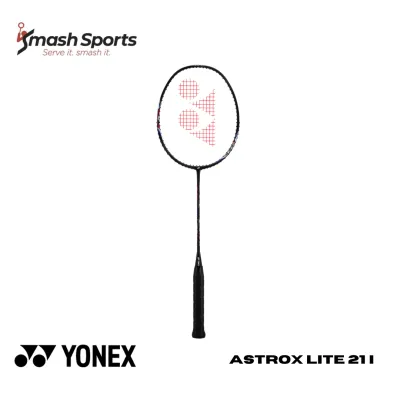
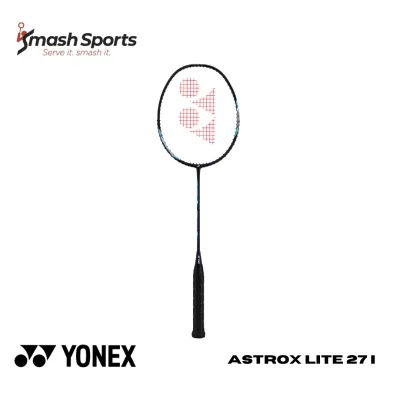
The fundamental difference among these three series lies in their balance points and frame designs, which dictate how the racket behaves during a swing. The Astrox series is engineered with a head-heavy balance, concentrating weight at the top of the frame and the joint to generate steep attacking angles and maximum power. This design utilizes a rotational generator system to distribute weight across the grip end, frame top, and joint, helping players transition smoothly from one powerful smash to the next.
Products mentioned in this guide
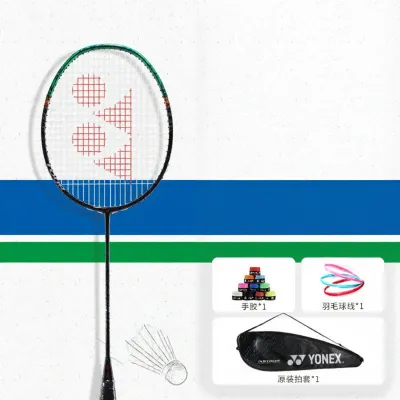
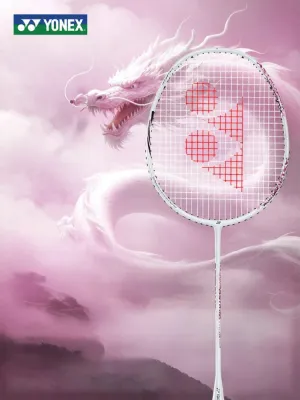
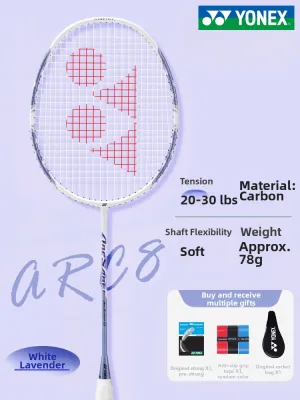
Prices are valid at publication and may change. Please refer to the product page for the latest price.
In contrast, the Arcsaber series adopts an even-balance philosophy, distributing weight uniformly across the frame and shaft. This series focuses on shuttle hold, allowing the frame to flex slightly upon impact to keep the shuttle on the string bed longer for precise placement and control. It is designed for players who prioritize accuracy, tactical placement, and a clean feel over raw power.
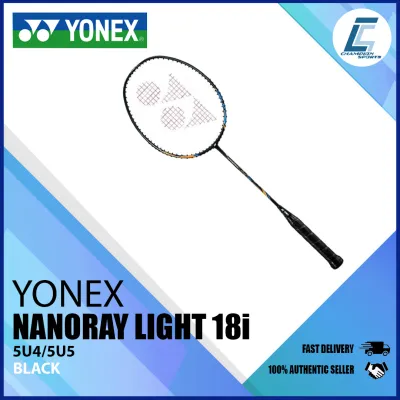
The Nanoflare series is built with a head-light balance, placing more weight toward the handle to facilitate rapid swings, quick drives, and swift defensive recovery. These rackets feature aerodynamic frames designed to slice through the air with minimal resistance, making them ideal for fast-paced exchanges and quick defensive reactions.
The frame geometry also differs across these lines. For instance, the Nanoflare series often utilizes a highly aerodynamic frame profile to maximize head speed, whereas the Astrox series employs a slightly wider frame construction to handle the stress of high-impact smashes. The Arcsaber series focuses on frame elasticity, utilizing materials that allow the sides of the frame to flex inward upon impact, cradling the shuttle momentarily before launching it.
While these general characteristics define each family, individual models within each series vary significantly in stiffness, weight, and materials. It is essential to check the specific manufacturer specifications for any model you consider, rather than assuming every racket in a series performs identically.
Matching the Series to Your On-Court Play Style
Your tactical role on the court and your preferred shot selection should guide your choice among these three series. If your game relies heavily on steep smashes, aggressive clears, and dominating the rally from the rear court, the Astrox series is designed to support that offensive pressure. The head-heavy momentum helps transfer maximum energy into the shuttle, making it easier to execute deep, powerful shots that force your opponent onto the defensive.

If you prefer constructing rallies, playing deceptive net shots, and maintaining consistent accuracy from all areas of the court, the Arcsaber series offers the balanced feel required for precise control. The enhanced shuttle hold gives you the split-second feedback needed to direct the shuttle into tight corners or execute tight net spins that disrupt your opponent’s rhythm.
For players who thrive in fast flat exchanges, quick interceptions at the net, and rapid transitions from defense to attack, the Nanoflare series provides the necessary speed. The head-light design allows you to maneuver the racket quickly during rapid double drives and defensive blocks, ensuring you can keep up with high-speed rallies.
Your choice may also depend on whether you primarily play singles or doubles. In doubles, where fast-paced flat exchanges and quick net interceptions dominate, a head-light Nanoflare or an even-balanced Arcsaber is often preferred for rapid defensive reactions. In singles, where you have more time to construct rallies and set up powerful overhead shots, the head-heavy Astrox can be highly effective for wearing down opponents with deep, heavy clears and steep smashes.
If your playing style is highly transitional and does not fit neatly into one category, you may need to look for specific models that bridge these design gaps. Alternatively, you can adjust your string type and tension to modify the overall feel of a racket, tailoring a head-light frame for slightly more control or an even-balanced frame for a touch more speed.
Crucial Specifications to Verify Within Your Chosen Series
Once you identify the series that matches your style, you must evaluate the specific physical dimensions of individual models. Weight classes are designated by a “U” rating, where a lower number indicates a heavier racket. For example, 3U rackets (typically 85–89 grams) offer more stability and power potential but require greater physical stamina, whereas 4U (80–84 grams) and 5U (75–79 grams) options increase swing speed and reduce arm fatigue.
Shaft flexibility is another critical factor that dictates timing and power transfer. Stiff shafts require a fast, well-developed swing speed to bend the racket and release energy efficiently, making them suitable for players with refined technique and strong wrist action. Medium or flexible shafts bend more easily, helping players with slower swings generate depth and power without straining their muscles.
Grip sizes, usually labeled from G4 (larger) to G5 (smaller), directly impact your wrist action and finger power. A smaller grip allows for quick finger adjustments and rapid changes in racket face angle, while a larger grip can offer a more secure hold for players with larger hands or those who prefer a thicker overgrip.
Additionally, pay close attention to the recommended tension limits specified by the manufacturer. Heavier, stiffer frames designed for advanced players often support higher tension limits, whereas lighter, more flexible frames may have lower maximum tension thresholds to protect the structural integrity of the frame. Exceeding these recommended limits can void the warranty and increase the risk of frame breakage during play.
Because these metrics vary across different models within the same family, always verify the exact balance point, weight, and stiffness ratings on the manufacturer’s label or official specification sheet before making a decision.
Factoring in Skill Level and Physical Conditioning
Your physical capabilities and technical development must align with your racket choice to ensure steady progress and prevent physical strain. Beginners and intermediate players generally benefit from lighter, more flexible options within any of the three series. These user-friendly specifications aid in building proper swing technique, allow for easier timing, and significantly reduce muscle fatigue during long sessions.
Advanced players, who have developed consistent swing mechanics and physical strength, can effectively utilize stiffer shafts and heavier frames. These demanding specifications require precise timing and robust physical conditioning to maximize energy transfer, but they reward the player with superior control and shot feedback.
Proper physical conditioning and a thorough warm-up routine are essential to prepare your muscles and joints for the rapid, explosive movements required in badminton. Relying solely on a high-performance racket to generate power without the necessary physical preparation can lead to improper swing mechanics and acute injuries. Always prioritize building core strength, shoulder stability, and wrist flexibility alongside your technical practice.
Injury prevention should always be a primary consideration when selecting equipment. If you begin to experience persistent shoulder, elbow, or wrist fatigue, it is often a sign that your racket is too heavy, too stiff, or improperly balanced for your current physical conditioning.
Equipment cannot replace proper training, physical preparation, and sound judgment on the court. If you experience persistent joint pain during or after play, stop using the racket immediately and consult a coach or a sports physiotherapist to evaluate your technique and physical health.
Final Verification: Testing and Purchasing Considerations
Before committing to a purchase, practical testing is highly recommended to ensure the racket feels comfortable in hand. Borrowing or demoing rackets from local clubs, friends, or specialized sports retailers in Singapore allows you to experience the actual swing weight and vibration dampening under real playing conditions.
When evaluating your investment, balance your budget in S$ with the durability, material grade, and warranty terms of the specific model. Premium high-modulus carbon frames offer excellent responsiveness but come at a higher price point, while mid-range options often provide a durable, cost-effective alternative for recreational play.
Grip customization is another practical way to fine-tune your racket’s feel. Adding a thicker polyurethane replacement grip or a thin overgrip can alter the balance point slightly, shifting a head-light racket toward an even balance, or making a head-heavy racket feel slightly more manageable. Experimenting with different grip materials and thicknesses can help you achieve the perfect balance of comfort and control.
Keep in mind that string choice and tension interact dynamically with the racket’s inherent balance and stiffness. High string tensions offer precise control but shrink the sweet spot and demand perfect technique, while lower tensions provide more elasticity and power assistance.
Finally, view your racket selection as an evolving process. As your footwork, physical strength, and tactical awareness develop over time, your equipment needs may change, requiring you to re-evaluate your choice of series and specifications to match your growing skills.

Community discussion
Share your experience or ask a question. Comments are reviewed before publication.