
Choosing between the Yonex Mavis 350 and the Mavis 200 comes down to balancing flight accuracy with long-term durability. While both are popular nylon options for badminton players, they serve distinct developmental stages. The Mavis 350 is engineered to mimic the flight trajectory and recovery of a traditional feather shuttlecock, making it a frequent choice for intermediate players and club sessions. In contrast, the Mavis 200 focuses on basic flight stability and robust construction, offering an accessible entry point for beginners and casual recreational players.
Selecting the right model prevents frustration on the court. A shuttlecock that flies too fast or fails to slow down naturally can disrupt your timing and hinder skill development. By evaluating how each model behaves during clears, drops, and smashes, you can invest in the tube that matches your current playing style and budget.
Core Differences in Flight and Durability
The structural differences between these two models start with the design of the nylon skirt and the composition of the base. According to manufacturer specifications, the Mavis 350 features an advanced skirt designed to replicate the recovery time of feather shuttlecocks. When hit, the skirt collapses slightly and then quickly expands, allowing the shuttlecock to stabilize its flight path rapidly. This rapid recovery is crucial for realistic net play and drop shots, where the shuttlecock must flatten out and descend predictably.
Products mentioned in this guide
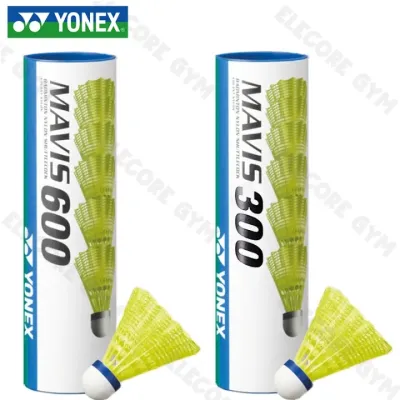
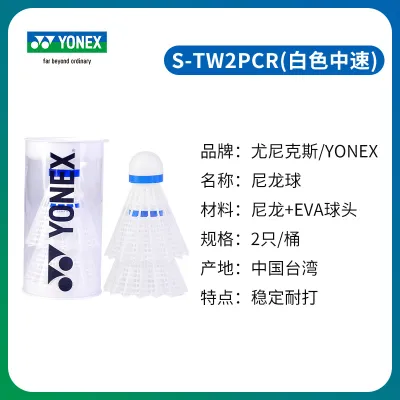
Prices are valid at publication and may change. Please refer to the product page for the latest price.
The Mavis 200 utilizes a slightly different skirt geometry and weight distribution. Its design prioritizes a stable, consistent arc that is forgiving for players who are still mastering their contact point. While it may not recover as quickly as the higher-tier model, it offers a predictable flight path that helps beginners establish a steady rhythm during long rallies. The base of both models typically features synthetic cork or natural cork, depending on the specific production run, which directly influences how the shuttlecock feels off the racket face.
The lattice pattern of the nylon skirt also differs between the two models. The Mavis 350 utilizes an intricate lattice structure that allows air to pass through in a manner similar to natural feathers. This design helps the shuttlecock slow down naturally at the end of its flight path. The Mavis 200 features a slightly thicker, more rigid lattice structure designed to withstand repeated high-impact hits, prioritizing structural longevity over advanced aerodynamic deceleration.
Durability on the court is highly dependent on player technique and the frequency of off-center hits. During regular play, you can perform simple observable checks to determine when a shuttlecock needs replacement. Inspect the nylon skirt for visible tearing, warping, or thinning along the ribs. A deformed skirt will cause the shuttlecock to wobble in the air or drift off-course. Additionally, check the connection point between the skirt and the cork base; any separation or loosening indicates that the shuttlecock’s structural integrity is compromised and should be retired to maintain consistent play.
Matching the Shuttlecock to Your Skill Level
For beginners, the primary goal is developing consistent hand-eye coordination, clean racket contact, and fundamental footwork. The Mavis 200 is well-suited for this stage of learning. Because beginner rallies often involve slower clears and high, defensive lifts, the stable flight profile of the Mavis 200 allows players to focus entirely on their swing mechanics. It is forgiving of mistimed hits that might otherwise tear or warp a more delicate shuttlecock.

Intermediate players require a shuttlecock that responds accurately to advanced techniques like sliced drop shots, tight net spins, and powerful smashes. The Mavis 350 is designed to meet these demands by bridging the gap between nylon and feather performance. In traditional badminton, feather shuttlecocks decelerate rapidly after the initial impact, creating a steep drop-off at the end of their flight. The Mavis 350 is engineered to approximate this deceleration curve, allowing intermediate players to practice realistic court positioning and tactical shot placement.
The physical feedback transmitted through the racket shaft also varies between these models. Hitting the Mavis 350 provides a crisp sensation that closely resembles the impact of a feather shuttlecock, helping players gauge the exact amount of force required for delicate net shots. The Mavis 200, due to its slightly more rigid skirt construction, can feel somewhat heavier upon impact. While this solid feel is reassuring for beginners, intermediate players may find it lacks the subtle responsiveness needed for advanced shot-making.
Transitioning from nylon to feather shuttlecocks can be challenging because nylon models generally fly faster and do not slow down as abruptly. If you plan to eventually play in competitive leagues or tournaments where feather shuttlecocks are mandatory, training with the Mavis 350 helps ease this transition. It teaches you to anticipate the natural drop-off of the shuttle, preventing the common habit of overhitting that often occurs when players train exclusively with basic nylon models.
Budget and Value Assessment
When evaluating the financial aspect of your purchase, it is helpful to look at the relative price tiers of these models in S$. The Mavis 350 sits at a premium tier, reflecting its advanced flight engineering and closer approximation of feather flight. The Mavis 200 is positioned as a budget-friendly alternative, making it highly attractive for schools, community centers, and casual weekend players who want to keep operational costs low.
To calculate the conceptual cost per session, consider your group’s average skill level and hit consistency. While a tube of Mavis 350 requires a higher initial investment, intermediate players may find they use fewer shuttlecocks per session because their clean contact reduces structural wear. Conversely, if a group of beginners uses the Mavis 350, frequent frame hits can damage the advanced skirt design quickly, leading to a high replacement rate and poor cost-effectiveness. In this scenario, the durable Mavis 200 offers greater value.
Proper storage also plays a significant role in maximizing the lifespan of your shuttlecocks. In warm tropical climates, exposing nylon shuttlecocks to direct sunlight or leaving them in a hot vehicle can cause the plastic skirts to warp and become brittle. Storing your tubes in a cool, shaded place helps maintain the flexibility of the nylon, ensuring you get the maximum number of games out of each shuttlecock regardless of the model you choose.
Paying the premium for the Mavis 350 makes long-term financial sense when your training goals require realistic flight feedback. If you are actively working on your tactical game, shot precision, and tournament preparation, the cheaper model may hinder your progress by providing unrealistic flight paths. Investing in the higher-tier model ensures that your practice hours translate directly to competitive success, making the extra cost a worthwhile investment in your athletic development.
Quick Comparison Matrix
To help you quickly compare these two popular nylon shuttlecocks, the following matrix outlines their primary characteristics and target use cases. Keep in mind that performance can vary based on local court conditions and individual player habits.
| Feature | Yonex Mavis 350 | Yonex Mavis 200 |
|---|---|---|
| Target Audience | Intermediate players, club training, feather transition | Beginners, casual recreational players, schools |
| Flight Characteristics | Fast recovery, realistic deceleration, closer to feather | Stable arc, forgiving flight, consistent speed |
| Durability Expectation | High (when hit cleanly with proper technique) | Very High (forgiving of off-center frame hits) |
| Relative Price Tier | Premium nylon tier (Higher S$ per tube) | Budget-friendly tier (Lower S$ per tube) |
Please note that the exact flight speed of any nylon shuttlecock is highly dependent on the specific cap color (green, blue, or red) and the ambient temperature of your playing environment. Always verify the speed rating on the tube label before finalizing your purchase to ensure optimal performance on your local courts.
Final Verdict: Which One Should You Choose?
Choose the Yonex Mavis 350 if you are an intermediate player, participate in organized club sessions, or are actively training to transition to feather shuttlecocks. Its advanced skirt design provides the rapid recovery and realistic deceleration needed to practice precise drop shots, tight net play, and tactical smashes. The higher investment is justified by the realistic feedback it provides during intensive training sessions.
Choose the Yonex Mavis 200 if you are a beginner, play casual recreational games with family, or are purchasing equipment for a school or community group. Its forgiving flight path and robust durability make it ideal for players who are still mastering clean racket contact. It offers excellent value for money, allowing you to enjoy long rallies without worrying about premature wear from off-center hits.
Verify first before buying any tube of shuttlecocks by checking the speed rating indicator on the cap. In warm and humid indoor sports halls, a slow speed (green cap) or middle speed (blue cap) is typically recommended to prevent the shuttlecock from flying out of bounds too easily. Matching the speed rating to your local playing temperature is just as important as choosing the right model.
Frequently Asked Questions (FAQ)
Can I use these nylon shuttlecocks for official tournaments?
Most official, sanctioned badminton tournaments governed by national or international bodies require the use of natural feather shuttlecocks. Nylon shuttlecocks like the Mavis series are generally restricted to local club leagues, recreational tournaments, school competitions, and training sessions. Always check the specific tournament regulations provided by the organizers before purchasing shuttlecocks in bulk for competitive events.
How does temperature affect the speed of Mavis shuttlecocks?
Ambient temperature directly influences air density, which in turn affects the flight speed of nylon shuttlecocks. In warmer conditions, the air is less dense, causing the shuttlecock to fly faster and travel further. Conversely, colder air is denser, slowing the shuttlecock down. To compensate for this, manufacturers color-code the tube caps: green caps indicate slow speed (for warm climates), blue caps indicate middle speed (for moderate temperatures), and red caps indicate fast speed (for cold environments).

Community discussion
Share your experience or ask a question. Comments are reviewed before publication.