
Choosing between a Yonex polyurethane (PU) overgrip and a towel grip is not about finding a universally superior product, but rather matching the material to your personal sweat volume and the realities of Singapore’s consistently humid climate. While PU grips offer a tacky, precise feel that excels for light to moderate sweaters, towel grips provide the heavy-duty moisture absorption required by players who perspire profusely. This guide breaks down the physical differences, performance thresholds, and maintenance requirements of both options so you can select the grip that keeps your racket secure and your game consistent.
In Singapore’s typical indoor sports halls, where ventilation can be limited and relative humidity often exceeds 80 percent, maintaining a secure hold on your badminton racket is a constant challenge. A slipping racket not only ruins your shot accuracy but also increases the risk of the racket flying out of your hand, potentially causing injury or equipment damage. By understanding how these two distinct grip materials interact with moisture and skin, you can make an informed decision that enhances your control and confidence on the court.
Understanding the Core Differences: PU vs. Towel Overgrips
To make the right choice, you must first understand the structural and material differences between polyurethane (PU) and towel overgrips. These physical properties directly dictate how the racket feels in your hand, how much shock is absorbed, and how the handle shape is preserved.
Products mentioned in this guide
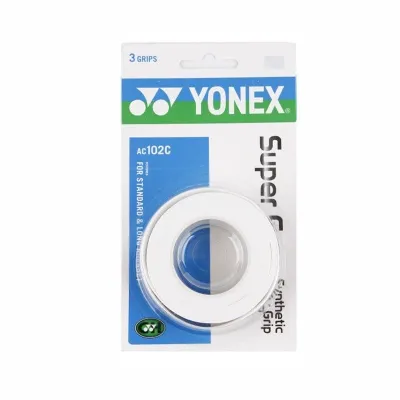
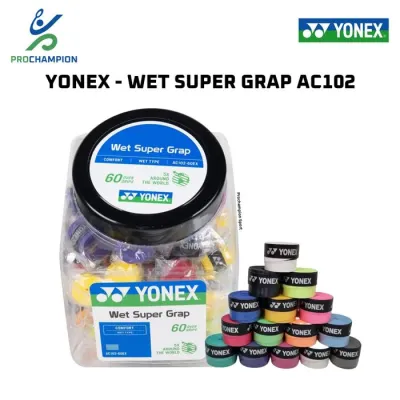
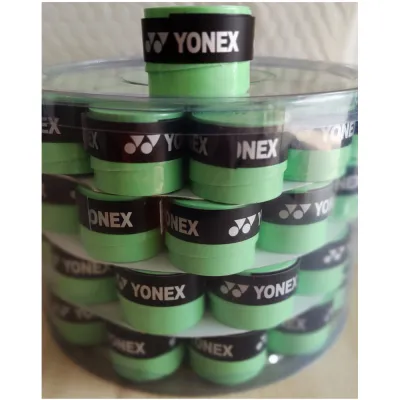
![Yonex Super Grap (3pcs in 1 roll/pack) [For Badminton/Tennis AC102EX]](https://img.lazcdn.com/g/p/15485796f0bf3289861499713af790d6.jpg_400x400q80.jpg_.webp)
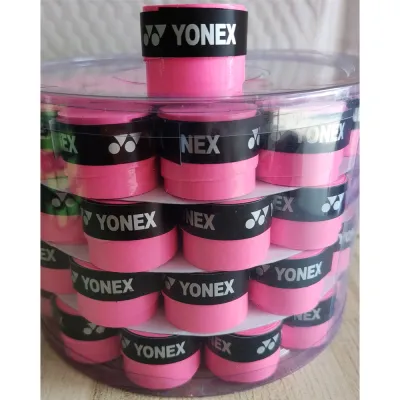
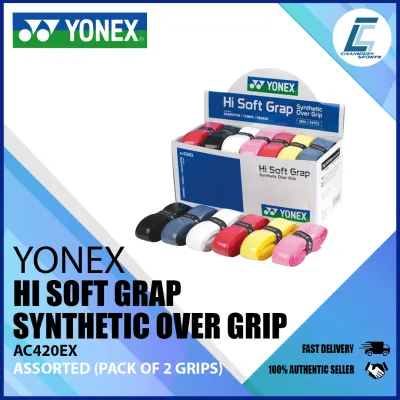
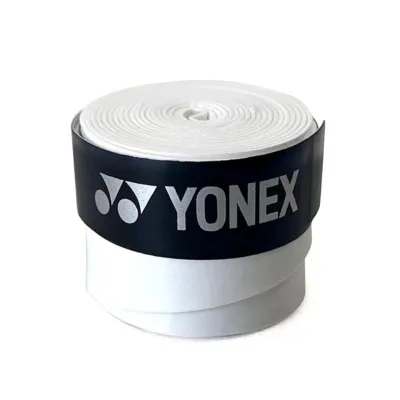
Prices are valid at publication and may change. Please refer to the product page for the latest price.
PU overgrips are made from a thin layer of polyurethane polymer applied over a non-woven polyester backing. They are designed to be wrapped tightly over the racket’s original base grip. PU grips are exceptionally thin, typically ranging from 0.4 mm to 0.6 mm in thickness. This ultra-thin profile is highly valued by players who rely on technical finger play, as it preserves the sharp, distinct bevels of the wooden handle. Feeling these bevels allows you to instantly verify your racket face orientation without looking at your hand, facilitating rapid transitions between forehand and backhand grips.
In contrast, towel grips are constructed from woven cotton or microfiber loops, mimicking the texture of a bath towel. They are significantly thicker and denser than synthetic PU grips. When wrapped around the handle, a towel grip adds noticeable volume and weight. This plush, fabric-like layer rounds out the sharp bevels of the handle, transforming the grip into a softer, more cylindrical shape. While this reduces the tactile feedback of the handle’s edges, it provides a highly cushioned, comfortable hold that can reduce hand strain during long, repetitive hitting sessions.
Furthermore, the added weight of a towel grip can slightly alter the balance point of your racket. Because the handle becomes heavier, the racket’s overall balance shifts slightly toward the headlight end. For players who are highly sensitive to racket customization, this minor shift can affect swing speed and timing, whereas a lightweight PU grip has a negligible impact on the racket’s original balance.
Evaluating Performance in High Humidity and Heavy Sweat
The performance of any grip material changes dramatically when exposed to moisture. In a tropical climate like Singapore’s, sweat and ambient humidity work together to test the limits of your overgrip’s friction and hold.

PU grips rely on surface adhesion, commonly referred to as “tackiness,” to provide friction against your skin. Under dry conditions or light perspiration, this tacky surface offers an incredibly secure, locked-in feel. The grip essentially sticks to your hand, requiring minimal squeezing force to keep the racket stable. However, polyurethane is a non-porous material. When your hands begin to sweat heavily, the moisture cannot penetrate the synthetic surface. Instead, it pools on top, creating a thin liquid barrier between your skin and the grip. Once this saturation point is reached, the friction coefficient drops rapidly, and the grip becomes slick, slippery, and difficult to control.
Towel grips handle moisture through a completely different physical mechanism: capillary action. The cotton or microfiber loops act as tiny sponges, drawing sweat away from your palm and storing it deep within the fabric structure. Because the moisture is absorbed rather than left on the surface, the outer layer of the towel grip remains dry and rough, maintaining excellent friction even during intense, high-sweat rallies. This makes towel grips the preferred choice for players who perspire heavily or those who play in non-air-conditioned halls where sweat runs down the forearm onto the handle.
However, towel grips have a finite absorption capacity. In extremely long matches, a towel grip can become completely waterlogged. When this happens, the fabric loses its plushness, becomes heavy and cold, and begins to slip. Additionally, drying a saturated towel grip in Singapore’s humid air is a slow process. While a PU grip can be wiped dry with a towel between games and be ready for immediate use, a soaked towel grip will remain damp for hours, requiring dedicated air-drying before it can perform effectively again.
Maintenance, Durability, and Replacement Signals
Because overgrips are consumable items, their long-term value depends on how well they withstand wear and how easy they are to maintain. Both materials degrade over time, but they exhibit very different signs of aging.
For PU grips, wear is primarily visual and tactile. Over time, the friction of your hand rubs away the polyurethane coating, leading to peeling, flaking, or tearing, especially around the thumb and index finger contact points. You will also notice a gradual loss of tackiness; the grip will begin to feel smooth, dry, or plastic-like. Once the surface starts to peel or slide under moderate pressure, the grip has reached the end of its functional life and must be replaced to prevent slipping.
For towel grips, degradation is characterized by hardening and hygiene issues rather than peeling. As sweat evaporates from the cotton fibers, it leaves behind salt, body oils, and minerals. Over several sessions, these deposits accumulate, causing the soft loops to stiffen and mat down. The grip will transition from a soft, plush towel to a rough, crusty, and abrasive surface that can cause blisters. Furthermore, because cotton traps organic matter and moisture, towel grips are highly susceptible to bacterial growth, which leads to a persistent, sour odor.
To extend the life of both grip types, proper storage is essential. Never leave your rackets inside a sealed, unventilated bag immediately after a session. This traps moisture, accelerating the chemical breakdown (hydrolysis) of PU grips and encouraging mold and bacteria to grow on towel grips. Instead, remove your rackets from your bag as soon as you return home and store them in a cool, dry room with active air circulation.
Decision Framework: Choosing the Right Yonex Grip for You
To finalize your choice, evaluate your personal physical needs, playing environment, and maintenance preferences against the characteristics of each material.
Choose a PU Grip if:
- Your sweat level is low to moderate: Your hands damp slightly during play, but sweat does not actively drip down your arms.
- You prioritize racket feedback: You want to feel the precise edges of the handle bevels to execute delicate net shots and quick grip changes.
- You want low-maintenance durability: You prefer a grip that can be wiped dry instantly and does not require frequent replacement due to odor.
- You prefer a lightweight setup: You want to maintain the original factory balance and weight of your racket.
Choose a Towel Grip if:
- Your sweat level is heavy to extreme: Your hands are constantly wet, or you play in hot, non-air-conditioned halls where sweat accumulation is unavoidable.
- You prefer a soft, cushioned hold: You like a thicker handle that fills your palm and cushions your fingers during hard smashes.
- You are willing to perform regular maintenance: You do not mind replacing your grip frequently (often every few sessions) to maintain hygiene and softness.
- You use grip powder: You want to combine your grip with magnesium carbonate powder to maximize dryness and friction.
Before committing to a bulk purchase, buy a single unit of both a Yonex PU overgrip and a towel overgrip. Install and test each one during a full-intensity practice session. This hands-on verification is the most reliable way to determine which material matches your sweat rate and playing style. Always keep a spare overgrip and a roll of finishing tape in your sports bag so you can perform an emergency replacement at the court if your current grip loses traction.
Frequently Asked Questions (FAQ)
Can I apply a towel grip directly over the wooden handle without a replacement grip?
No, you should not apply a towel grip directly onto the bare wooden handle of your racket. The wooden handle is highly porous and vulnerable to moisture damage. Because towel grips absorb large volumes of sweat, applying one directly to the wood allows moisture to seep into the handle. Over time, this constant dampness can cause the wood to rot, warp, or splinter, eventually leading to structural failure of the racket handle.
Additionally, the bare wood offers no shock absorption. A proper base grip or cushion wrap is necessary to dampen vibrations from shuttlecock impacts. Without this protective underlying layer, the harsh vibrations are transmitted directly to your wrist and elbow, increasing the risk of joint fatigue or injury. Always ensure there is a synthetic replacement grip or a specialized waterproof cushion wrap covering the wood before wrapping your towel grip.
How do I prevent my overgrip from developing odors in a humid climate?
To prevent odors, you must manage moisture and bacteria. Immediately after playing, remove your rackets from your zipped bag and stand them upright in a well-ventilated room. Allowing the grips to air-dry completely prevents the damp, dark environment that bacteria and mold need to thrive.
For towel grips, you can use a small amount of specialized grip powder to help absorb excess moisture during play, but avoid overusing it, as the powder can build up and harden the fibers. If a grip begins to emit a persistent sour smell, it means bacteria have colonized the material. At this stage, sprays or powders will only mask the odor temporarily. The only hygienic solution is to strip off the old grip, wipe down the underlying surface with a mild disinfectant wipe, let it dry completely, and apply a fresh overgrip.

Community discussion
Share your experience or ask a question. Comments are reviewed before publication.